
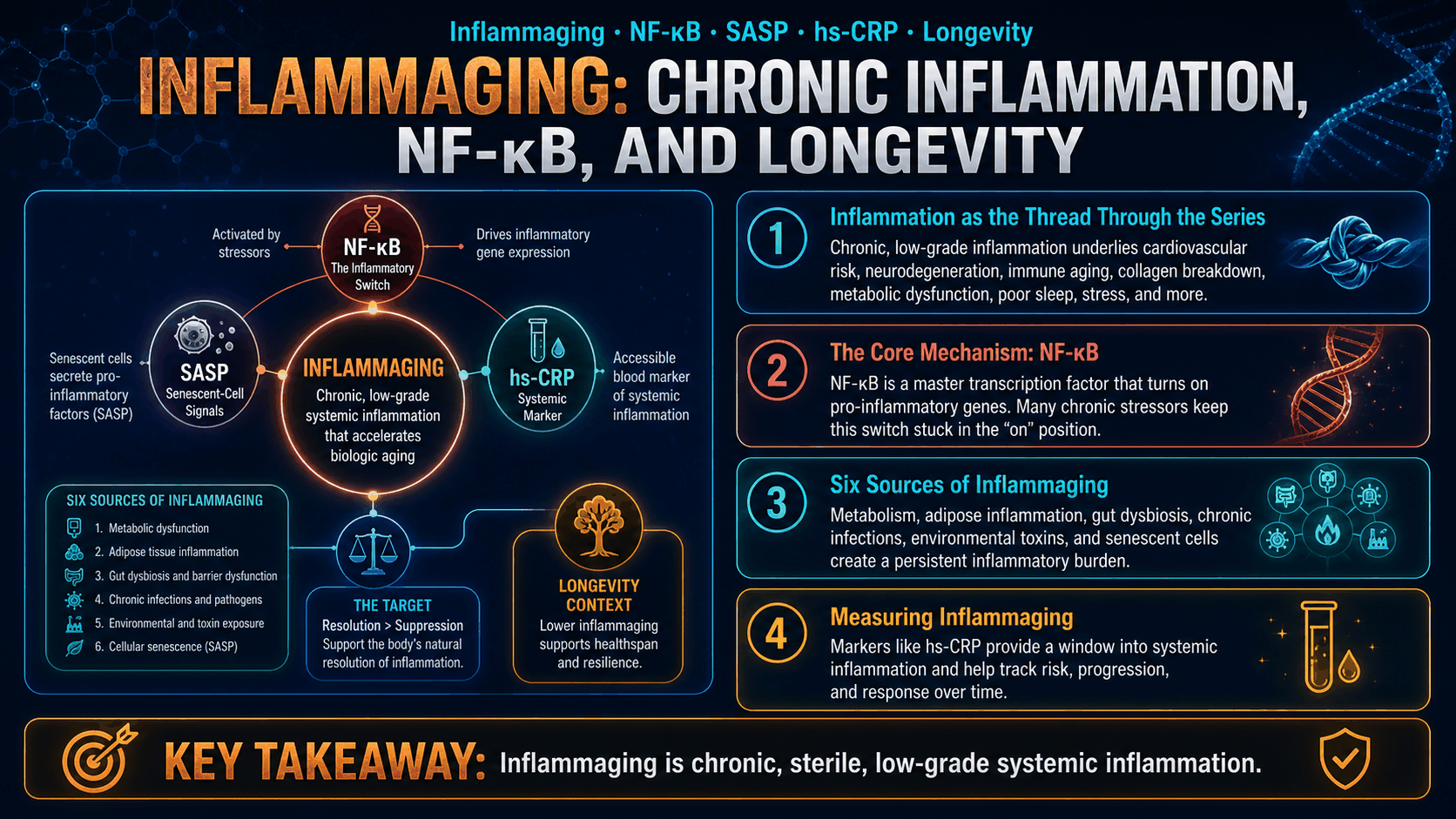
Inflammation as the Thread Through the Series
Inflammaging connects many topics: atherosclerosis, neurodegeneration, diabetes, cancer biology, autoimmunity, skin, joints, gut barrier, stress, sleep, and mitochondrial aging.
Acute inflammation is protective. The problem is when inflammatory signaling remains chronically active without a clear acute threat. That low-grade fire can slowly alter tissue function, insulin signaling, vascular health, immune balance, brain resilience, and connective-tissue integrity.
The Core Mechanism: NF‑κB
NF‑κB is a central transcription factor in inflammatory signaling. In inflammaging, NF‑κB can remain chronically activated, increasing production of inflammatory mediators such as TNF‑α, IL‑6, IL‑1β, and CRP.
Helpful and necessary
Turns on to clear threats, repair damage, and coordinate immunity. It should resolve after the signal ends.
Chronic low-grade burn
Months or years of sterile, systemic inflammatory tone without a clear acute trigger.
 Sponsored / AffiliatePeptide ReGenesis · Peptide education, protocols, and wellness-focused resources
Six Sources of Inflammaging
Senescent cells
Senescent “zombie cells” release SASP factors such as TNF‑α, IL‑6, and MMPs. BPC‑157 is discussed around reducing inflammatory signaling, not killing senescent cells.
Gut dysbiosis
A disrupted gut barrier can increase LPS exposure, activating TLR‑4 and NF‑κB. Oral BPC‑157, fiber, and probiotics are discussed around this pathway.
Visceral adiposity
Visceral fat releases inflammatory adipokines such as TNF‑α, IL‑6, and resistin, making adipose tissue an inflammatory organ in obesity contexts.
Chronic immune activation
CMV persistence can contribute to immune activation and immunosenescence discussions, especially in older adults.
Cortisol rhythm disruption
Chronic stress may contribute to glucocorticoid resistance and higher NF‑κB tone. Stress plus poor sleep is a double inflammatory hit.
NLRP3 activation
Aging mitochondria can release mtDNA and ROS, activating inflammasome pathways and IL‑1β context.
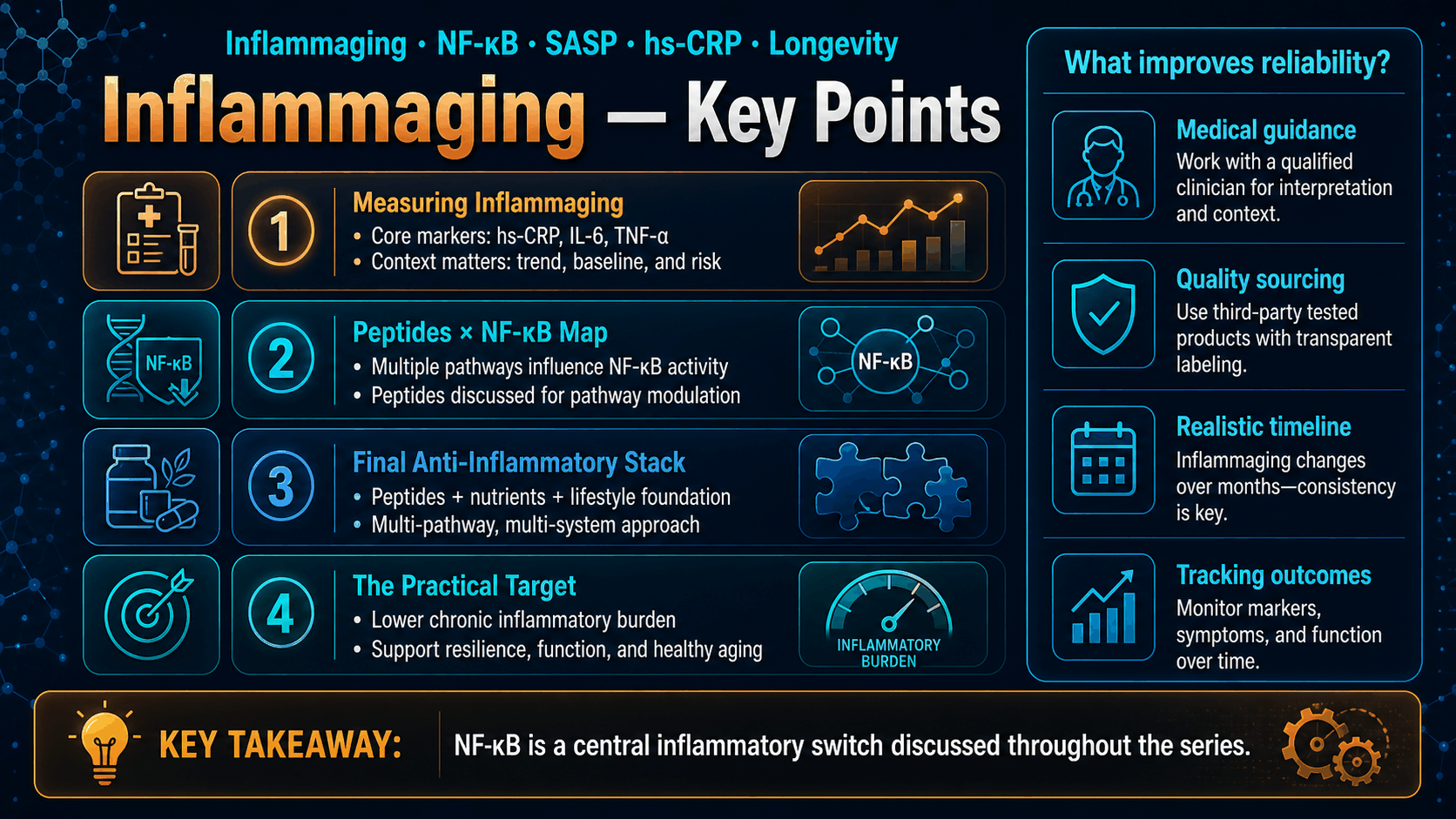
Measuring Inflammaging
Peptides × NF‑κB Map
Gut barrier + NF‑κB context
Discussed around gut-barrier support, less LPS exposure, lower TLR‑4/NF‑κB signaling context, SASP-factor signaling, and eNOS/NO pathways.
Genomic inflammation context
Discussed around transcriptomic modulation, antioxidant enzymes such as SOD, lower ROS burden, and inflammatory-cascade downshift.
Neuroimmune rhythm context
Semax is discussed around neuroinflammation and BDNF; Epitalon around circadian inflammatory rhythm; Thymalin around immune reserve.
 Sponsored / AffiliateQuest Health · Personal lab testing and health marker tracking
Final Anti-Inflammatory Stack
Lifestyle
- Zone-2 aerobic exercise.
- Mediterranean / anti-inflammatory pattern.
- Lower ultra-processed foods.
- Lower sugar/refined carbohydrate load.
- N3 sleep and stress management.
Nutraceuticals
- Omega‑3 EPA / resolvin context.
- Vitamin D3 / T‑reg context.
- Curcumin / NF‑κB discussion.
- Quercetin / NLRP3 context.
- Berberine / AMPK context.
Peptide layer
- BPC‑157 central anti-inflammatory discussion.
- GHK‑Cu genomic inflammation context.
- Semax neuroinflammation context.
- Epitalon circadian regulation context.
- Thymalin immune-aging context.
Progress markers
- hs‑CRP every 3–6 months when appropriate.
- IL‑6 and TNF‑α in deeper panels.
- Homocysteine and fibrinogen.
- Body composition and visceral fat.
- Symptoms and medical context.
The Practical Target
The practical goal is not “zero inflammation.” The goal is low chronic inflammatory burden, good tissue repair, fast resolution after stressors, and better resilience. In longevity frameworks, hs‑CRP below 1 mg/L is often treated as a useful target, but it should never be interpreted without the whole clinical picture.
Two Common Myths
Myth: Inflammation is always bad and should be suppressed.
Fact: Acute inflammation is essential for wound healing, immune defense, and training adaptation. The goal is better resolution, not indiscriminate suppression.
Myth: If hs‑CRP is “normal,” inflammation is absent.
Fact: Standard ranges are not always longevity-optimized. hs‑CRP also does not fully capture neuroinflammation or early SASP activity.
Frequently Asked Questions
What is inflammaging?
Chronic, sterile, low-grade systemic inflammation that tends to rise with age and contributes to aging biology and chronic disease risk contexts.
Is hs‑CRP enough?
No. It is useful but incomplete. A broader view may include IL‑6, TNF‑α, homocysteine, fibrinogen, body composition, symptoms, and clinician interpretation.
Where does BPC‑157 fit?
It is discussed around gut-barrier support, NF‑κB context, LPS/TLR‑4 signaling, and stress/injury consequences — not as a cure.
Why does omega‑3 matter?
EPA-derived resolvins and protectins are discussed around inflammation resolution rather than blunt inflammatory suppression.
When should I see a doctor?
High or rising inflammatory markers, fever, pain, autoimmune symptoms, chest pain, unexplained weight loss, cancer history, IBD, or chronic infection signs require medical evaluation.
Key Takeaways
- Inflammaging is chronic, sterile, low-grade systemic inflammation.
- NF‑κB is a central inflammatory switch discussed throughout the series.
- Six sources include SASP, dysbiosis/LPS, visceral fat, CMV, stress, and mitochondrial dysfunction.
- hs‑CRP is useful, but not the only marker.
- BPC‑157, GHK‑Cu, Semax, Epitalon, and Thymalin are discussed as adjunctive peptide-context tools, not treatments.
- Resolution, not total suppression, is the better goal.
- The page is mobile-responsive: source grids, marker rows, stack cards, FAQ, and tables adapt for small screens.