
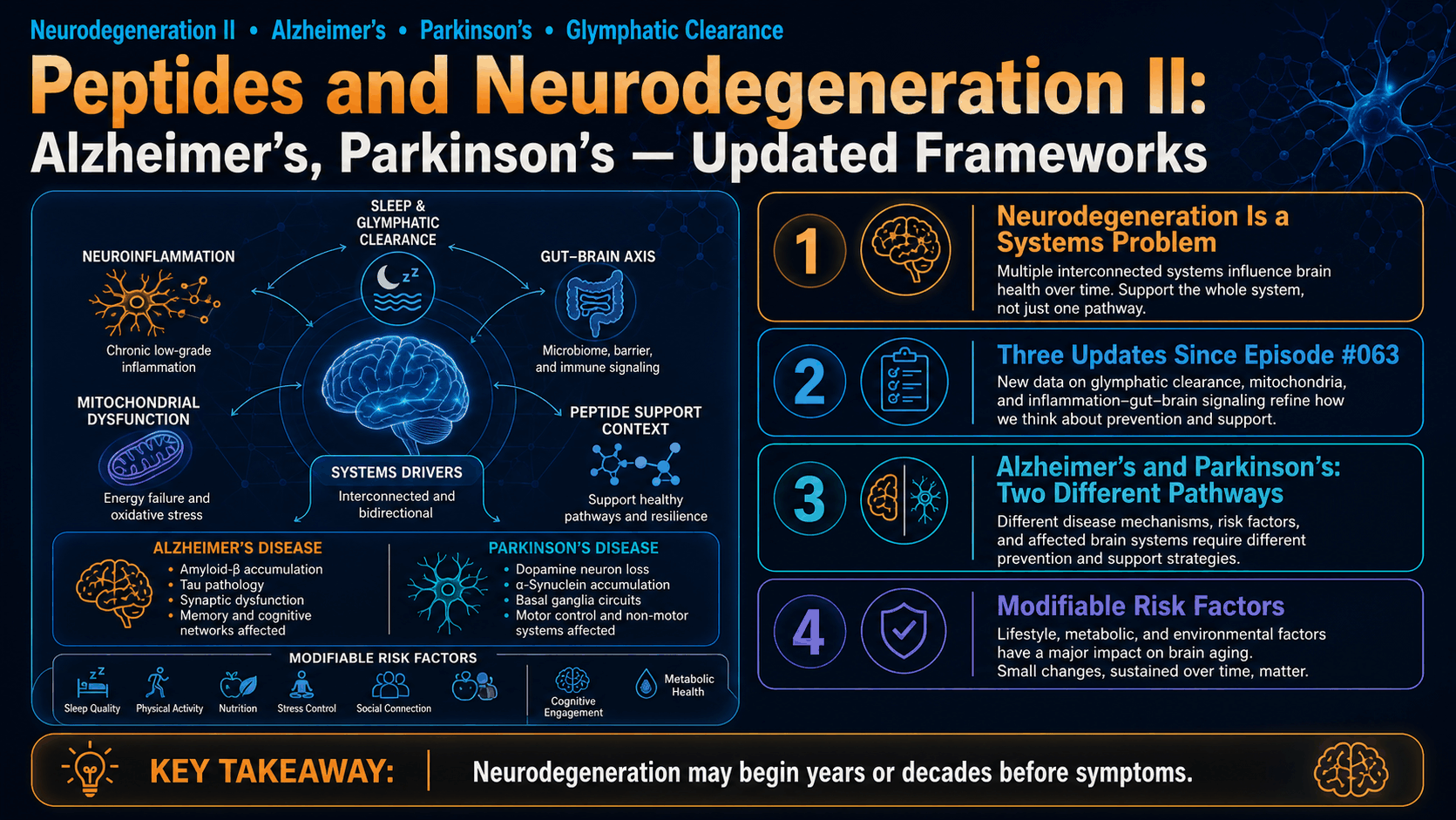
Neurodegeneration Is a Systems Problem
Alzheimer’s and Parkinson’s can begin years or decades before obvious symptoms.
This is why the prevention-support window matters. The core focus is not “one peptide for memory.” It is a systems framework: inflammation, sleep, glymphatic clearance, gut–brain signaling, mitochondria, vascular function, cognitive reserve, and clinician-guided monitoring.
Three Updates Since Episode #063
 Sponsored / AffiliateMito Red Light · Red light therapy devices for recovery and wellness routines
Alzheimer’s and Parkinson’s: Two Different Pathways
β‑Amyloid, tau, inflammation
Alzheimer’s is often discussed through β‑amyloid plaques, tau tangles, impaired clearance, neuroinflammation, mitochondrial dysfunction, APOE4 risk context, and glymphatic sleep biology.
- Semax: BDNF / neuroplasticity context.
- Glycine: N3 sleep and glymphatic clearance context.
- DHA: neuronal membrane and synaptic-plasticity context.
- BPC‑157: neuroinflammation / gut-system context.
α‑Synuclein, dopamine, gut pathway
Parkinson’s is discussed through dopaminergic neuron loss, α‑synuclein/Lewy bodies, gut–brain spread theories, neuroinflammation, and mitochondrial complex I dysfunction.
- Exercise is a key evidence-supported layer.
- BPC‑157: gut-barrier and inflammation context.
- Semax: neuroprotection context.
- CoQ10 / PQQ: mitochondrial-support context.
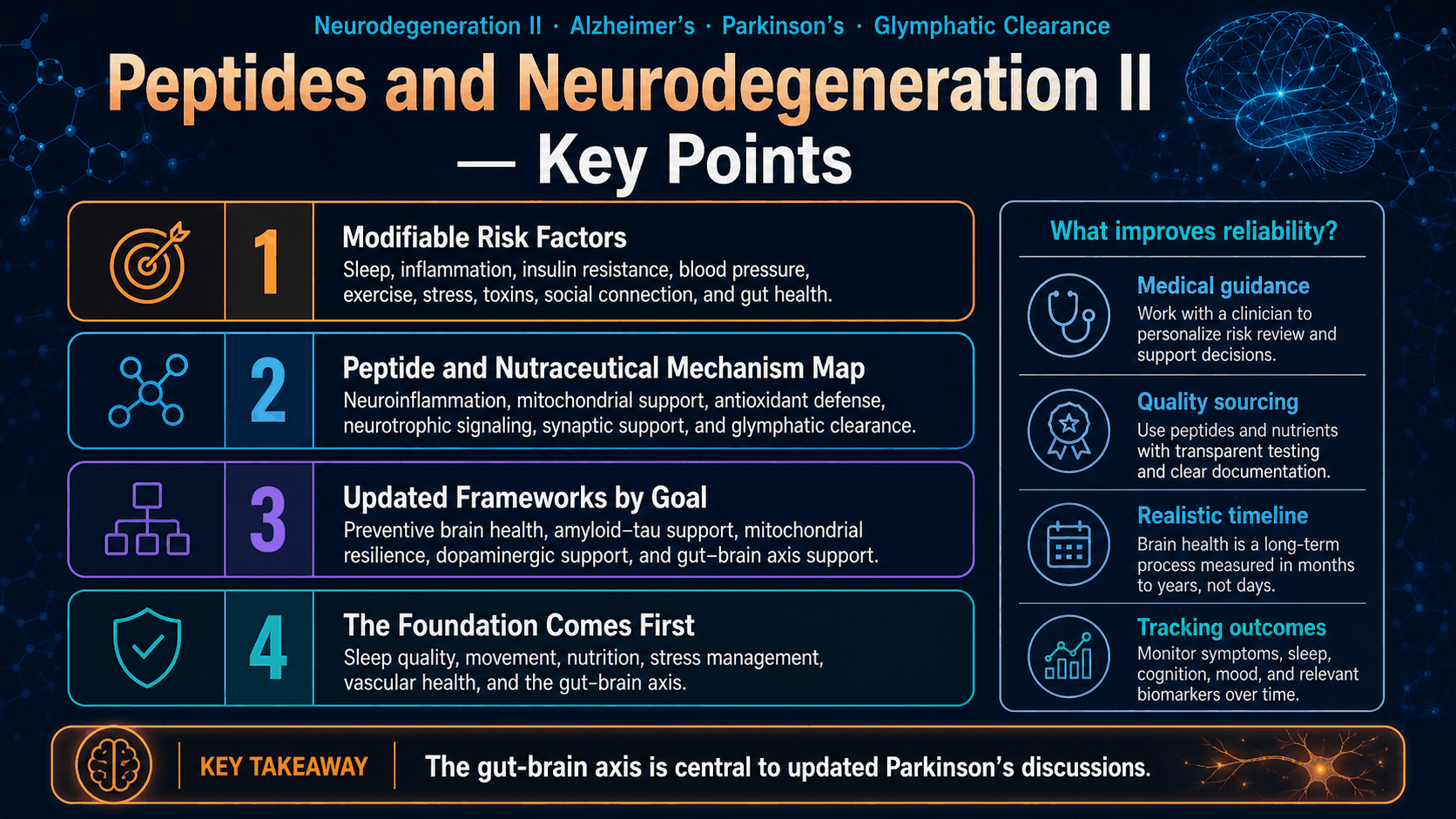
Modifiable Risk Factors
A meaningful share of dementia risk is linked to modifiable factors. Genetics matters, but it is not the whole story.
Diabetes, obesity, insulin resistance
Metabolic dysfunction increases inflammation, vascular risk, and brain-energy stress.
Hypertension and cardiovascular risk
Blood pressure, ApoB, Lp(a), hs‑CRP, and vascular health all influence brain outcomes.
Inactivity, alcohol, smoking
Aerobic exercise, strength training, and smoking avoidance remain foundational.
Social isolation, hearing loss, depression
Cognitive reserve depends on stimulation, social connection, sensory input, and mental-health support.
Peptide and Nutraceutical Mechanism Map
| Tool | Main discussion context | Important boundary |
|---|---|---|
| Semax | BDNF, NGF, neuroplasticity, cerebral blood-flow, neuroinflammation context | Not proven disease-modifying Alzheimer’s/Parkinson’s therapy |
| BPC‑157 | Gut barrier, lower LPS exposure, systemic inflammation, microglial activation context | Emerging evidence; not a disease cure |
| Glycine | N3 sleep, glymphatic clearance, β‑amyloid/tau clearance context | Sleep support, not dementia treatment |
| DHA | Neuronal membranes, synaptic plasticity, inflammation-resolution context | Supportive nutritional layer |
| Magnesium threonate | Synaptic-plasticity and CNS magnesium context | Use with clinician awareness in kidney disease/medications |
| Aerobic exercise | BDNF, vascular health, insulin sensitivity, hippocampal support | Foundation layer, not optional |
 Sponsored / AffiliatePeptide University · Peptide learning resources and educational programs
Updated Frameworks by Goal
Prevention-support framework
- Aerobic training 150 min/week.
- N3 sleep focus: glycine and magnesium context.
- Mediterranean-style diet and metabolic control.
- Cognitive load: learning, social contact, novelty.
- DHA, vitamin D when indicated, curcumin context.
- Semax/BPC‑157/Epitalon only as clinician-informed adjunctive discussions.
Support framework with neurologist
- Neurologist-directed diagnosis and medication remain primary.
- Semax discussion only with clinician guidance.
- BPC‑157 as gut–brain / neuroinflammation context.
- Magnesium threonate and acetyl-L-carnitine context.
- Parkinson’s: aerobic exercise, dance, tai chi, physical therapy.
- Caregiver support and rehabilitation are part of care.
The Foundation Comes First
N3 and glymphatic clearance
Deep sleep is central to clearance biology. Chronic sleep disruption requires serious attention, not just supplement stacking.
BDNF and vascular health
Aerobic and resistance training support the brain through neurotrophic, metabolic, and vascular pathways.
Gut, metabolic, vascular
Lowering systemic inflammation may support brain resilience through microglial, vascular, and gut–brain pathways.
Two Common Myths
Myth: Semax improves memory, so it treats Alzheimer’s disease.
Fact: Semax is discussed around neurotrophic support, but it is not proven to modify Alzheimer’s disease progression.
Myth: Family history means nothing can be done.
Fact: Most cases are multifactorial. APOE4 increases risk but is not destiny; sleep, exercise, inflammation, vascular risk, hearing care, and metabolic health still matter.
Frequently Asked Questions
Can peptides cure Alzheimer’s or Parkinson’s?
No. The honest framing is support, risk-factor modification, and quality-of-life context, not cure or reversal.
Why is sleep so important?
N3 sleep supports glymphatic clearance, which is involved in removal of β‑amyloid and tau-related waste.
Why does gut health matter in Parkinson’s?
α‑synuclein and gut–brain signaling are central to one important disease model, making gut inflammation and barrier health relevant.
What is the most evidence-based lifestyle layer?
Aerobic exercise, sleep optimization, blood-pressure/metabolic control, cognitive engagement, and social connection.
When is a neurologist required?
Any memory decline, tremor, gait change, falls, confusion, hallucinations, sleep behavior disorder, seizures, or rapid cognitive change requires evaluation.
Key Takeaways
- Neurodegeneration may begin years or decades before symptoms.
- The gut–brain axis is central to updated Parkinson’s discussions.
- N3 sleep and glymphatic clearance are core Alzheimer’s-prevention-support concepts.
- Semax is a neurotrophic-support discussion, not a cure.
- BPC‑157 fits mainly through gut-barrier and inflammation context.
- Exercise, sleep, metabolic health, vascular care, and neurologist-led care come first.
- The page is mobile-responsive: grids collapse, update rows stack, sticky TOC becomes normal, and mechanism tables scroll horizontally.