
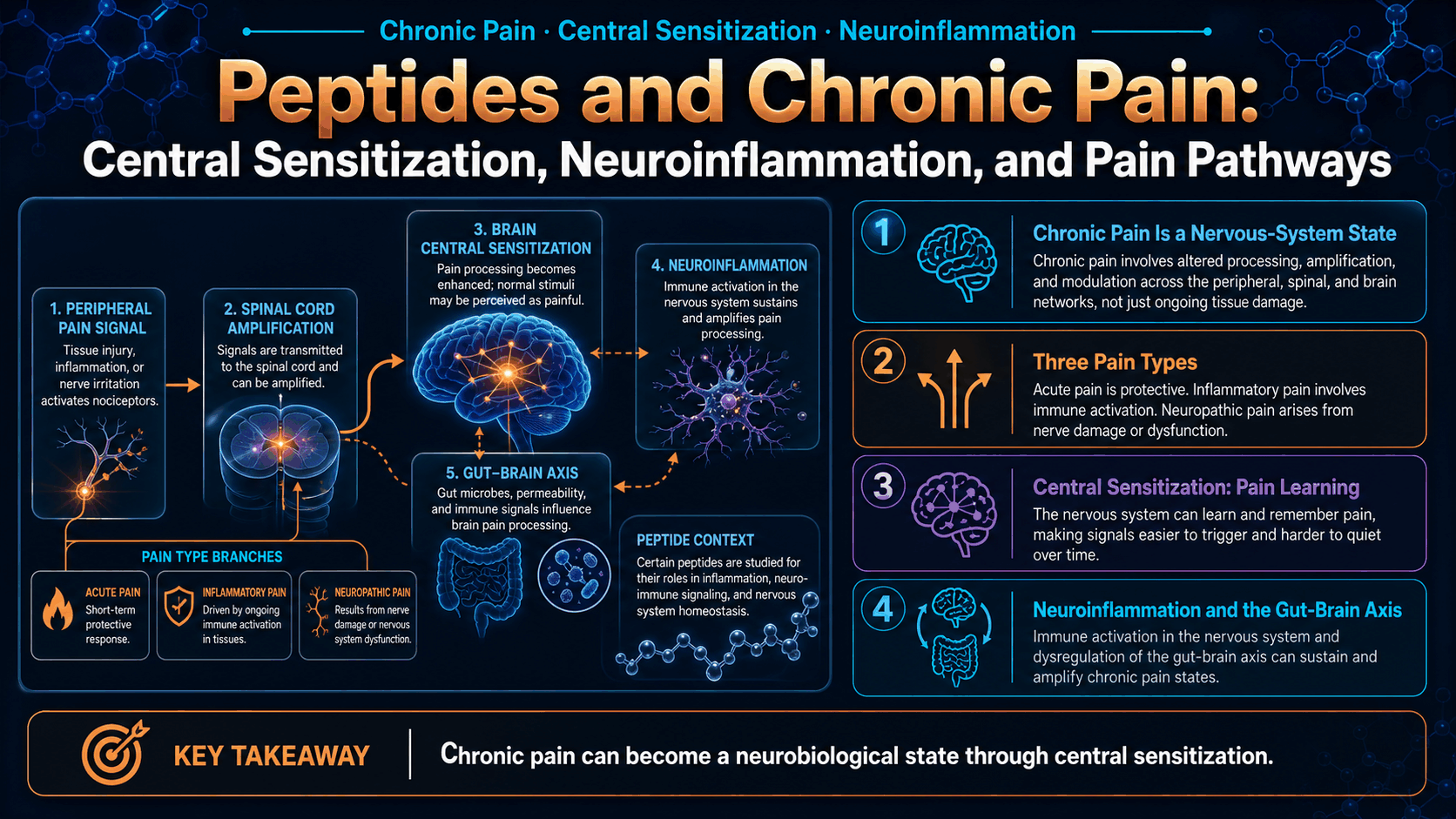
Chronic Pain Is a Nervous-System State
Chronic pain is not simply acute pain that lasted too long. In many people, the nervous system itself becomes sensitized.
The tissue may have healed, but the spinal cord, microglia, emotional pain circuitry, sleep system, and stress axis may continue amplifying pain. That is why chronic pain often requires a systems approach: diagnosis, primary treatment, rehabilitation, sleep, stress care, and pain neurobiology.
Three Pain Types
Acute nociceptive pain
Protective pain from tissue injury. It usually decreases as tissue heals. Standard diagnosis and appropriate analgesics/NSAIDs may be needed.
- BPC‑157 is discussed around tissue-repair context.
- Pain should decrease as the tissue problem resolves.
Chronic inflammatory pain
Persistent inflammatory input from conditions such as arthritis or IBD. The primary disease must be treated.
- BPC‑157: inflammation context.
- Omega‑3: prostaglandin/inflammatory mediator context.
- DMARDs/biologics/NSAIDs may be primary when indicated.
Neuropathic / central pain
Pain driven by nerve injury, central sensitization, neuroinflammation, or altered pain processing.
- Semax: neuroplasticity/BDNF context.
- Selank: anxiety-pain loop context.
- Sleep support matters for pain modulation.
 Sponsored / AffiliateUlta Lab Tests · Lab testing for hormones, inflammation, and wellness
Central Sensitization: Pain Learning
Central sensitization means that spinal-cord and CNS pain circuits become more reactive. The pain threshold drops; ordinary signals can feel painful.
BDNF is complicated in pain. In spinal pathways, BDNF can participate in sensitization; in supraspinal brain regions, it may support adaptive neuroplasticity. Context matters.
Neuroinflammation and the Gut-Brain Axis
Activated microglia in the CNS can release TNF‑α, IL‑1β, and BDNF, amplifying pain sensitivity. This neuroimmune layer is one reason chronic pain can become self-sustaining.
LPS and microglia
Barrier dysfunction may increase LPS exposure, which can activate microglia and strengthen neuroinflammatory pain pathways.
Cortisol and inhibition
Chronic stress can lower pain thresholds and weaken descending pain inhibition. Stress care is a pain intervention, not a luxury.
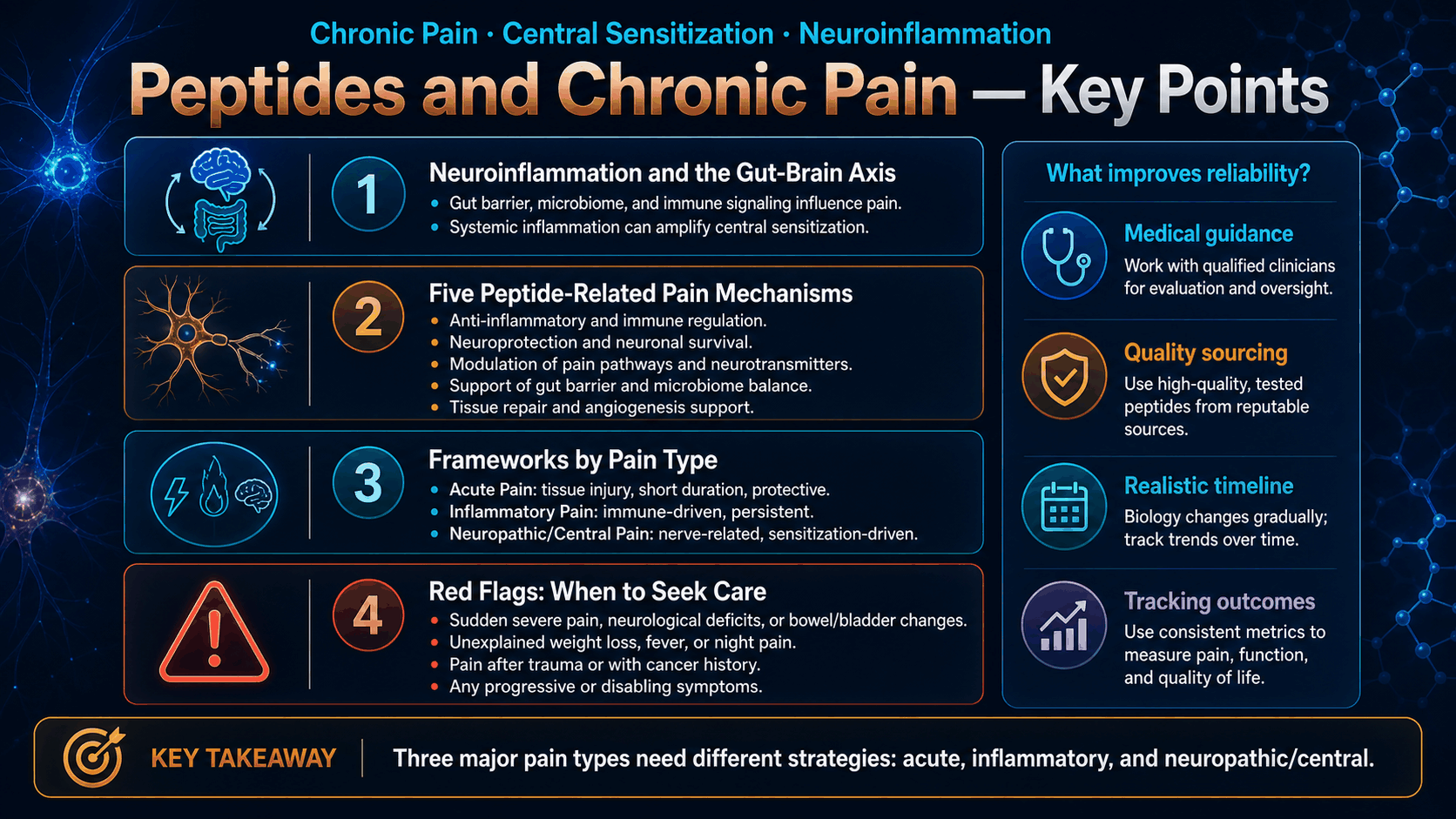
Five Peptide-Related Pain Mechanisms
 Sponsored / AffiliatePeptide ReGenesis · Peptide education, protocols, and wellness-focused resources
Frameworks by Pain Type
RA, IBD, spondylitis context
Primary treatment comes first. BPC‑157, omega‑3, and curcumin are discussed only as adjunctive inflammation-context supports.
Diabetic or post-herpetic contexts
Neurologist-led care matters. Semax, alpha-lipoic acid, BPC‑157, and sleep support are discussed as adjunctive layers.
Central sensitization context
Selank, stress care, sleep support, Semax context, and low-intensity aerobic activity are discussed alongside rheumatology evaluation and CBT/pain psychology.
Do not bypass diagnosis
Acute severe pain needs diagnosis and standard medical treatment. Peptides are not replacements for analgesics or emergency care.
Red Flags: When to Seek Care
Two Common Myths
Myth: BPC‑157 is a painkiller and can replace NSAIDs.
Fact: BPC‑157 is discussed around inflammatory signaling and tissue-repair context. It is not a classic direct analgesic and does not replace NSAIDs or physician-directed pain treatment.
Myth: Fibromyalgia is just anxiety.
Fact: Fibromyalgia is a documented central-sensitization condition. Anxiety may coexist and amplify pain, but it is not the whole explanation.
Frequently Asked Questions
Can peptides cure chronic pain?
No. They are discussed as adjunctive tools around inflammation, neuroinflammation, sleep, and anxiety context, not cures.
Which peptide is most relevant for inflammatory pain?
BPC‑157 is the main discussion point, but primary disease treatment remains essential.
Why does anxiety matter in pain?
Anxiety and pain share brain circuits. Reducing anxiety can reduce the affective burden of pain, even if tissue signals remain.
Why is sleep included?
Sleep deprivation increases pain sensitivity. Deep N3 sleep supports descending pain modulation and lower inflammatory tone.
What kind of doctor should be involved?
A pain specialist, neurologist, rheumatologist, gastroenterologist, primary care physician, physical therapist, or mental-health specialist may be needed depending on the cause.
Key Takeaways
- Chronic pain can become a neurobiological state through central sensitization.
- Three major pain types need different strategies: acute, inflammatory, and neuropathic/central.
- BPC‑157 is discussed around inflammation and repair context, not direct analgesia.
- Semax and BDNF require context because pain neuroplasticity is complex.
- Selank is discussed around the anxiety-pain loop.
- Sleep and N3 quality are central to pain modulation.
- The page is mobile-responsive: grids collapse, mechanism rows stack, sticky TOC becomes normal, and tables scroll horizontally.