
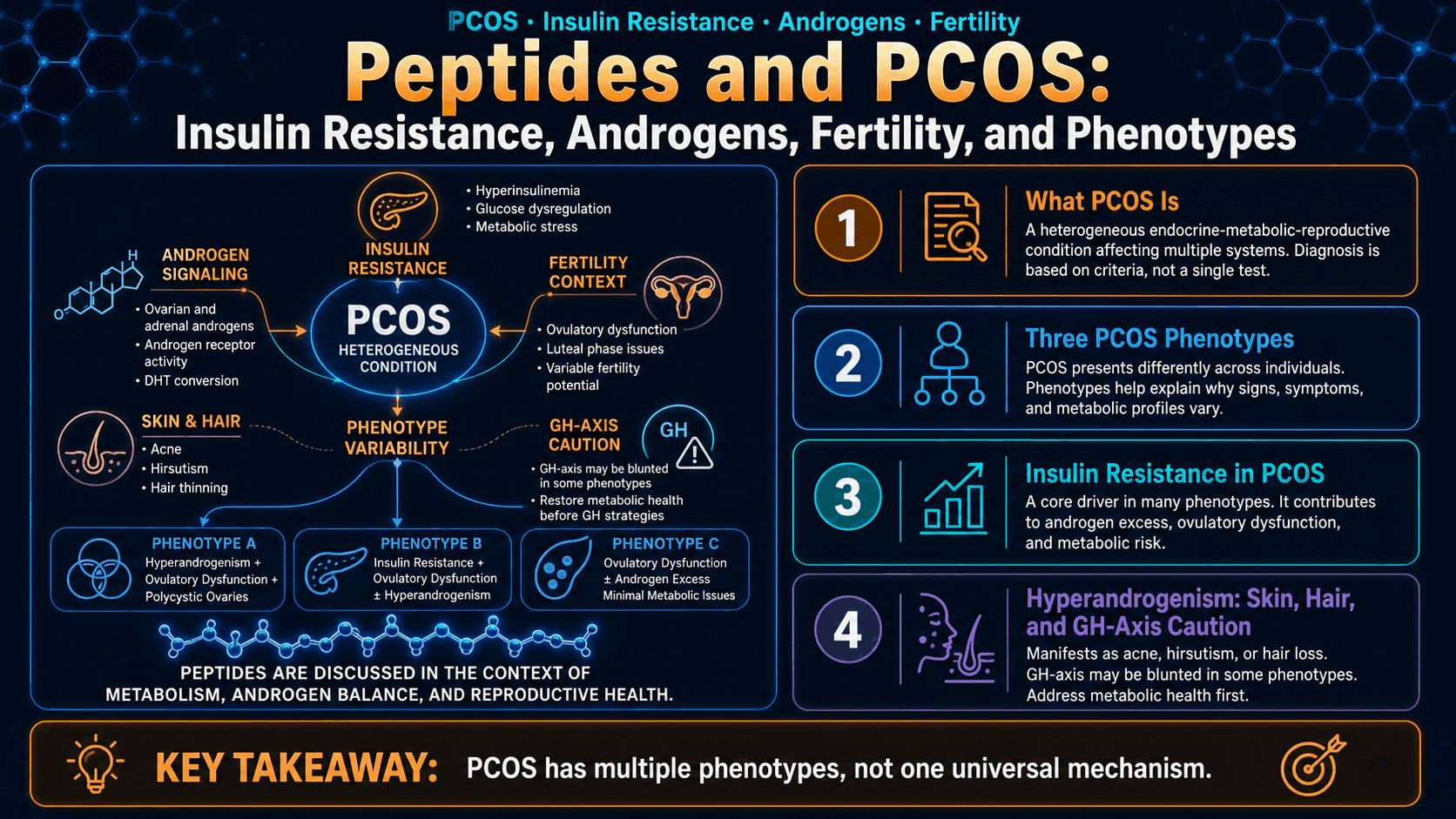
What PCOS Is
PCOS is not one single disease. It is a heterogeneous syndrome with metabolic, androgenic, inflammatory, and fertility dimensions.
The Rotterdam criteria define PCOS by two out of three findings: ovulatory dysfunction, clinical or biochemical hyperandrogenism, and polycystic ovarian morphology on ultrasound. Because PCOS has several biochemical patterns, a generic “one protocol for everyone” approach is rarely optimal.
Three PCOS Phenotypes
Insulin-resistant / classic PCOS
Hyperinsulinemia may drive ovarian androgen production. Weight gain may be present, but PCOS-related insulin resistance can occur regardless of body weight.
- Metformin discussion when appropriate.
- Inositol and lifestyle foundation.
- BPC‑157 as inflammation/IR context only.
Lean / adrenal-stress PCOS
Normal weight with higher adrenal androgens such as DHEA-S. Stress, cortisol, anxiety, and HPA-axis tone may be central.
- Stress management first.
- Selank anxiety-context discussion.
- Monitor DHEA-S and morning cortisol.
Inflammatory PCOS
Elevated hs‑CRP, gut dysbiosis, LPS endotoxemia, and chronic inflammation may contribute to androgen signaling.
- Gut and inflammation focus.
- Omega‑3 / microbiome context.
- BPC‑157 oral gut-barrier discussion.
 Sponsored / AffiliateDT Peptides · Peptide research products and laboratory-focused resources
Insulin Resistance in PCOS
Insulin resistance can be one of the central drivers of PCOS. Hyperinsulinemia may stimulate LH receptor activity in ovarian theca cells, increasing androgen production and contributing to anovulation.
Evidence-based tools include clinician-guided metformin when appropriate, inositol discussions, nutrition strategy, aerobic activity, resistance training, and metabolic monitoring.
Hyperandrogenism: Skin, Hair, and GH-Axis Caution
Hyperandrogenism may show up as acne, hirsutism, and androgenic hair thinning. Topical GHK-Cu may support inflamed acne-prone skin barrier, but it does not correct hyperandrogenism.
 Sponsored / AffiliateiHerb · Supplements, wellness products, and daily health essentials
BPC‑157 and Inflammatory PCOS: Four Theoretical Pathways
Androgen-steroidogenesis pressure
TNF‑α can stimulate androgen production in ovarian theca cells. BPC‑157 is discussed around TNF‑α reduction, but PCOS-specific human evidence is lacking.
LPS endotoxemia context
PCOS is often discussed with dysbiosis and increased gut permeability. Barrier support may reduce inflammatory androgen signaling.
Insulin-sensitivity context
TNF‑α can interfere with insulin receptor substrate signaling. This is the theoretical bridge between inflammation and insulin resistance.
Ovarian microcirculation context
BPC‑157 is discussed around eNOS and nitric oxide. This ovarian-flow idea is indirect and speculative, not a proven PCOS treatment.
Support Frameworks by Phenotype
Metabolic foundation
- Metformin discussion with clinician when appropriate.
- Myo-inositol / D-chiro-inositol discussion.
- Nutrition strategy, aerobic + resistance training.
- BPC‑157 only as inflammation/gut-barrier context.
- Glycine as post-meal glucose-context support.
HPA-axis focus
- Stress management is primary.
- Selank as GABA/anxiety-context discussion.
- Ashwagandha and magnesium discussions when appropriate.
- Monitor DHEA‑S and morning cortisol with clinician.
Gut and inflammation
- Oral BPC‑157 as barrier + TNF‑α context only.
- Microbiome support and omega‑3 discussion.
- hs‑CRP as a monitoring marker.
- Gynecologist + gastroenterologist when GI symptoms or IBD are present.
Two Common Myths
Myth: Ipamorelin will normalize PCOS hormones.
Fact: Ipamorelin increases GH and IGF‑1. IGF‑1 may interact with ovarian steroidogenesis and theoretically intensify androgen production in active hyperandrogenic PCOS. It is not a hormone-normalizing shortcut.
Myth: PCOS is only about weight and cycles.
Fact: PCOS is a systemic metabolic-endocrine syndrome involving insulin resistance, androgen biology, inflammation, cardiometabolic risk, mood, skin, and fertility.
Frequently Asked Questions
Can peptides treat PCOS?
No. Peptides are not PCOS treatment. They may be discussed as adjunctive support for selected pathways after medical diagnosis and clinician-guided care.
Which labs help identify PCOS phenotype?
Common discussions include fasting insulin, HOMA‑IR, total/free testosterone, DHEA‑S, LH/FSH, AMH, prolactin, TSH, and hs‑CRP. A clinician should interpret these.
Is BPC‑157 proven for PCOS?
No. BPC‑157 has theoretical relevance for inflammation, gut barrier, TNF‑α, and insulin signaling, but strong human PCOS-specific trials are lacking.
Are GH secretagogues safe in PCOS?
They require caution, especially with active hyperandrogenism, fertility goals, or irregular cycles. Use should be clinician-guided.
What if pregnancy is planned?
Do not self-use peptide protocols. Work with a reproductive endocrinologist or fertility specialist.
Key Takeaways
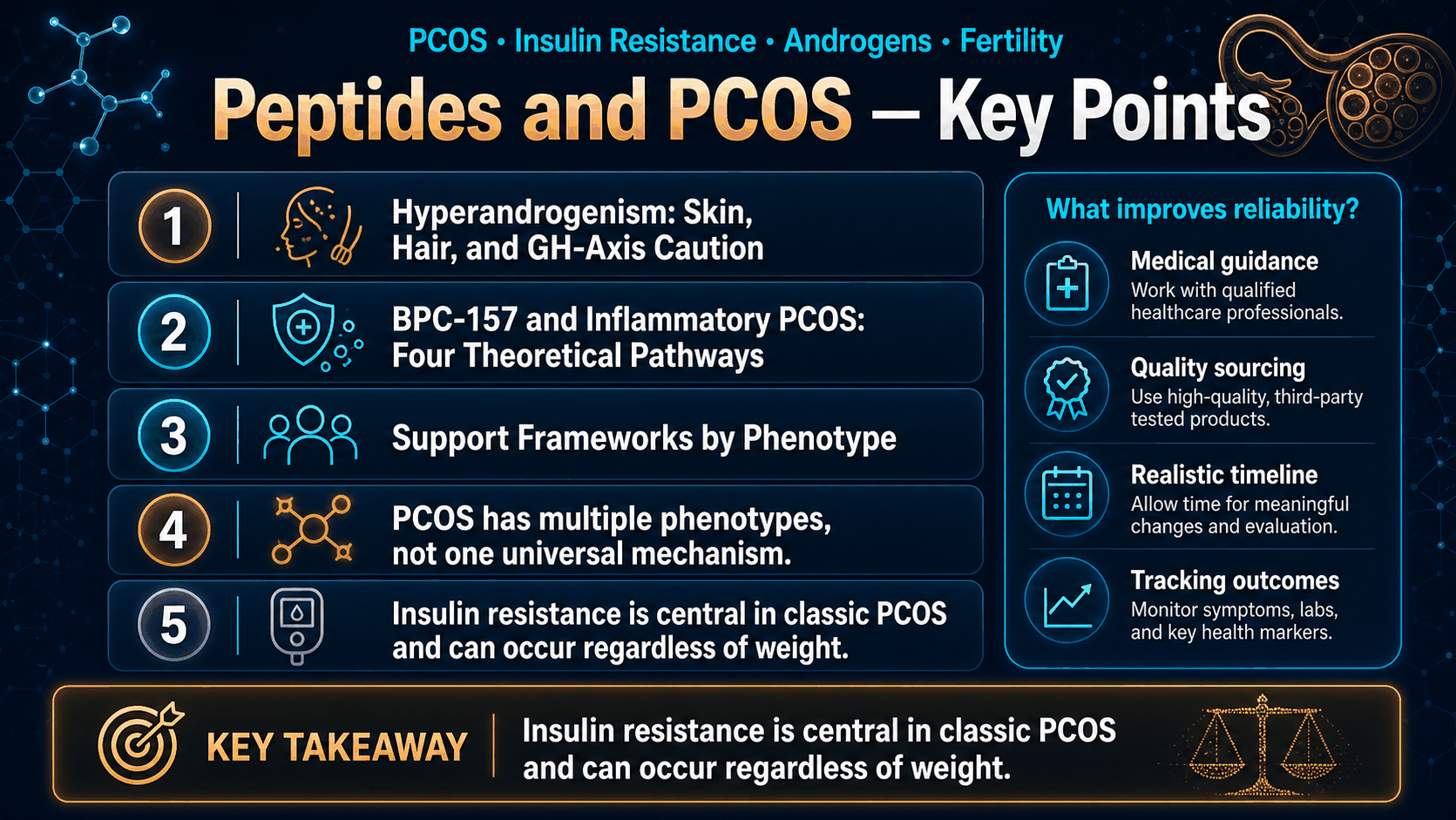
- PCOS has multiple phenotypes, not one universal mechanism.
- Insulin resistance is central in classic PCOS and can occur regardless of weight.
- Adrenal/stress PCOS needs HPA-axis and stress-focused care.
- Inflammatory PCOS may involve gut barrier, LPS, hs‑CRP, and cytokines.
- BPC‑157 is a theoretical inflammation/gut context tool, not proven PCOS therapy.
- GH secretagogues require caution in active hyperandrogenism.
- Fertility goals require reproductive-specialist oversight.