Why Cycle Phase Matters
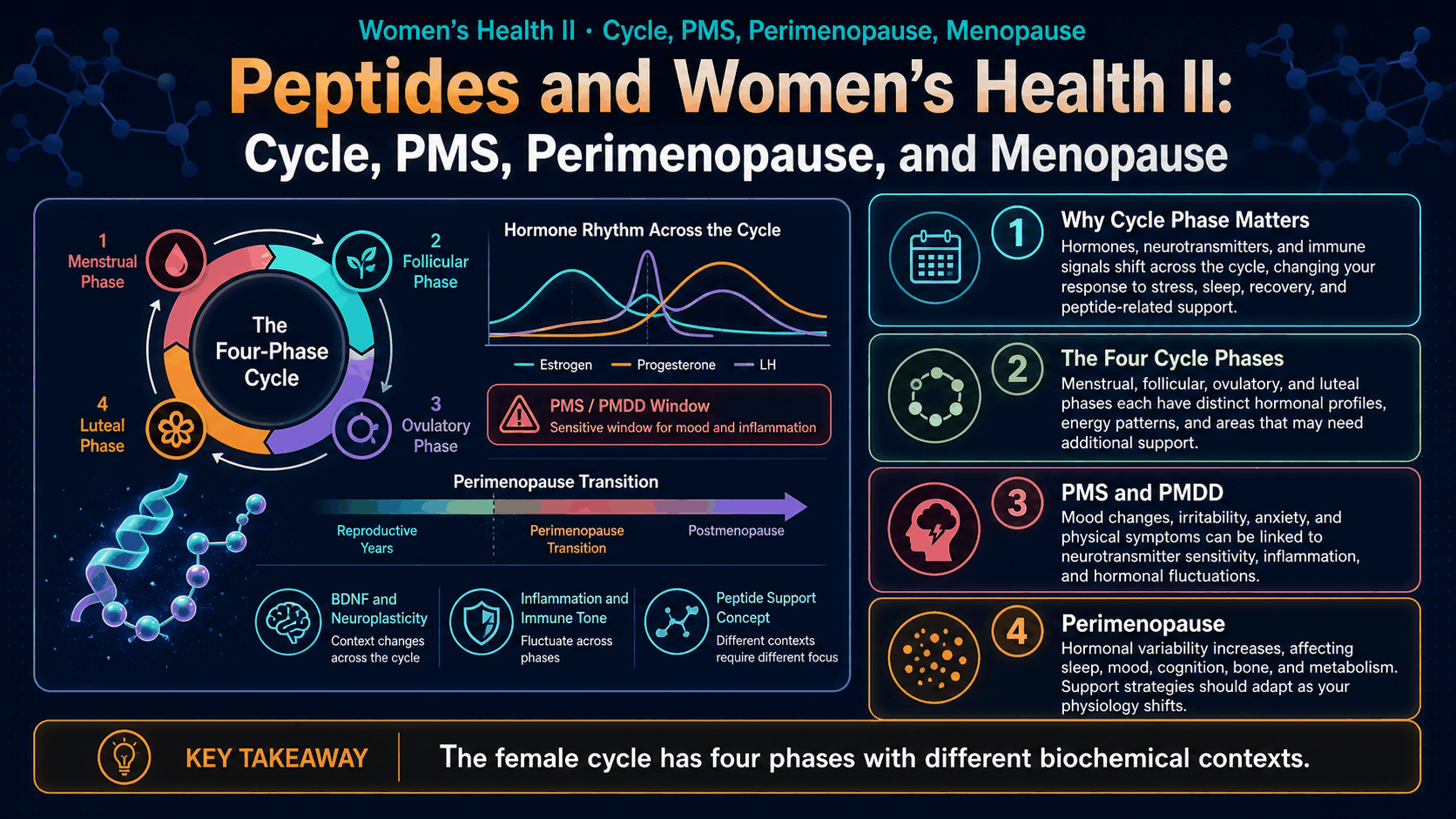
The menstrual cycle is not instability. It is a structured biochemical rhythm.
Estrogen and progesterone shift across the month, changing sleep, pain sensitivity, fluid retention, mood, cognition, skin reactivity, inflammation, and training response. A peptide-support plan that ignores cycle phase can feel inconsistent because the underlying biology is changing.
The Four Cycle Phases
Menstrual
Estrogen and progesterone are low. Prostaglandins and inflammation may rise, pain threshold may be lower, and energy may drop.
- BPC-157 inflammation context.
- Glycine + magnesium for sleep context.
- Lower training intensity if needed.
Follicular
Estrogen rises, often supporting BDNF, serotonin, cognition, and training capacity.
- Semax + BDNF context.
- GH-axis discussions may fit better.
- Skin renewal procedures may be better tolerated.
Ovulatory
Estrogen and testosterone peak. Energy, libido, and strength may be highest.
- Performance-support window.
- Joint support during higher loads.
- Useful only if symptoms are stable.
Luteal
Progesterone dominates. Temperature rises, sleep may shift, and water retention or anxiety may appear.
- Selank anxiety-context discussion.
- Magnesium support often matters more.
- Pause harsh skincare if reactive.
 Sponsored / AffiliateQuest Health · Personal lab testing and health marker tracking
PMS and PMDD
PMS can involve physical and emotional symptoms, while PMDD is a severe disorder requiring medical and often mental-health care. Peptides and supplements are not substitutes for evidence-based PMDD treatment.
Fluid, pain, inflammation
Bloating, breast tenderness, headache, and water retention may involve prostaglandins, fluid shifts, inflammatory tone, and magnesium status.
Anxiety and mood shifts
Late luteal anxiety and irritability may involve GABA sensitivity, serotonin changes, sleep disruption, and stress load. Selank is discussed as an adjunctive GABA-context support tool.
Clinician care first
PMDD requires gynecologic and/or psychiatric care. SSRIs or hormonal strategies may be appropriate. Peptide discussions are adjunctive only and not self-treatment.
Perimenopause
Perimenopause can begin years before the final menstrual period. It is often the most complex transition because estrogen and progesterone can fluctuate unpredictably.
| Issue | Biology | Peptide-support context | Clinical priority |
|---|---|---|---|
| Sleep disruption | Hot flashes, night sweats, N3 disruption. | Epitalon circadian/melatonin context; glycine + magnesium baseline. | Gynecologic evaluation; consider evidence-based therapy. |
| Brain fog | Estrogen supports BDNF and neuroplasticity. | Semax BDNF-context discussion. | Check sleep, thyroid, anemia, depression, medications. |
| Body composition | Lower estrogen may reduce muscle and increase visceral fat. | Ipamorelin / GH-axis discussion as adjunctive support. | Protein, strength training, sleep, metabolic screening. |
 Sponsored / AffiliatePeptide ReGenesis · Peptide education, protocols, and wellness-focused resources
Menopause
Menopause is defined as 12 months without menstruation. Postmenopause is a new hormonal state with low estrogen, making bone, skin, cardiovascular, sleep, and metabolic support especially important.
Bones
Estrogen protects bone density through OPG/RANKL biology. Collagen, vitamin D3, K2, calcium when appropriate, resistance training, and clinician monitoring are foundational.
Skin
Postmenopausal collagen decline can be noticeable. GHK-Cu, oral collagen, SPF, retinoid tolerance, nutrition, and dermatology context matter.
Cardiovascular risk
After menopause, cardiovascular risk rises. BPC-157 is discussed around NO-system and endothelial context, but risk monitoring belongs with clinicians.
Life-Stage Support Framework
Cycle-aware support
- Daily baseline: collagen, omega‑3, magnesium, GHK‑Cu, SPF.
- Follicular: Semax / BDNF discussion, stronger training window.
- Luteal: magnesium, sleep support, Selank anxiety-context discussion.
Transition support
- Epitalon for sleep/circadian context.
- Semax for cognitive-support context.
- Ipamorelin GH-axis discussion for body composition.
- Gynecologist conversation about HRT when indicated.
Geroprotective support
- GHK‑Cu + collagen + bone-support stack.
- BPC‑157 only as clinician-guided inflammation-context discussion.
- Aerobic + strength training.
- Regular gynecology and cardiology monitoring.
Two Common Myths
Myth: GH secretagogues raise estrogen.
Fact: GH secretagogues act through the GH/IGF‑1 axis, not direct estrogen replacement. With PCOS, anovulation, irregular cycles, fertility goals, or endocrine disease, clinician guidance is necessary.
Myth: Peptides can replace HRT in menopause.
Fact: Peptides do not replace estrogen deficiency. They may support collagen, inflammation, sleep, or BDNF-context pathways, but hot flashes, genitourinary syndrome, and bone-density risk require evidence-based medical discussion.
Frequently Asked Questions
Can peptides treat PMDD?
No. PMDD requires gynecologic and/or psychiatric care. Peptides are not a replacement for SSRIs, hormonal strategies, therapy, or medical treatment.
Should peptide support change across the cycle?
It can be more logical to adjust support around sleep, skin tolerance, training, anxiety, and inflammation based on cycle phase.
Can menopause symptoms be handled without HRT?
Some symptoms can improve with lifestyle and supportive tools, but HRT is one of the most evidence-based options when indicated. Decisions should be made with a gynecologist.
What symptoms need medical evaluation?
Irregular heavy bleeding, pelvic pain, severe PMS/PMDD, infertility, suspected PCOS, hot flashes disrupting life, depression, anxiety, or suicidal thoughts need professional care.
Are peptides safe during fertility treatment or pregnancy?
This requires physician guidance. Do not self-use peptide protocols during pregnancy, breastfeeding, fertility treatment, or suspected hormonal disorder.
Key Takeaways
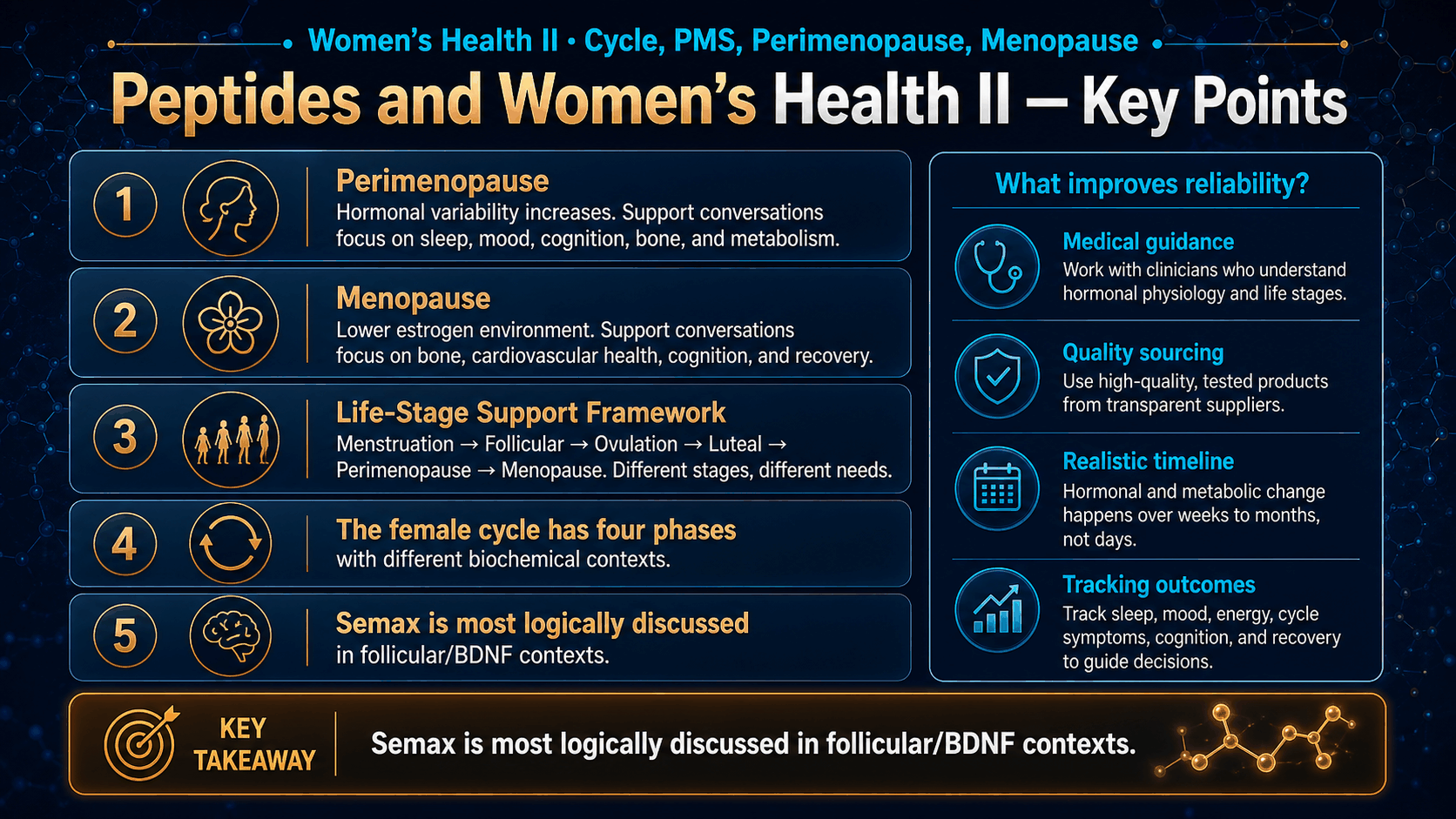
- The female cycle has four phases with different biochemical contexts.
- Semax is most logically discussed in follicular/BDNF contexts.
- Selank is most logically discussed around late-luteal anxiety/PMS context.
- PMDD is a medical condition, not a supplement problem.
- Perimenopause often requires sleep, cognition, body-composition, and gynecologic support.
- Menopause support must include bone, skin, cardiovascular, and HRT discussion when appropriate.
- Peptides can support certain layers, but they do not replace diagnosis, HRT, psychiatry, gynecology, or evidence-based care.