
Why Insulin Resistance Matters
Insulin resistance can develop quietly for years before type 2 diabetes is diagnosed.
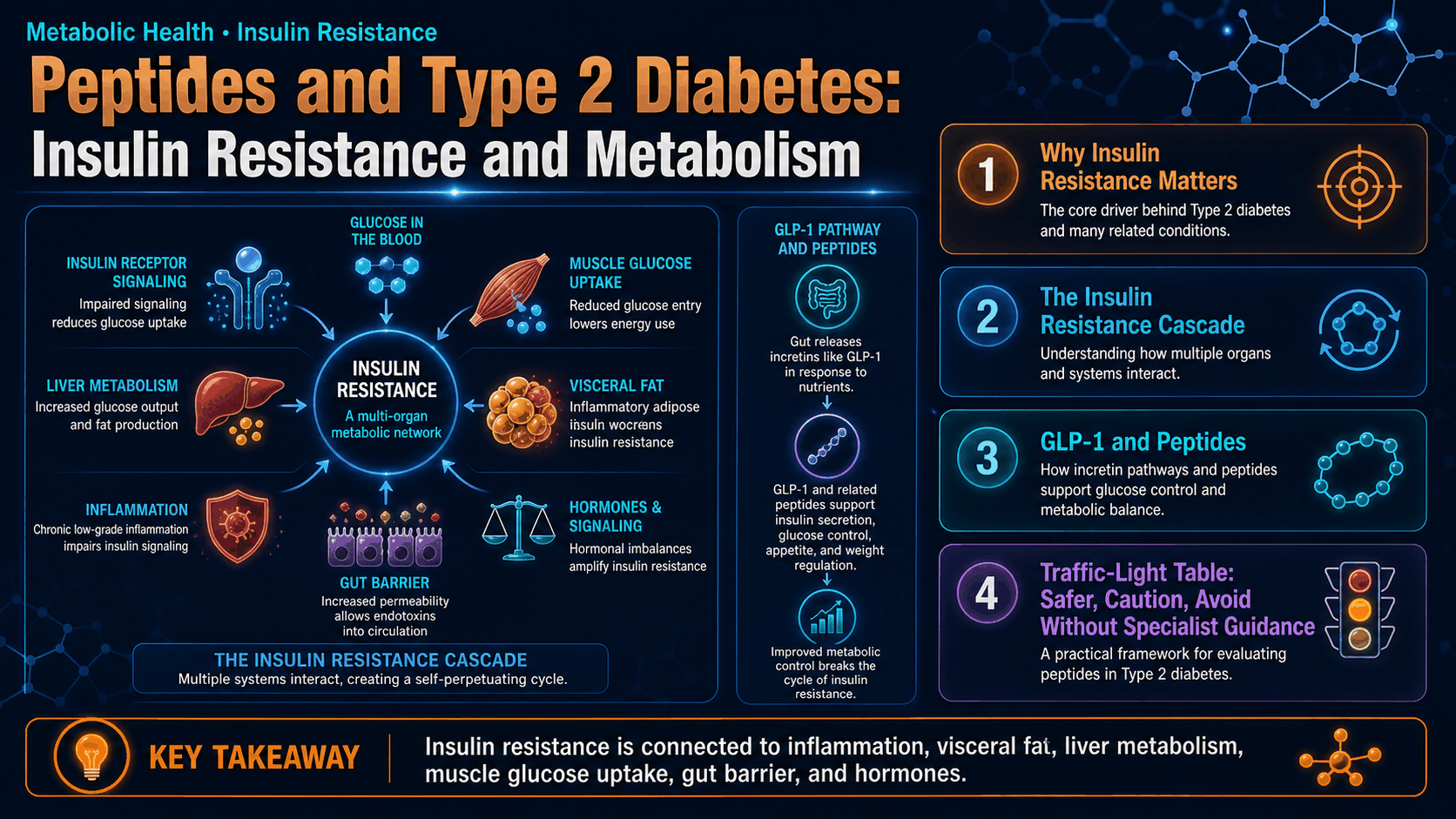
Cells gradually stop responding to insulin normally. The pancreas compensates by producing more insulin. For a while, blood glucose may look “normal,” but the system is under pressure. Over time, this can progress to prediabetes, type 2 diabetes, fatty liver, higher cardiovascular risk, and chronic inflammation.
The Insulin Resistance Cascade
Excess calories and refined carbohydrates
Persistently high insulin demand can push cells toward reduced sensitivity over time. At first, this may be adaptive; later, it becomes pathological.
Fat accumulation in liver and muscle
Visceral and ectopic fat are metabolically active. They can release inflammatory signals that impair insulin signaling.
Inflammation disrupts insulin signaling
Inflammatory pathways such as TNF-alpha and IL‑6 can interfere with insulin signaling proteins, creating a molecular link between obesity, inflammation, and insulin resistance.
Beta-cell stress and metabolic progression
The pancreas compensates by producing more insulin. Over years, beta-cell function may decline, increasing the risk of prediabetes and type 2 diabetes.
 Sponsored / AffiliateTeleWellnessMD · Telehealth wellness consultations and health optimization support
GLP‑1 and Peptides
GLP‑1, or glucagon-like peptide‑1, is one of the most important metabolic peptide hormones. Semaglutide and liraglutide work through the GLP‑1 receptor, which is why GLP‑1 is central to modern metabolic therapy.
Meal-related insulin signaling
GLP‑1 supports insulin secretion in response to food, helping reduce post-meal glucose elevations.
Lower glucagon signaling
It helps reduce excessive glucagon signaling, which can otherwise increase hepatic glucose output.
Slower gastric emptying
Slower gastric emptying can reduce post-meal glucose spikes and increase satiety.
Appetite regulation
GLP‑1 receptor agonists affect central appetite pathways and can support weight loss when prescribed.
Traffic-Light Table: Safer, Caution, Avoid Without Specialist Guidance
| Peptide / tool | Status in IR / T2D | Mechanism discussed | Condition |
|---|---|---|---|
| BPC‑157 | Potentially discussable | Inflammation context, gut-barrier context, beta-cell stress discussion in preclinical models | Adjunctive only, with glucose monitoring |
| Glycine | Lower-complexity support | May support insulin sensitivity and post-meal glucose response in some contexts | Discuss if on glucose-lowering drugs |
| Omega‑3 | Supportive | Inflammation and cardiometabolic-risk context | Consider interactions and bleeding risk |
| Semax / Selank | Generally glucose-neutral discussion | Stress-axis and cognition context, not diabetes treatment | Track sleep, anxiety, medication context |
| GH secretagogues | High caution | GH can oppose insulin action and may raise fasting glucose | Only with good control and endocrinologist oversight |
| GHRP‑6 | Usually not ideal | Strong appetite stimulation may worsen intake and glucose excursions | Avoid with uncontrolled appetite or IR |
| Thymalin / Thymosin α1 | Immune-context discussion | Immune modulation, not glucose-lowering therapy | Specialist guidance if autoimmune/immunotherapy context |
| Epitalon | Circadian-context discussion | Sleep/circadian rhythm may influence cortisol and metabolism | Not a diabetes medication |
 Sponsored / AffiliateQuest Health · Personal lab testing and health marker tracking
BPC‑157 and Glucose Metabolism
BPC‑157 is often discussed in metabolic-health content because of three theoretical or preclinical mechanisms. These are not proof that it treats diabetes.
Inflammatory signaling
If inflammatory pathways interfere with insulin signaling, anti-inflammatory mechanisms may be relevant. This remains an adjunctive discussion, not a treatment claim.
Gut-barrier support
A damaged gut barrier may allow bacterial components such as LPS to drive systemic inflammation, which can worsen insulin resistance.
Beta-cell stress context
Pancreatic beta cells are vulnerable to oxidative and inflammatory stress. Some animal models suggest protective signals, but human outcome data are insufficient.
Framework by Stage
Subclinical insulin resistance
Glucose may still look normal while insulin dynamics are already strained. Lifestyle is the foundation.
- Reduce refined carbohydrates.
- Prioritize protein and fiber.
- Add resistance and aerobic training.
- Improve sleep and body composition.
Prediabetes
This stage deserves medical evaluation. Peptide discussions should remain secondary to standard monitoring and intervention.
- Clinician involvement.
- Glucose and HbA1c tracking.
- Nutrition and exercise plan.
- No replacement of standard care.
Type 2 diabetes on therapy
If medication is involved, any peptide discussion must go through the treating clinician.
- Do not stop medication.
- Review hypoglycemia risk.
- Consider drug interactions.
- Use endocrinologist oversight.
Obesity + insulin resistance
Visceral fat, inflammation, glucose dysregulation, and cardiovascular risk often reinforce each other.
- Body-composition strategy.
- GLP‑1 therapy when prescribed.
- Cardiovascular risk management.
- Sleep and activity consistency.
Two Common Myths
Myth: BPC‑157 treats diabetes, so metformin can be stopped.
Fact: BPC‑157 is, at most, an adjunctive discussion around inflammation and barrier mechanisms. It is not a replacement for metformin, GLP‑1 receptor agonists, insulin, or evidence-based diabetes care.
Myth: GH secretagogues will burn fat and improve insulin resistance in diabetics.
Fact: Growth hormone may increase lipolysis, but it can also oppose insulin action and raise fasting glucose. In uncontrolled diabetes, GH-axis stimulation can worsen glucose toxicity and beta-cell stress.
Frequently Asked Questions
Can peptides replace diabetes medication?
No. Peptides should not replace metformin, GLP‑1 receptor agonists, insulin, SGLT2 inhibitors, or any prescribed therapy.
Is BPC‑157 a diabetes treatment?
No. It is discussed around inflammation and gut-barrier mechanisms, mostly from mechanistic or preclinical contexts, not as established diabetes therapy.
Why are GH secretagogues risky in diabetes?
Growth hormone can oppose insulin action and may increase fasting glucose in some people, especially when glycemic control is poor.
Is GLP‑1 a peptide?
Yes. GLP‑1 is a peptide hormone, and GLP‑1 receptor agonist medications target this pathway under medical supervision.
What is the foundation for insulin resistance?
Nutrition, weight management, physical activity, sleep, standard medical therapy, and consistent monitoring.
Key Takeaways
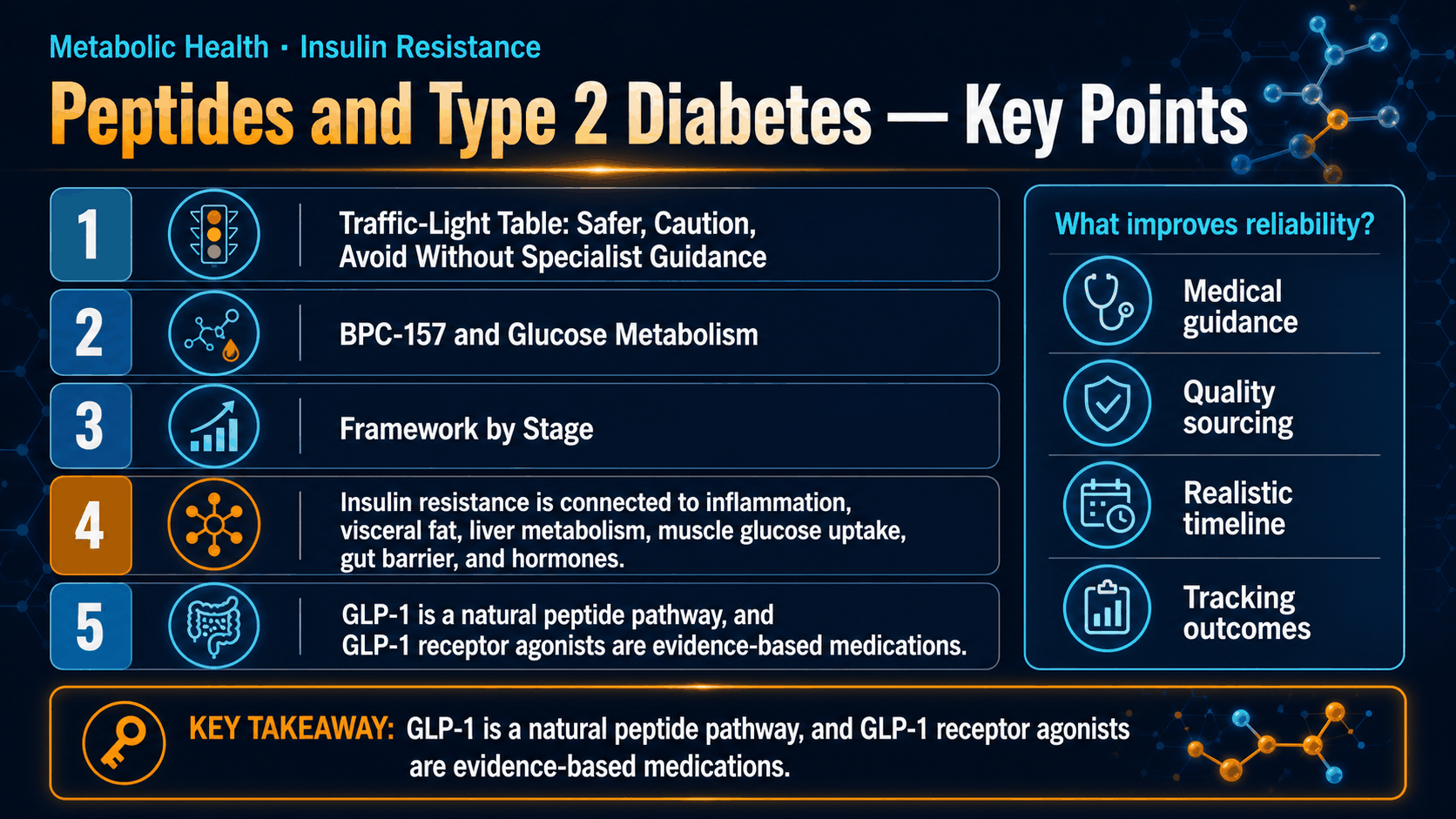
- Insulin resistance is connected to inflammation, visceral fat, liver metabolism, muscle glucose uptake, gut barrier, and hormones.
- GLP‑1 is a natural peptide pathway, and GLP‑1 receptor agonists are evidence-based medications.
- BPC‑157 is not a semaglutide substitute and not a diabetes medication.
- GH secretagogues require major caution in insulin resistance and diabetes.
- Never change diabetes medication without the treating clinician.
- Peptide discussions are adjunctive; standard care remains the foundation.