
Why Evaluation Matters
A protocol is only as useful as the system used to evaluate it.
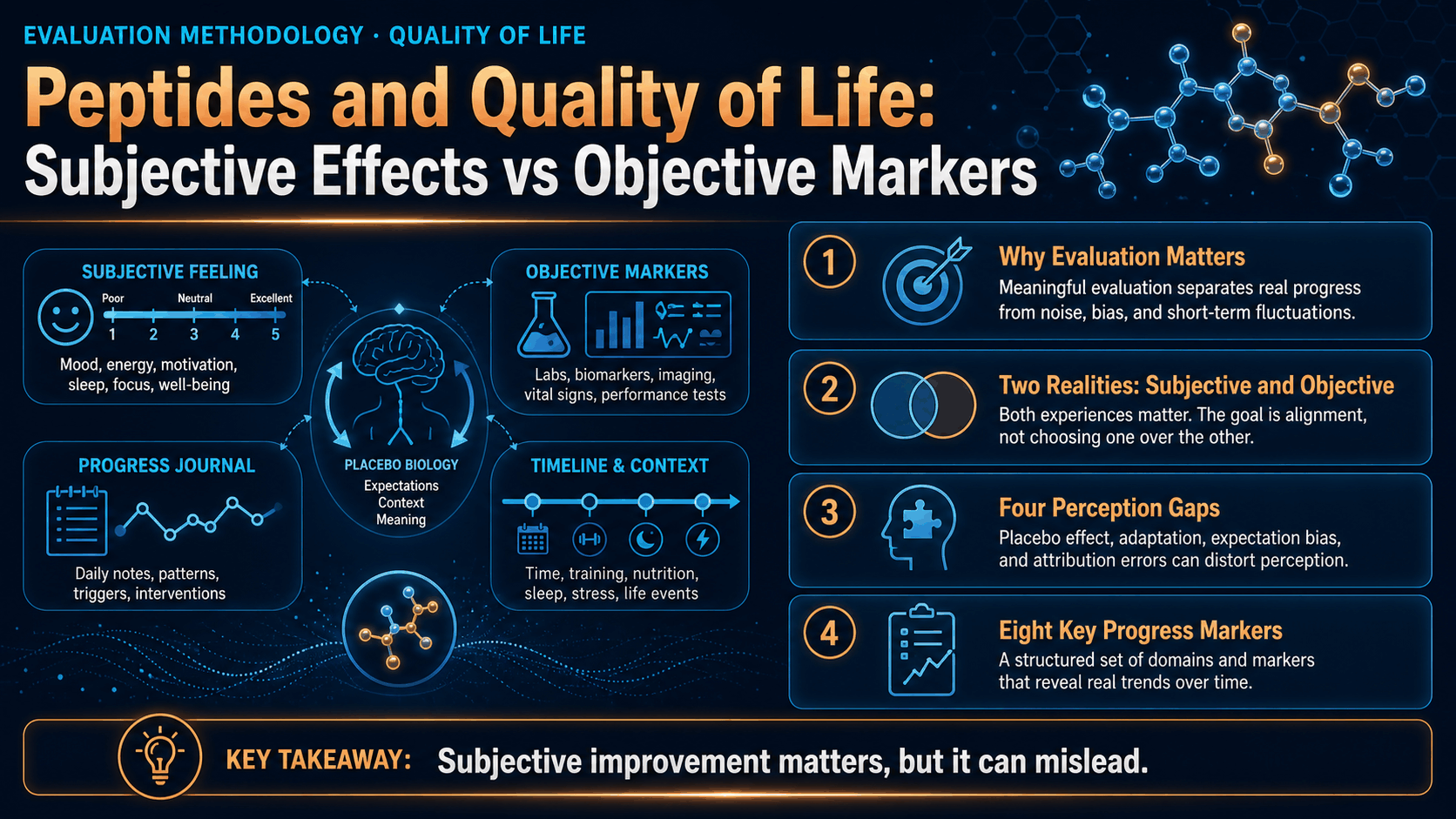
Without tracking, it is easy to confuse expectation, lifestyle changes, natural fluctuation, and true biochemical effects. With tracking, each course becomes data: what changed, what did not, what improved, what worsened, and what should be adjusted.
Two Realities: Subjective and Objective
What you feel
- Energy and alertness.
- Sleep quality and sense of recovery.
- Cognitive clarity and focus.
- Mood, anxiety, motivation.
- Joint comfort, skin appearance, libido.
What can be measured
- IGF-1 for GH-axis context.
- hs-CRP for systemic inflammation.
- Morning cortisol and DHEA-S.
- Free testosterone, SHBG, thyroid or immune markers when relevant.
- Sleep tracker trends and body composition.
Neither side is enough alone. Subjective data captures what labs may miss. Objective data catches what feelings may misread.
 Sponsored / AffiliateTeleWellnessMD · Telehealth wellness consultations and health optimization support
Four Perception Gaps
Feeling better, labs unchanged
Possible explanations include placebo response, benefits not captured by chosen markers, lifestyle confounders, or testing too early.
Labs improved, no subjective difference
Some biochemical improvements reduce long-term risk without producing immediate sensations. Inflammation and vascular markers often work this way.
Feeling worse, labs normal
This may reflect sleep disruption, overstimulation, stress, expectations, dose timing, or an early adaptation period. Persistent symptoms deserve review.
Feeling worse, labs worsened
This is a stop-and-reassess signal. Pause the protocol and investigate with medical guidance when safety markers move in the wrong direction.
Eight Key Progress Markers
Exact testing should be individualized. The point is not to order every marker, but to match markers to the goal of the protocol.
4–6 weeks
3 months
8 weeks
3 months
3 months
Yearly
8 weeks
If symptomatic
Weekly average
Before/after
After course
Periodic
8 weeks
Yearly
2–3 months
3 months
 Sponsored / AffiliatePeptide ReGenesis · Peptide education, protocols, and wellness-focused resources
The Placebo Effect Is Biology, Not a Lie
The placebo effect is real. Expectation can affect dopamine, endogenous opioid signaling, attention, pain perception, motivation, and subjective wellbeing.
That does not make the experience fake. It means subjective improvement can be biologically real even if the assumed mechanism is wrong. Objective markers help separate expectation-driven effects from measurable biochemical changes.
Minimal Protocol Journal
Day 0
- Relevant labs for the goal.
- 1–10 scores for energy, sleep, cognition, mood, and target symptom.
- Weight and body composition if relevant.
Weekly
- Date and schedule changes.
- Same subjective scores each week.
- Side effects or unusual reactions.
- Stress, training, sleep, illness, travel, alcohol, and diet changes.
End of course
- Repeat relevant markers at the correct timing.
- Compare against baseline.
- Review both symptoms and safety markers.
Decision
- Continue only if benefit outweighs risk.
- Pause if safety markers worsen.
- Reassess dose, quality, timing, and goals with a professional.
Two Common Myths
Myth: If I feel better, the protocol works and labs are unnecessary.
Fact: Subjective improvement is important, but it is not enough. Placebo effects are real, and some unwanted biochemical changes may not be felt. Control markers are a safety tool.
Myth: If labs did not change, the peptide does not work.
Fact: It depends on the marker and timing. Some markers need weeks or months to shift. Some benefits are not captured by a standard lab panel.
Frequently Asked Questions
Which matters more: feelings or labs?
Both matter. Feelings show quality of life; labs help identify measurable biologic changes and safety concerns.
Can placebo still be useful?
Yes. A placebo-driven improvement can still feel real, but it should not be mistaken for proof that a peptide changed a specific biomarker.
Should everyone test all eight markers?
No. Marker choice should match the protocol goal, symptoms, risk factors, and clinician guidance.
How often should I track subjective effects?
Weekly tracking is often more useful than daily over-analysis. Use the same 1–10 categories each time.
What is the biggest red flag?
Feeling worse plus worsening safety markers. That combination requires stopping and reassessing.
Key Takeaways
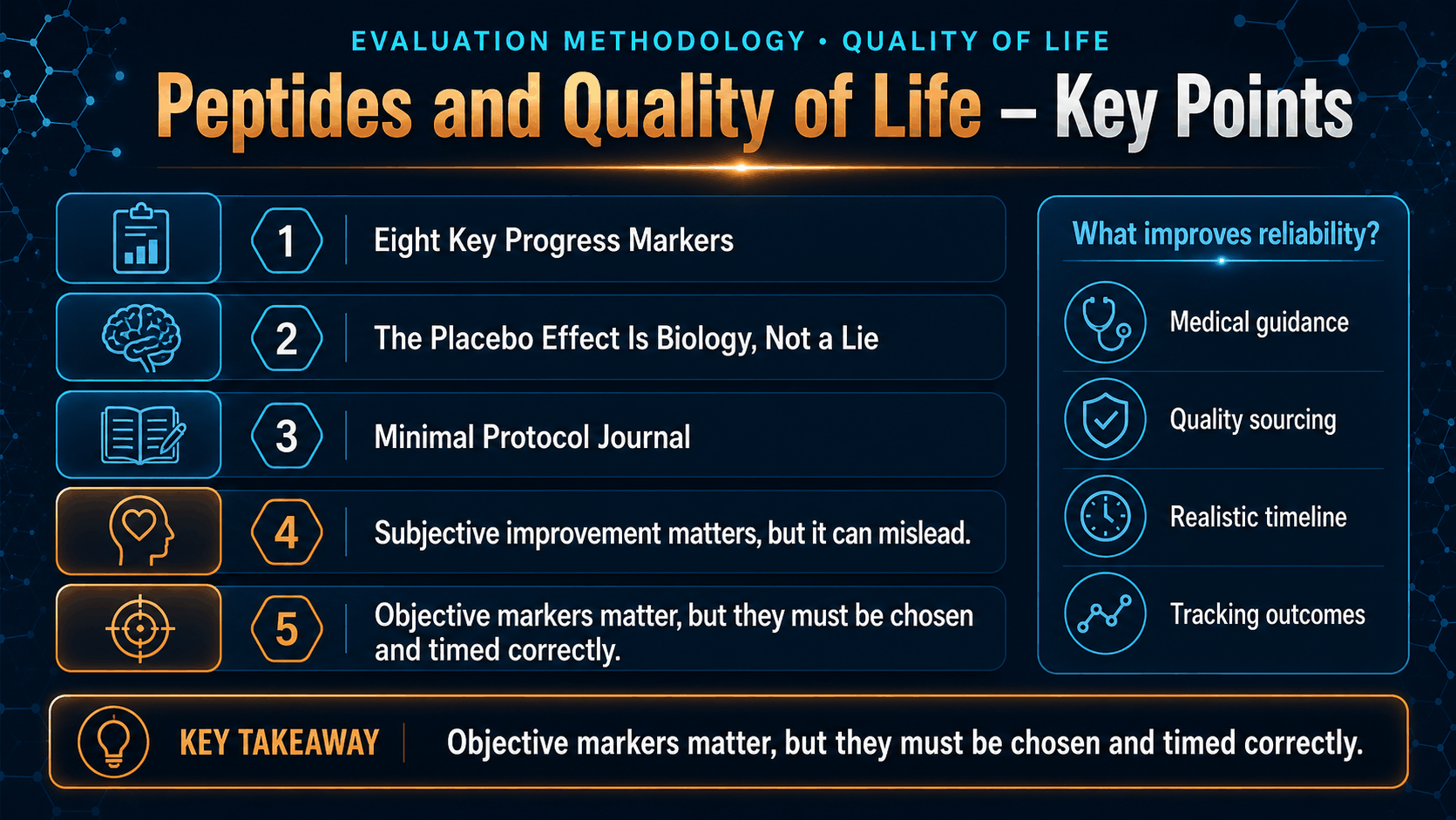
- Subjective improvement matters, but it can mislead.
- Objective markers matter, but they must be chosen and timed correctly.
- Placebo is real biology, not “fake improvement.”
- IGF-1, hs-CRP, hormones, cortisol/DHEA-S, sleep trends, BDNF, gut markers, and body composition can each serve different goals.
- A minimal protocol journal turns vague impressions into useful data.
- Worsening safety markers should trigger a pause and review.