
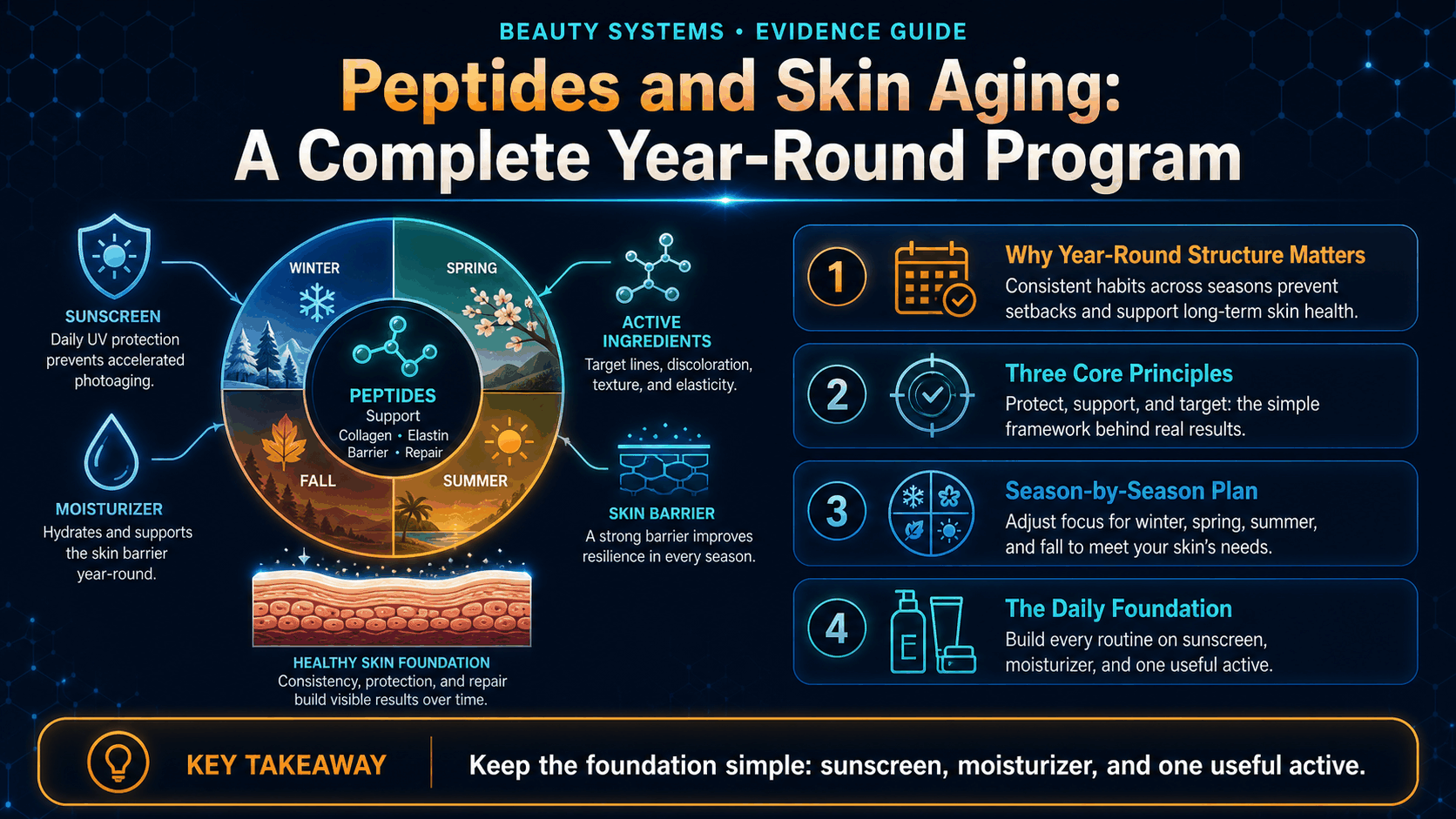
Why Year-Round Structure Matters
Skin care works best when the routine is consistent, tolerable, and adjusted to real conditions.
A product used intensely for a few weeks cannot replace daily sun protection, barrier care, and a routine that the skin can tolerate. Peptides may help selected cosmetic goals, but they are not the foundation of anti-aging care.
Three Core Principles
1. Foundation Before “Courses”
Sunscreen, gentle cleansing, moisturizer, and consistent use of well-tolerated actives matter more than adding multiple experimental products.
2. Adjust to Environment
UV exposure, humidity, wind, indoor heating, air conditioning, travel, and pollution can change what the skin needs and tolerates.
3. Avoid Rigid Seasonal Rules
Retinoids may be used year-round with proper sun protection. Epitalon and thymalin do not have validated seasonal cosmetic schedules.
 Sponsored / AffiliateMito Red Light · Red light therapy devices for recovery and wellness routines
Season-by-Season Plan
Reset and Rebalance
- Review sunscreen expiration, amount, and application habits.
- Repair winter dryness with barrier-support moisturizers.
- Introduce niacinamide or vitamin C one product at a time.
- Continue a peptide serum if the formula fits and does not irritate.
- Plan procedures around future sun exposure and travel.
UV Defense and Lower Irritation
- Use broad-spectrum SPF 30+ and reapply during outdoor exposure.
- Add hats, shade, sunglasses, and protective clothing.
- Retinoids do not always require a full pause, but reduce frequency if irritation rises.
- Use lightweight hydration in heat and humidity.
- Avoid aggressive home procedures before sun exposure or vacations.
Rebuild Consistency
- Return to a consistent retinoid schedule if appropriate.
- Assess summer pigmentation before adding multiple brightening products.
- Consider professional procedures only with realistic aftercare.
- Shift toward richer moisturizers as humidity drops.
- Continue daily sun protection despite shorter days.
Barrier Protection
- Increase ceramides, humectants, and occlusives when needed.
- Monitor irritation from retinoids and indoor heating.
- Use peptide or barrier products on recovery nights if helpful.
- Continue sunscreen during meaningful daylight exposure, snow, travel, or high altitude.
- Simplify if eczema, burning, or dermatitis appears.
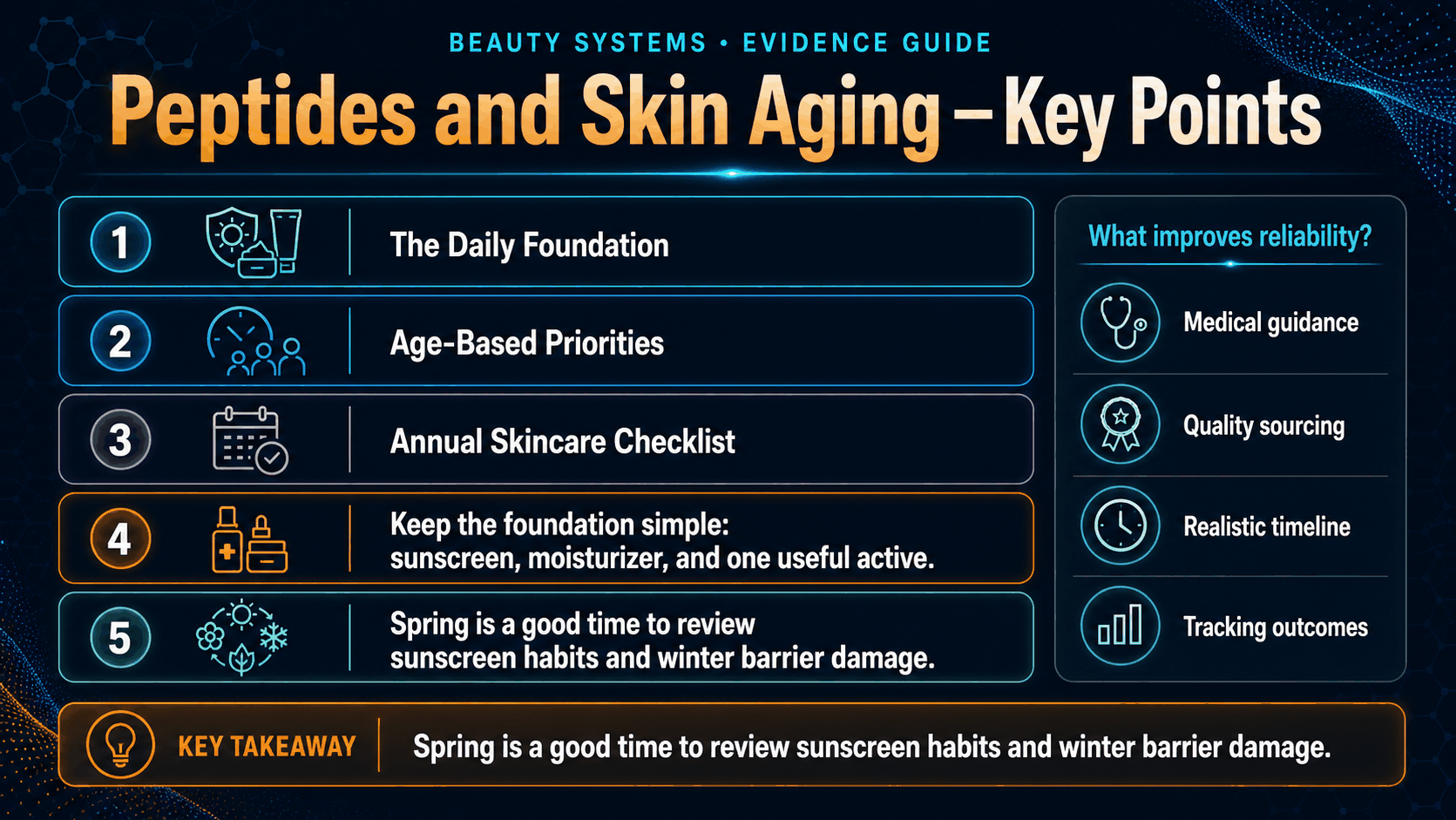
The Daily Foundation
Morning
- Gentle cleansing when needed.
- Optional antioxidant, niacinamide, or peptide serum.
- Moisturizer matched to skin type.
- Broad-spectrum SPF 30+ when daylight exposure is expected.
Evening
- Cleanse thoroughly, especially after makeup or water-resistant sunscreen.
- Use one main active: retinoid, pigment treatment, acne treatment, or peptide serum.
- Moisturizer and barrier support.
Lifestyle
- Adequate protein, fruits, vegetables, sleep, and exercise.
- Smoking avoidance and reduced intentional tanning.
- Supplements only when useful for diet or medical context.
Priority Order
- Sun protection and barrier care first.
- Retinoid or diagnosis-specific active when appropriate.
- Optional peptides such as GHK-Cu or Matrixyl-type formulas.
- Procedures only when benefits justify risk and cost.
 Sponsored / AffiliatePeptide ReGenesis · Peptide education, protocols, and wellness-focused resources
Age-Based Priorities
Niacinamide
Low-frequency retinoid
Vitamin C
Optional peptide
Retinoid if tolerated
Procedure consult
Moisturizer
Dermatology review
Annual Skincare Checklist
Spring
- Check sunscreen expiration and application habits.
- Review winter dryness and barrier damage.
- Introduce brightening products one at a time.
- Plan procedures around future sun exposure.
- Photograph changing lesions for comparison.
Summer
- Use sunscreen and reapply outdoors.
- Use hats, shade, and protective clothing.
- Reduce irritating actives if the barrier becomes inflamed.
- Avoid aggressive home procedures before sun exposure.
- Treat heat rash, acne, or pigmentation according to diagnosis.
Autumn
- Return to a consistent retinoid schedule if appropriate.
- Assess persistent summer pigmentation.
- Consider professional procedures with proper aftercare.
- Switch to richer moisturizer as humidity drops.
- Continue daily sun protection.
Winter
- Increase ceramides, humectants, or occlusives when needed.
- Monitor irritation from retinoids and indoor heating.
- Use peptide or barrier products on recovery nights.
- Continue sunscreen during meaningful daylight exposure.
- Simplify if eczema or dermatitis develops.
Two Common Myths
Myth: I work indoors, so I never need sunscreen.
Fact: Sun exposure depends on windows, commute, season, latitude, outdoor time, and skin goals. UVA can pass through ordinary window glass, although actual exposure varies. Sunscreen is most important when meaningful daylight exposure is expected.
Myth: Winter is automatically the best season for every strong active and procedure.
Fact: Lower UV exposure may simplify aftercare, but cold air and indoor heating can worsen dryness and dermatitis. Retinoids and procedures should be adjusted to skin tolerance, sun exposure, diagnosis, and professional guidance—not the calendar alone.
Frequently Asked Questions
Should retinoids be stopped every summer?
Not always. Many people use retinoids year-round with careful sun protection, but frequency may need to be reduced when irritation or sun exposure increases.
Are peptides required for anti-aging skincare?
No. Peptides can be useful optional additions, but sunscreen, moisturizer, and evidence-based actives are the foundation.
Is winter the best time for procedures?
Often it is easier because UV exposure may be lower, but skin dryness and aftercare still matter. Professional guidance is important.
Can Epitalon or thymalin be used as seasonal skincare courses?
There is no validated seasonal cosmetic schedule for these peptides. They should not replace standard skincare or medical advice.
What is the simplest effective routine?
Gentle cleansing, moisturizer, sun protection, and one useful active that the skin tolerates consistently.
Key Takeaways
- Keep the foundation simple: sunscreen, moisturizer, and one useful active.
- Spring is a good time to review sunscreen habits and winter barrier damage.
- Summer routines should prioritize UV protection and reduce irritation when needed.
- Autumn is useful for rebuilding consistency and assessing pigmentation.
- Winter often requires stronger barrier support and simplification if dryness develops.
- Peptides are optional additions, not the foundation of the routine.
- Seasonal adjustment should follow climate and tolerance, not rigid peptide courses.