Why Women’s Health Needs Context
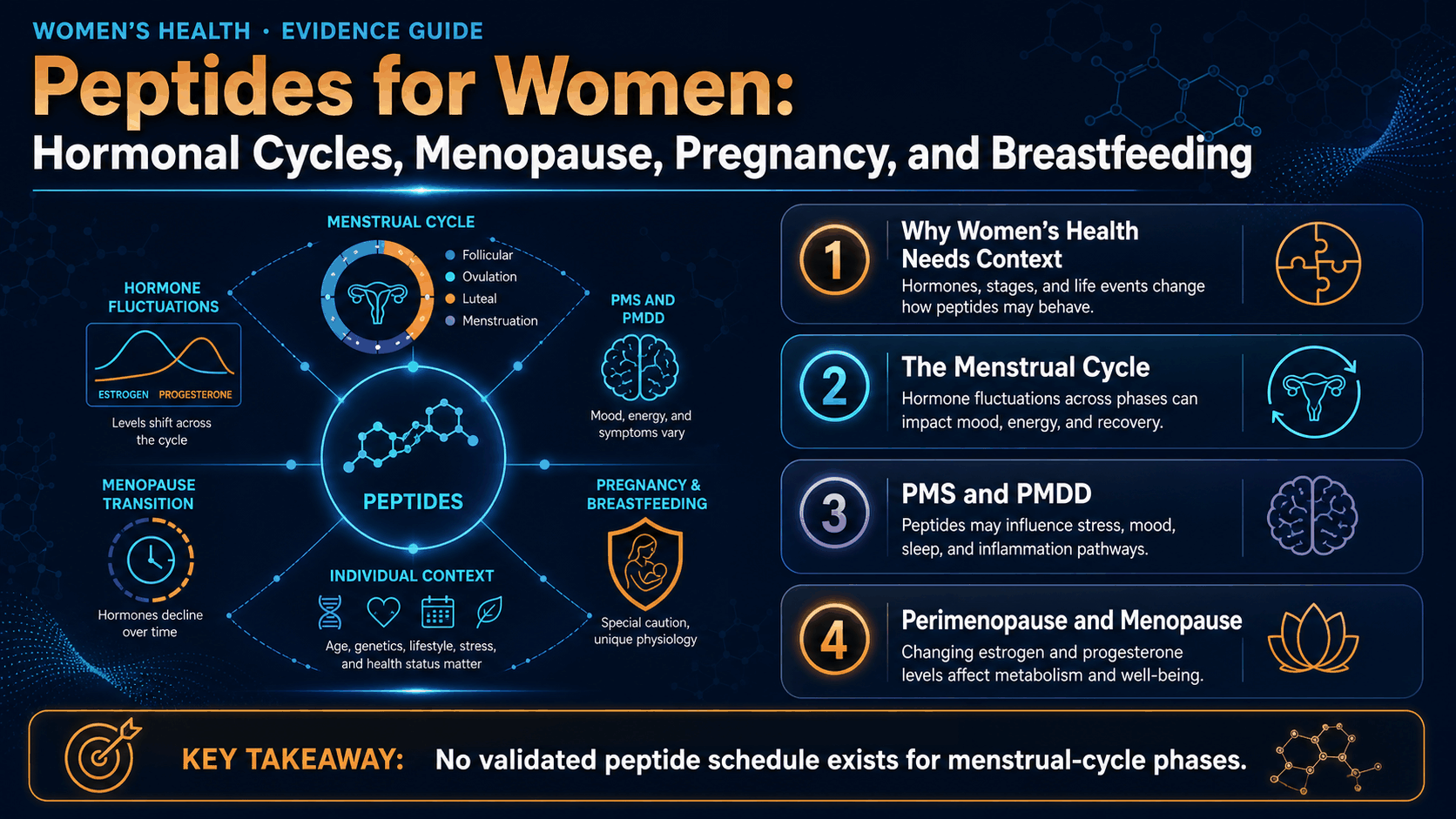
A menstrual cycle is not a peptide schedule, and menopause is not a reason to start an experimental stack.
Hormonal changes can affect sleep, body temperature, fluid balance, mood, appetite, pain, skin, bone, and cardiovascular risk. But most research peptides have not been tested adequately across the menstrual cycle, pregnancy, breastfeeding, or menopause.
The Menstrual Cycle
Approximately Days 1–5
Estrogen and progesterone are relatively low. Priorities include pain evaluation, hydration, sleep, nutrition, and evidence-based menstrual-pain treatment.
After Menstruation to Ovulation
Estrogen generally rises. Training tolerance may improve for some women, but this does not establish a peptide-cycling protocol.
Mid-Cycle
An LH surge and estrogen peak occur. There is no proven “best phase” for peptide efficacy, and pregnancy possibility must be considered.
After Ovulation
Progesterone rises and later falls. PMS symptoms may increase, so symptom tracking and established care matter more than adding new experimental compounds.
 Sponsored / AffiliateUlta Lab Tests · Lab testing for hormones, inflammation, and wellness
PMS and PMDD
PMS may include mood changes, breast tenderness, bloating, headaches, sleep disturbance, and food cravings. PMDD is more severe and can cause marked depression, anxiety, irritability, and functional impairment.
Perimenopause and Menopause
Hot flashes, night sweats, sleep disruption, vaginal and urinary symptoms, mood changes, bone loss, and changes in body composition and skin can all occur.
- Epitalon: not proven to normalize LH or FSH, treat menopausal symptoms, or replace hormone therapy.
- Oral collagen: may modestly support skin hydration or elasticity, but it is optional rather than mandatory.
- GH secretagogues: not approved menopause treatments and may affect glucose, edema, nerve symptoms, IGF-1, and cancer-risk review.
- Menopausal hormone therapy: may be appropriate for selected women after individualized risk assessment.
 Sponsored / AffiliateApollo Peptide Sciences · Research-focused peptide science and molecular data
Pregnancy and Breastfeeding
Most research peptides lack adequate reproductive, fetal, pregnancy, and breastfeeding safety data. The default approach should be avoidance unless a specialist has approved a medically necessary treatment.
Priorities Across Four Life Stages
Reproductive Years
Track cycle changes, evaluate persistent pain or irregular bleeding, and avoid unapproved hormone-active compounds when pregnancy is possible.
Perimenopause
Evaluate irregular bleeding, hot flashes, heavy periods, mood symptoms, sleep changes, cardiometabolic risk, and bone health.
Menopause
Focus on symptom treatment, strength, protein, bone density, cardiovascular health, and skin protection.
Postmenopause and Older Age
Prioritize vaccination, fall prevention, strength, cancer screening, medication review, cognition, and social connection.
Two Common Myths
Myth: GH secretagogues are safe for women because they are not steroids.
Fact: Different mechanism does not mean safe. They may affect glucose, fluid balance, IGF-1, menstrual symptoms, fertility planning, and anti-doping status.
Myth: After menopause, collagen support no longer works.
Fact: Skin and connective tissue remain biologically active. Sunscreen, retinoids when appropriate, adequate protein, exercise, and selected collagen or peptide products may provide modest benefits.
Frequently Asked Questions
Should peptides be synchronized with menstrual-cycle phases?
No validated evidence-based peptide schedule exists for the different phases of the cycle.
Can Selank treat PMS or PMDD?
It is not an established treatment. PMDD requires diagnosis-specific care.
Can Epitalon replace menopausal hormone therapy?
No. It has not been proven to treat menopausal symptoms or normalize reproductive hormones.
Are copper peptides safe during pregnancy?
They are not automatically proven safe. Review the exact product with an obstetric or dermatology clinician.
What matters most after menopause?
Strength, bone health, cardiovascular risk, sleep, adequate protein, symptom management, and evidence-based preventive care.
Key Takeaways
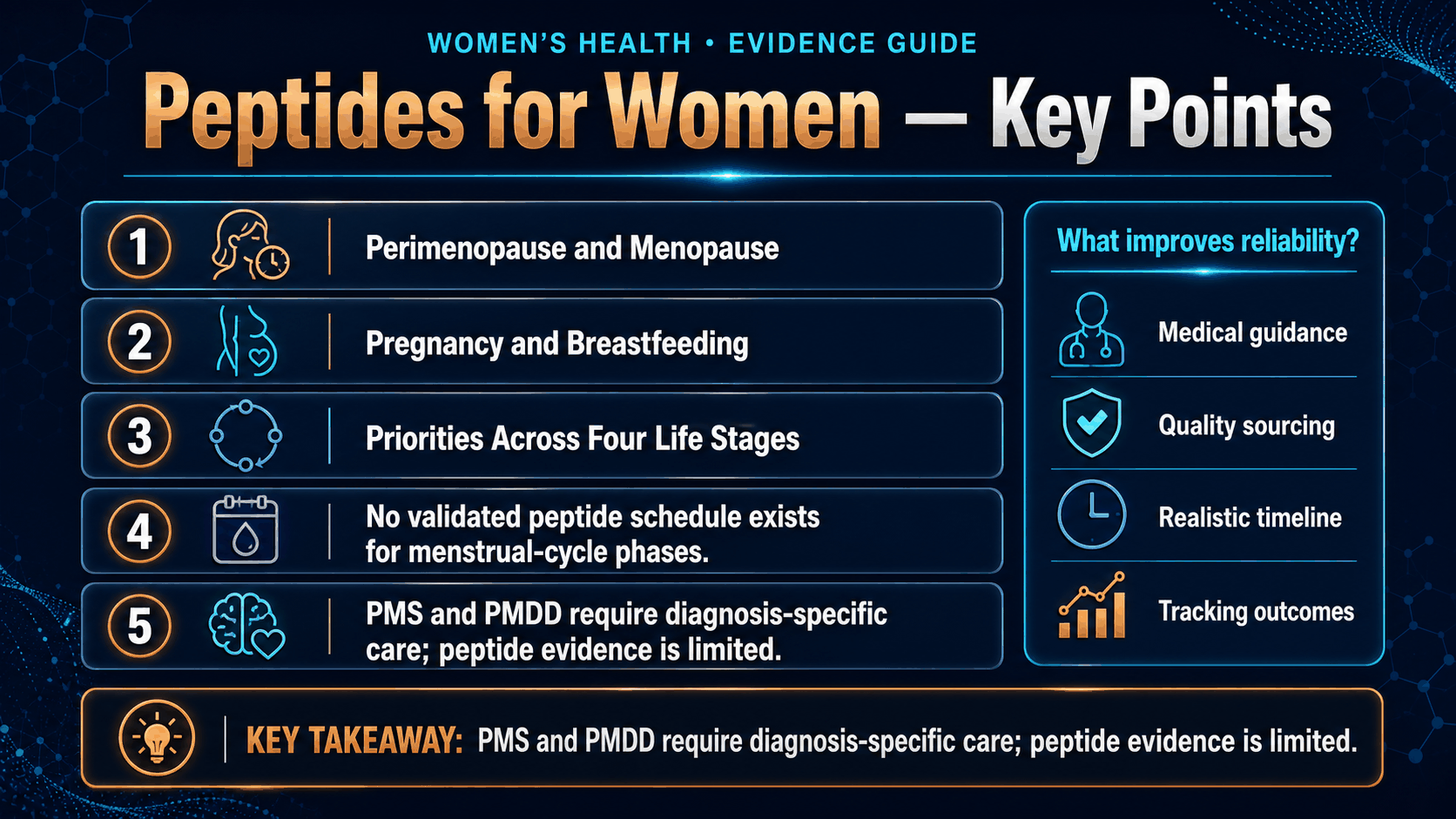
- No validated peptide schedule exists for menstrual-cycle phases.
- PMS and PMDD require diagnosis-specific care; peptide evidence is limited.
- Epitalon and GH secretagogues are not established menopause treatments.
- Most research peptides should be avoided during pregnancy and breastfeeding.
- Copper peptides are not automatically proven pregnancy-safe.
- Bone health, sleep, exercise, nutrition, and evidence-based symptom treatment come first.
- Women’s health should not be reduced to a peptide stack.