
What Makes Men’s Health Different?
The goals may be different, but the rules of evidence are the same.
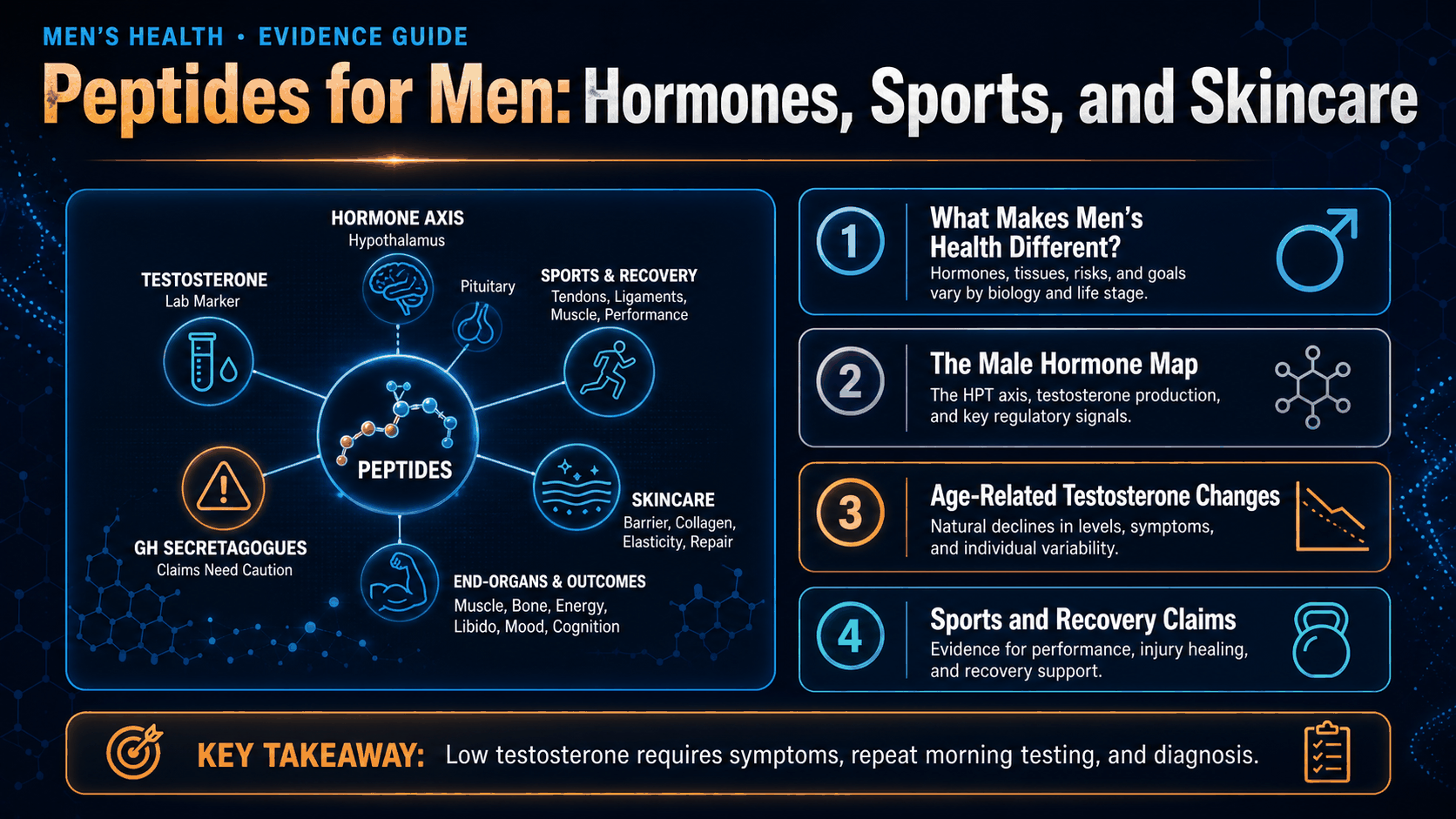
Male health discussions often involve testosterone, luteinizing hormone, SHBG, fertility, prostate health, body composition, sleep apnea, and training load. Peptides do not automatically behave differently in men, but the risk assessment and monitoring questions may be different.
The Male Hormone Map
 Sponsored / AffiliateDynamic Peptides · Research peptide catalog and product education resources
Age-Related Testosterone Changes
Low libido, fatigue, reduced strength, mood changes, infertility, or erectile dysfunction can have many causes. Peptides are not established treatments for borderline testosterone values.
- Confirm the problem: repeat morning testing when appropriate and review symptoms.
- Check related factors: LH, FSH, SHBG, prolactin, thyroid function, medications, obesity, and sleep apnea.
- Address reversible causes: sleep, body weight, resistance training, alcohol, nutrition, and medication effects.
- Use diagnosis-specific care: confirmed hypogonadism or fertility concerns require specialist management.
Sports and Recovery Claims
Muscle Gain
Training, adequate energy, protein, and sleep remain the foundation. GH secretagogues are not approved muscle-building treatments.
Fat Loss
Growth hormone affects lipolysis, but raising GH does not bypass energy balance and may worsen glucose control or cause edema.
Injury Recovery
BPC-157 and TB-500 are promoted for tendon, muscle, and joint recovery, but human evidence remains insufficient.
Overtraining
Persistent fatigue and falling performance require evaluation for low energy availability, anemia, thyroid disease, depression, infection, or sleep disorders.
 Sponsored / AffiliateQuest Health · Personal lab testing and health marker tracking
Men’s Skincare: Simple and Evidence-Based
Morning
Use a gentle cleanser, moisturizer when needed, and broad-spectrum sunscreen. A peptide serum is optional.
After Shaving
Freshly shaved skin may be more irritated. Choose fragrance-free soothing products rather than strong actives.
Fine Lines
Retinoids have the strongest evidence for photoaging. GHK-Cu and other peptides may be useful adjuncts.
Acne Scars
Deep scars usually require dermatologist-directed procedures such as professional microneedling, lasers, subcision, or chemical reconstruction.
Age-Based Priorities
Ages 25–35
Focus on training technique, injury prevention, adequate calories and protein, sleep, and evidence-based acne or skin care.
Ages 35–50
Prioritize body composition, metabolic health, blood pressure, lipids, glucose, sleep apnea screening, and testosterone testing only when symptoms justify it.
Ages 50+
Prioritize strength, balance, cardiometabolic risk, bone health, urinary symptoms, prostate assessment when indicated, vaccination, and skin-cancer surveillance.
Two Common Myths
Myth: GH secretagogues are basically safer anabolic steroids.
Fact: They are different classes, but “different” does not mean safe. They may affect glucose, fluid retention, nerve symptoms, IGF-1, and anti-doping status.
Myth: Men do not need skincare.
Fact: Men develop acne, shaving irritation, skin cancer, and photoaging. A simple routine with cleanser, moisturizer, and sunscreen has real value.
Frequently Asked Questions
Can peptides raise testosterone?
No peptide has an established indication for routine testosterone restoration in men.
Are GH secretagogues useful for muscle gain?
They are unapproved for routine muscle building and may carry metabolic and anti-doping risks.
Can BPC-157 or TB-500 speed injury recovery?
Human evidence remains insufficient, while diagnosis and rehabilitation have stronger support.
What skincare routine is enough for most men?
Gentle cleansing, moisturizer when needed, and daily broad-spectrum sunscreen.
When should testosterone be tested?
When symptoms and clinical context justify it, usually with repeat morning testing rather than one isolated result.
Key Takeaways
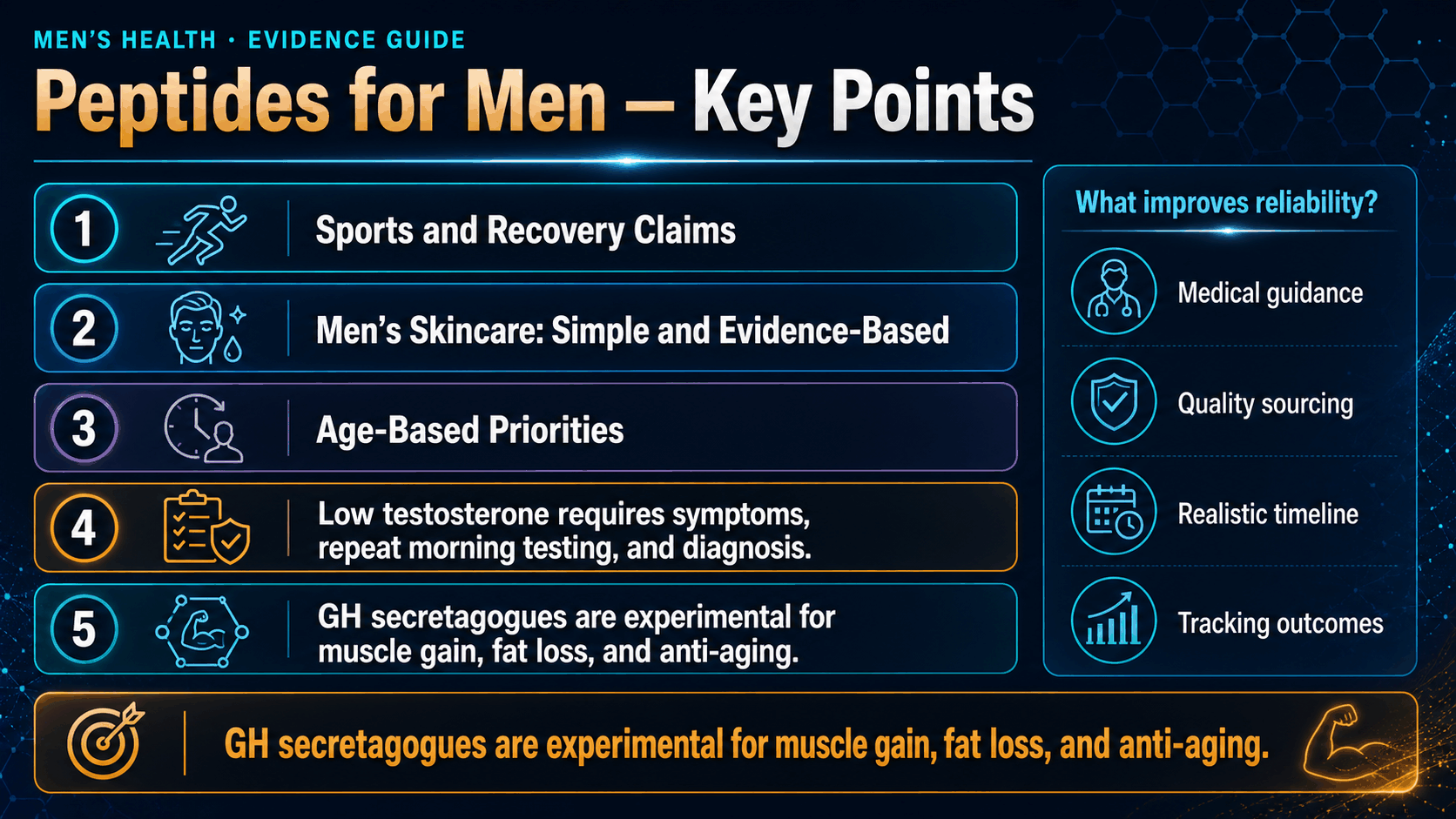
- Low testosterone requires symptoms, repeat morning testing, and diagnosis.
- GH secretagogues are experimental for muscle gain, fat loss, and anti-aging.
- BPC-157 and TB-500 are not established injury treatments.
- Stress, sleep apnea, obesity, and medications may influence male hormones.
- Men’s skincare can remain simple: cleanse, moisturize when needed, and use sunscreen.
- Peptides may be optional additions—not replacements for established care.
- Competitive athletes must consider anti-doping rules.