Why Diagnosis Comes First
Men’s sexual health is often an early signal of overall health.
Erectile dysfunction may reflect vascular disease. Low libido may reflect testosterone, prolactin, thyroid disease, medications, depression, sleep apnea, relationship stress, alcohol, or chronic illness. Prostate symptoms may come from benign enlargement, infection, inflammation, pelvic-floor dysfunction, or cancer risk.
This Is Not Peptide Treatment Advice
Peptides are not standard ED care
BPC‑157 and similar compounds are not approved erectile-dysfunction medications and do not replace diagnosis, cardiovascular evaluation, or clinician-guided therapy.
No peptide treatment for BPH
Benign prostatic hyperplasia, prostatitis, and PSA changes have established diagnostic pathways. Peptide stacks should not delay urology review.
Low libido is multifactorial
Testosterone matters, but libido can also involve sleep, mood, thyroid function, prolactin, medications, metabolic health, alcohol, and relationships.
Prostate Health: Inflammation, BPH, and PSA
Prostate symptoms can overlap. Weak stream, urgency, nocturia, incomplete emptying, pelvic pain, fever, urinary retention, or blood in urine deserve medical context.
Evidence is limited
Chronic prostatitis or chronic pelvic pain syndrome can involve pain, urinary symptoms, sexual symptoms, and reduced quality of life. BPC‑157 is promoted online for inflammation, but human evidence for prostatitis is not established.
Doctor-led care
Benign prostatic hyperplasia may cause weak stream, urgency, nocturia, incomplete emptying, and urinary frequency. Standard evaluation and evidence-based therapies should come first.
Monitoring matters
PSA must be interpreted clinically. A rising PSA, abnormal exam, family history, urinary red flags, or unexplained bone pain requires evaluation.
Use caution
Compounds that raise GH or IGF‑1 should be approached cautiously in men with prostate concerns and only within clinician-supervised care.
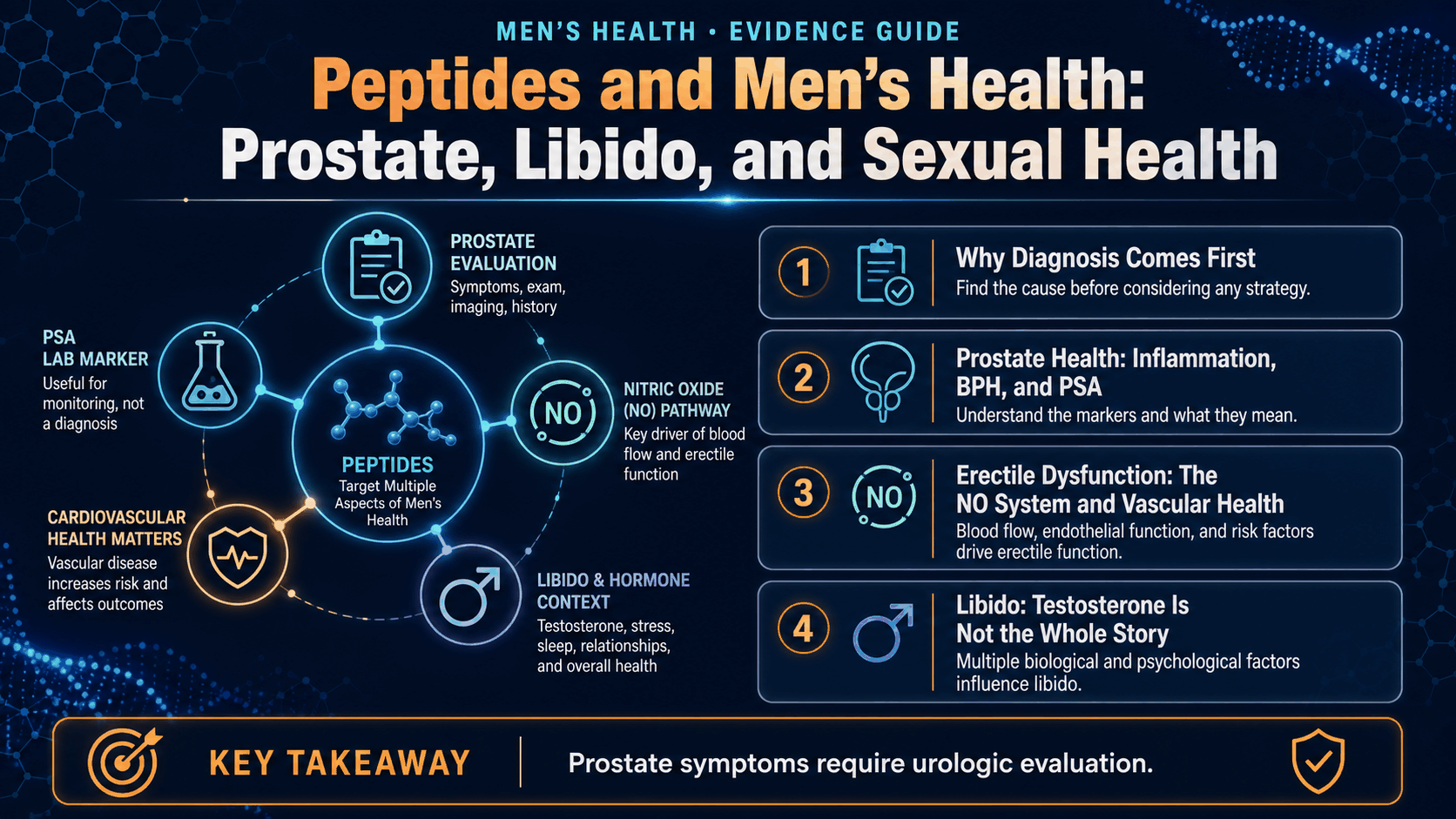
Erectile Dysfunction: NO System and Vascular Health
Nitric oxide helps relax smooth muscle in the corpus cavernosum, allowing blood flow and erection. Vascular disease, diabetes, smoking, hypertension, dyslipidemia, medication effects, nerve injury, anxiety, depression, and low testosterone may all contribute to ED.
ED can be a vascular clue
ED may appear before obvious cardiovascular disease because small blood vessels can show dysfunction early.
Testosterone is one part
Morning total testosterone, free testosterone, and SHBG may be useful when symptoms and clinical context justify testing.
Do not stop meds alone
Antidepressants, blood pressure medicines, opioids, alcohol, and other factors can contribute. Medication changes belong with a clinician.
Libido: Testosterone Is Not the Whole Story
Libido is multifactorial. Testosterone matters, but dopamine, prolactin, thyroid function, sleep, stress, depression, relationship factors, medications, alcohol, and chronic illness can all change sexual desire.
Some growth-hormone-releasing peptides may affect prolactin more than others. Unexplained libido changes during experimental peptide use should prompt lab evaluation and medical review.
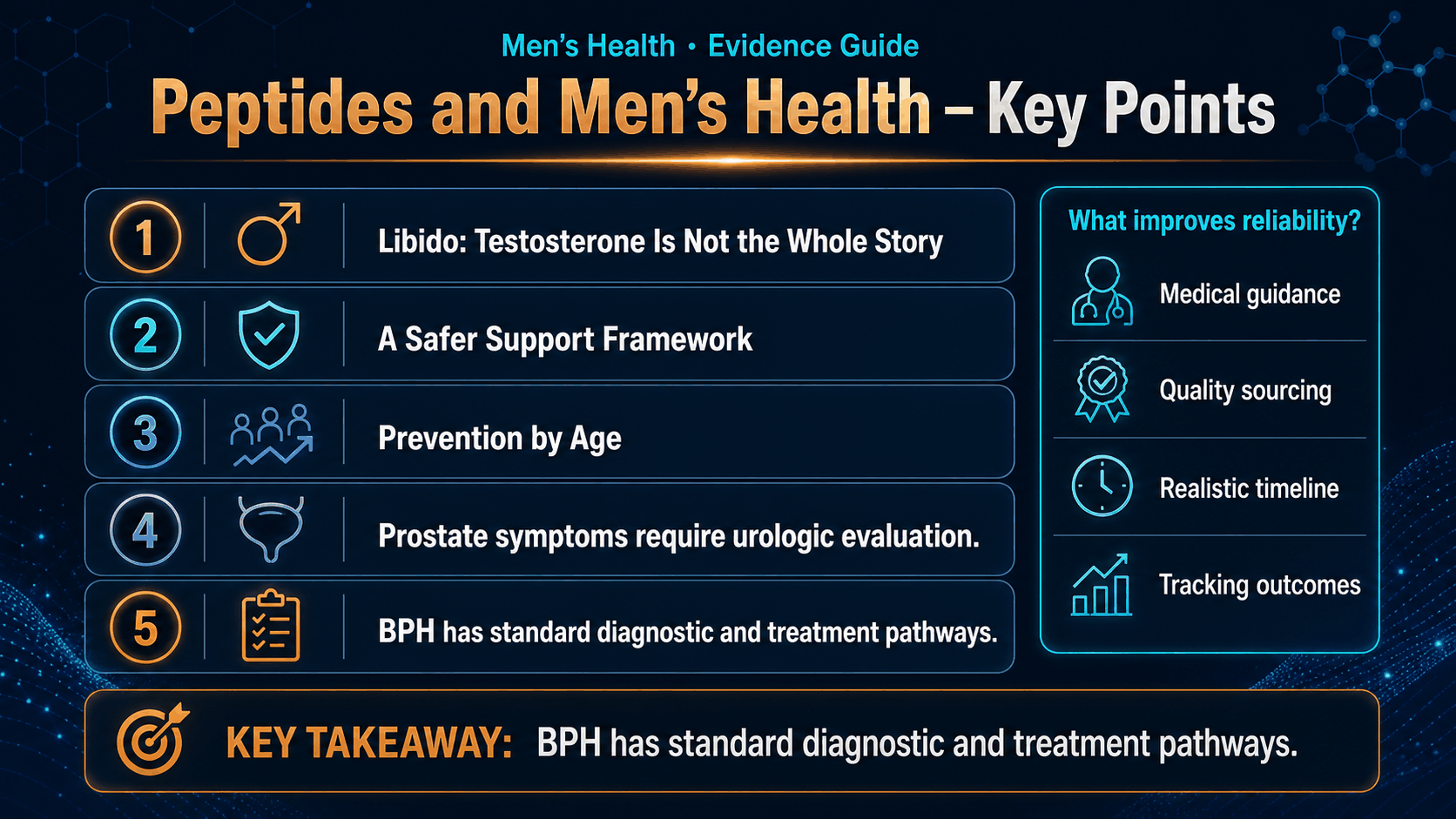
Useful Checklist to Discuss With a Clinician
When to Seek Prompt Care
Two Common Myths
“BPC‑157 treats ED like Viagra, but without side effects.”
Fact: BPC‑157 is not an approved ED medication and does not have the same acute, well-characterized clinical effect as PDE‑5 inhibitors.
“If testosterone is normal, libido problems are not hormonal.”
Fact: “Normal” testosterone ranges are broad, and libido can also involve free testosterone, SHBG, prolactin, thyroid disease, estradiol, depression, sleep, medications, alcohol, and chronic stress.
Frequently Asked Questions
Can peptides treat prostatitis?
No peptide is established as a prostatitis treatment. Chronic pelvic pain and prostate symptoms require urologic evaluation.
Can BPC‑157 treat erectile dysfunction?
No. It is not an approved ED medication and does not replace PDE‑5 inhibitors, cardiovascular evaluation, or medical assessment.
Why does ED need cardiovascular evaluation?
ED can appear before clinically obvious cardiovascular disease because small blood vessels may show vascular dysfunction early.
What labs may matter for low libido?
Total and free testosterone, SHBG, LH/FSH, prolactin, thyroid function, glucose/A1c, lipids, blood pressure, and medication review may be relevant depending on symptoms.
Key Takeaways
- Prostate symptoms require medical evaluation, not peptide experiments.
- ED can be an early cardiovascular warning sign.
- Low libido can involve hormones, sleep, mood, medications, alcohol, relationships, and chronic illness.
- BPC‑157 is not an established ED or prostatitis treatment.
- PSA, cardiovascular risk, and hormone testing must be interpreted clinically.
- Do not use unregulated peptide stacks to delay care.
References and Further Reading
These sources are provided to make the page more useful and transparent. They do not turn this article into medical advice.
- NIDDK — Symptoms & Causes of Erectile Dysfunction
- NIDDK — Diagnosis of Erectile Dysfunction
- NIDDK — Treatment for Erectile Dysfunction
- NIDDK — Enlarged Prostate / Benign Prostatic Hyperplasia
- NIDDK — Prostatitis: Inflammation of the Prostate
- MedlinePlus — Prostate-Specific Antigen (PSA) Test
- MedlinePlus — Testosterone Levels Test
- MedlinePlus — Erectile Dysfunction
Sponsored Resources
Some links may be affiliate links. They do not influence the educational content, safety framing, or references on this page.
 Sponsored / AffiliateiHerb · Supplements, wellness products, and daily health essentials
 Sponsored / AffiliatePeptide ReGenesis · Peptide education and wellness-focused resources