
What Is Epitalon?
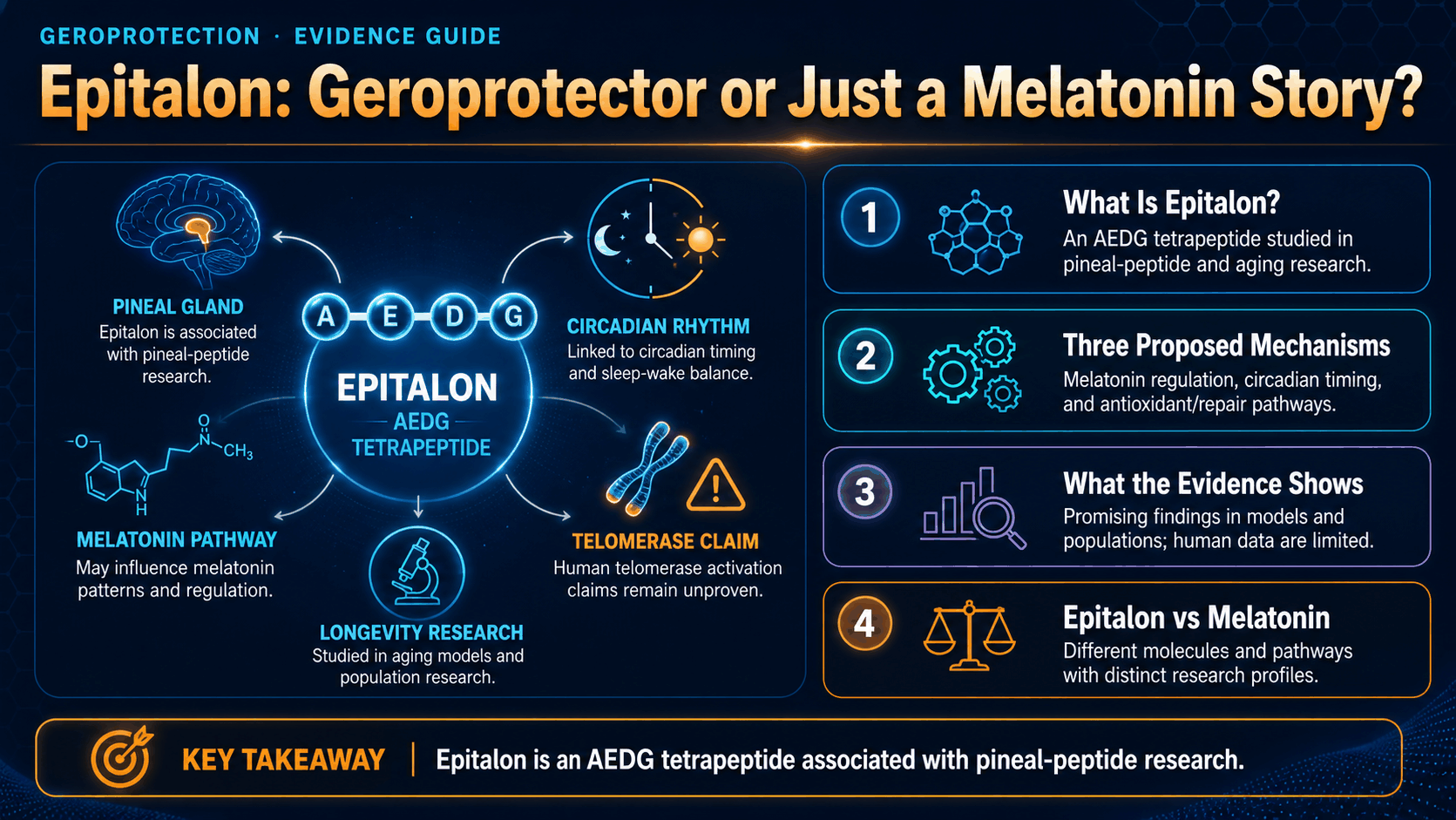
Epitalon is a synthetic AEDG tetrapeptide associated with research on pineal peptides, circadian rhythm, and aging.
It was developed within the Khavinson peptide research program in St. Petersburg. Its best-known claims involve melatonin regulation, telomerase, telomeres, and longevity—but those claims do not all have the same level of evidence.
Three Proposed Mechanisms
Pineal and Melatonin Signaling
Regional clinical observations and animal studies suggest possible effects on melatonin rhythm and circadian regulation. Independent randomized human evidence remains limited.
Telomerase and Telomeres
Cell studies have reported telomerase-related effects and telomere changes. Strong clinical evidence in living humans is lacking.
Oxidative-Stress and Aging Pathways
Melatonin-related and other preclinical pathways may influence oxidative stress, but systemic rejuvenation and cancer prevention are not established.
 Sponsored / AffiliateiHerb · Supplements, wellness products, and daily health essentials
What the Evidence Shows
Epitalon vs Melatonin
Epitalon
- StatusExperimental peptide
- Main claimPineal and circadian modulation
- TelomerasePreclinical claim
- Human evidenceLimited
- Quality controlVariable
- CostHigher
Melatonin
- StatusEstablished hormone / supplement
- Main roleCircadian timing signal
- Best-supported usesSelected circadian disorders
- Human evidenceMuch larger
- Key issueTiming, dose, and product quality
- CostLow
 Sponsored / AffiliateMito Red Light · Red light therapy devices for recovery and wellness routines
A Safer Clinical Framework
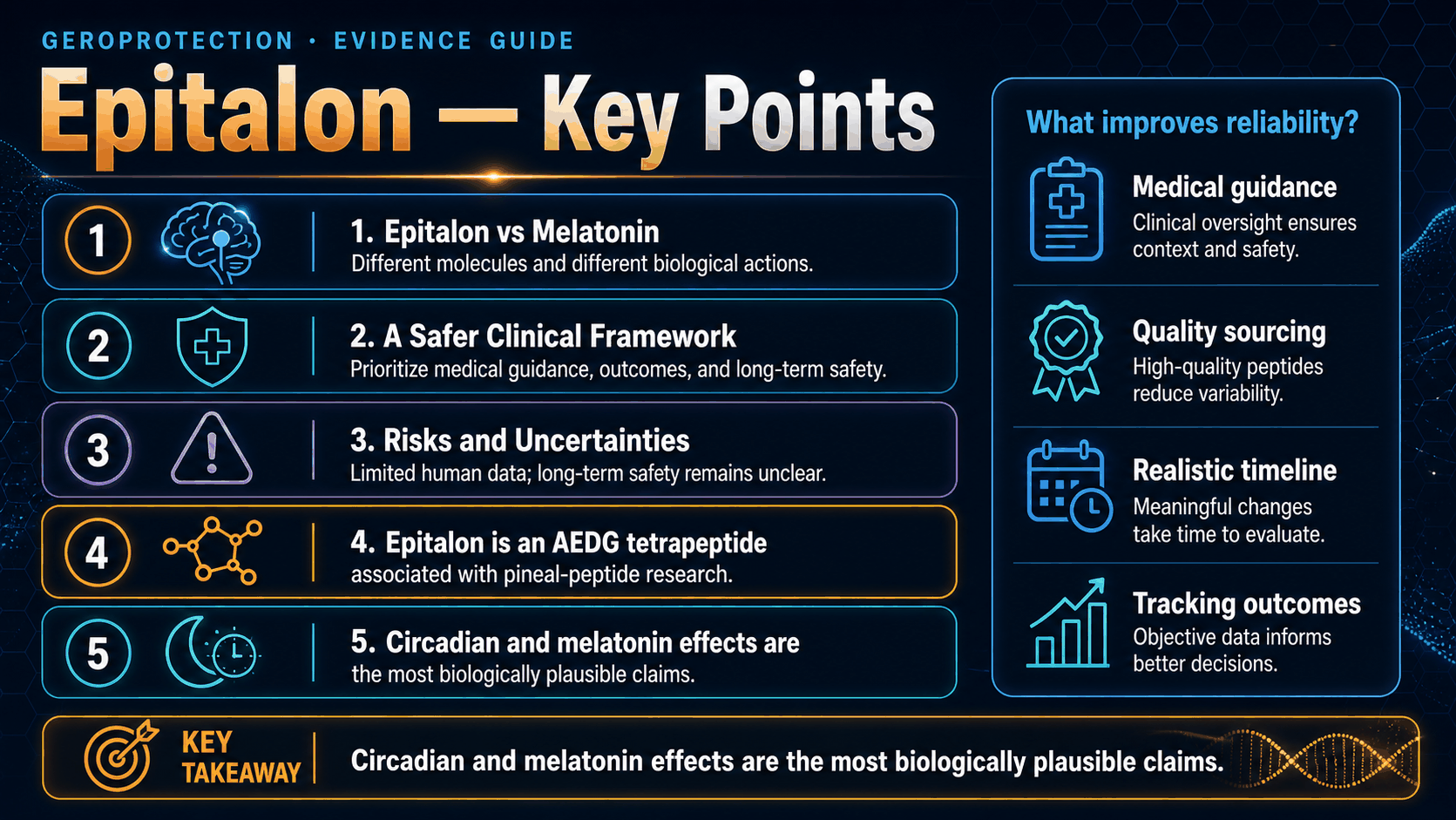
Risks and Uncertainties
Additional concerns include contamination, incorrect labeling, injection-related infection, drug interactions, pregnancy, and unknown reproductive or long-term effects.
Two Common Myths
Myth: Epitalon lengthens telomeres and literally reverses aging.
Fact: Telomere-related effects have been reported in cell models. Randomized human evidence is lacking, and telomeres are only one part of a complex aging process.
Myth: Khavinson worked in the Soviet Union, so all of the data are invalid.
Fact: The real issue is methodology, not geography. Much of the evidence comes from animals, cells, regional publications, and observational cohorts rather than large independent randomized trials.
Frequently Asked Questions
Does Epitalon lengthen telomeres in humans?
That has not been established in large randomized human trials.
Is Epitalon better than melatonin?
No. Melatonin has a much larger clinical evidence base for circadian disorders.
Can Epitalon extend lifespan?
Animal and observational data are interesting, but human lifespan extension remains unproven.
Is Epitalon safe after cancer?
People with active cancer or a cancer history should not self-treat and should discuss experimental peptides with an oncologist.
What is the strongest evidence-based approach to circadian problems?
Consistent wake time, morning light, reduction of evening light, treatment of sleep disorders, and appropriately timed melatonin when indicated.
Key Takeaways
- Epitalon is an AEDG tetrapeptide associated with pineal-peptide research.
- Circadian and melatonin effects are the most biologically plausible claims.
- Human telomere lengthening and lifespan extension are unproven.
- The evidence is mainly preclinical, regional, or observational.
- Melatonin has a much larger clinical evidence base for circadian disorders.
- Cancer history and telomerase claims require caution.
- No validated self-treatment protocol exists.