
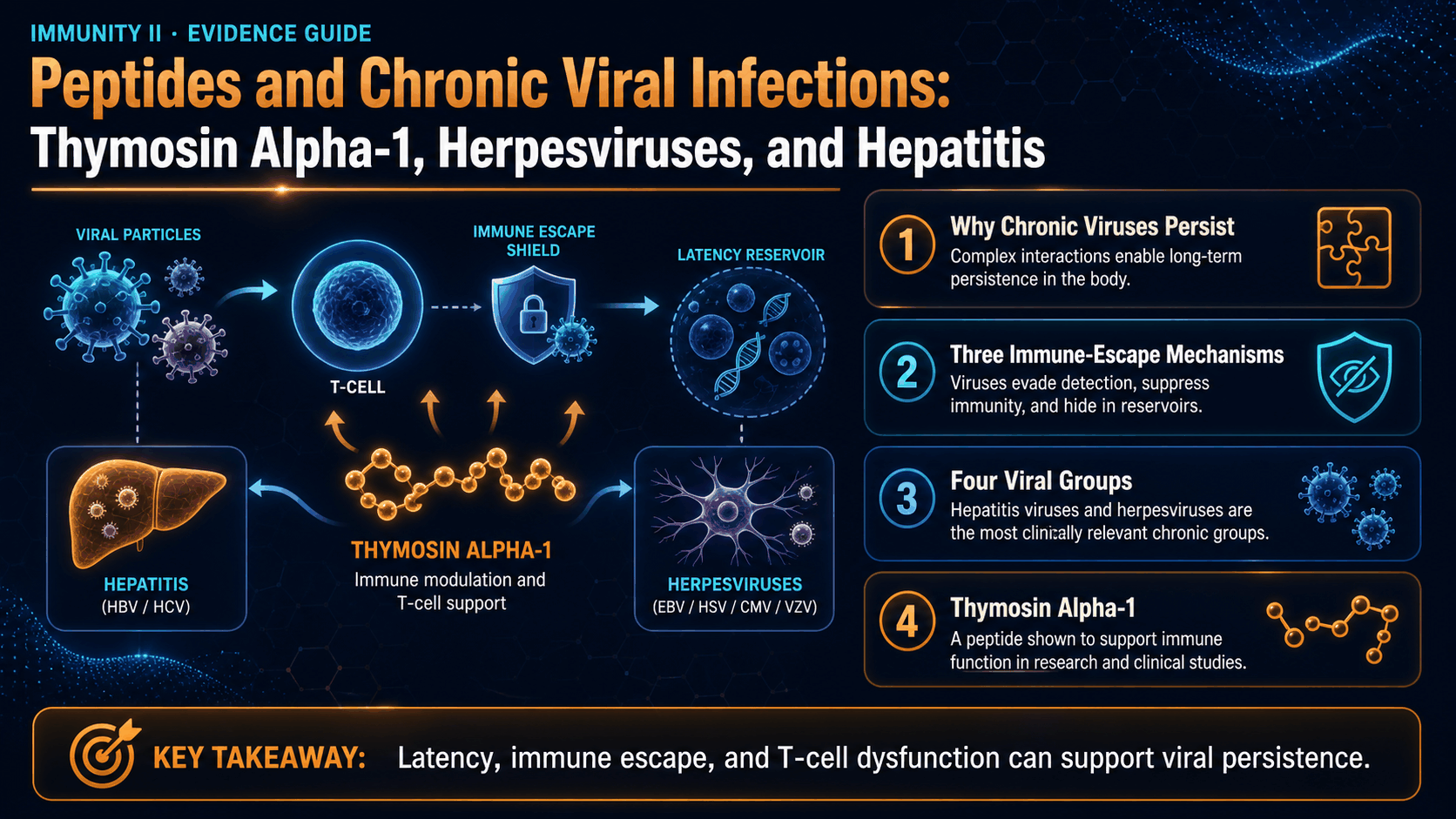
Why Chronic Viruses Persist
A positive antibody test does not always mean active infection, and not every persistent virus requires the same treatment.
Herpesviruses can remain latent for life, while chronic hepatitis viruses may continue replicating and damage the liver. Immune status, viral biology, medications, age, and underlying disease all influence clinical risk.
Three Immune-Escape Mechanisms
Latency
Herpesviruses can become dormant in long-lived cells such as neurons or lymphocytes, with limited viral gene expression and reduced immune visibility.
T-Cell Exhaustion
Persistent antigen exposure can reduce T-cell function and increase inhibitory receptors such as PD-1, LAG-3, and TIM-3.
Interferon Interference
Many viruses disrupt innate antiviral signaling. Thymosin alpha-1 has been studied as an immune modulator, but effects vary by disease and treatment setting.
 Sponsored / AffiliatePeptide ReGenesis · Peptide education, protocols, and wellness-focused resources
Four Viral Groups
HSV-1 and HSV-2
Reactivation may be influenced by illness, ultraviolet exposure, stress, or immune suppression. Acyclovir-class medicines remain standard for episodic or suppressive therapy.
Epstein–Barr Virus
Most adults have evidence of past infection. Fatigue or positive IgG alone does not prove active EBV disease. Chronic active EBV is rare and requires specialist diagnosis.
Cytomegalovirus
Usually mild in immunocompetent adults but potentially serious after transplantation, with advanced immune suppression, or during pregnancy.
Hepatitis B and C
Chronic liver infections require guideline-directed antiviral care. Modern HBV and HCV therapies are the foundations of treatment.
Thymosin Alpha-1
Proposed Immune Actions
- Dendritic-cell modulation
- Interferon-related signaling
- T-cell maturation and cytokine effects
- Natural-killer-cell modulation
Clinical Context
- Historical and regional research in chronic hepatitis B
- Older interferon-era studies in hepatitis C
- Adjunctive research in selected severe infections
- Insufficient randomized evidence for recurrent herpes prevention
 Sponsored / AffiliateTeleWellnessMD · Telehealth wellness consultations and health optimization support
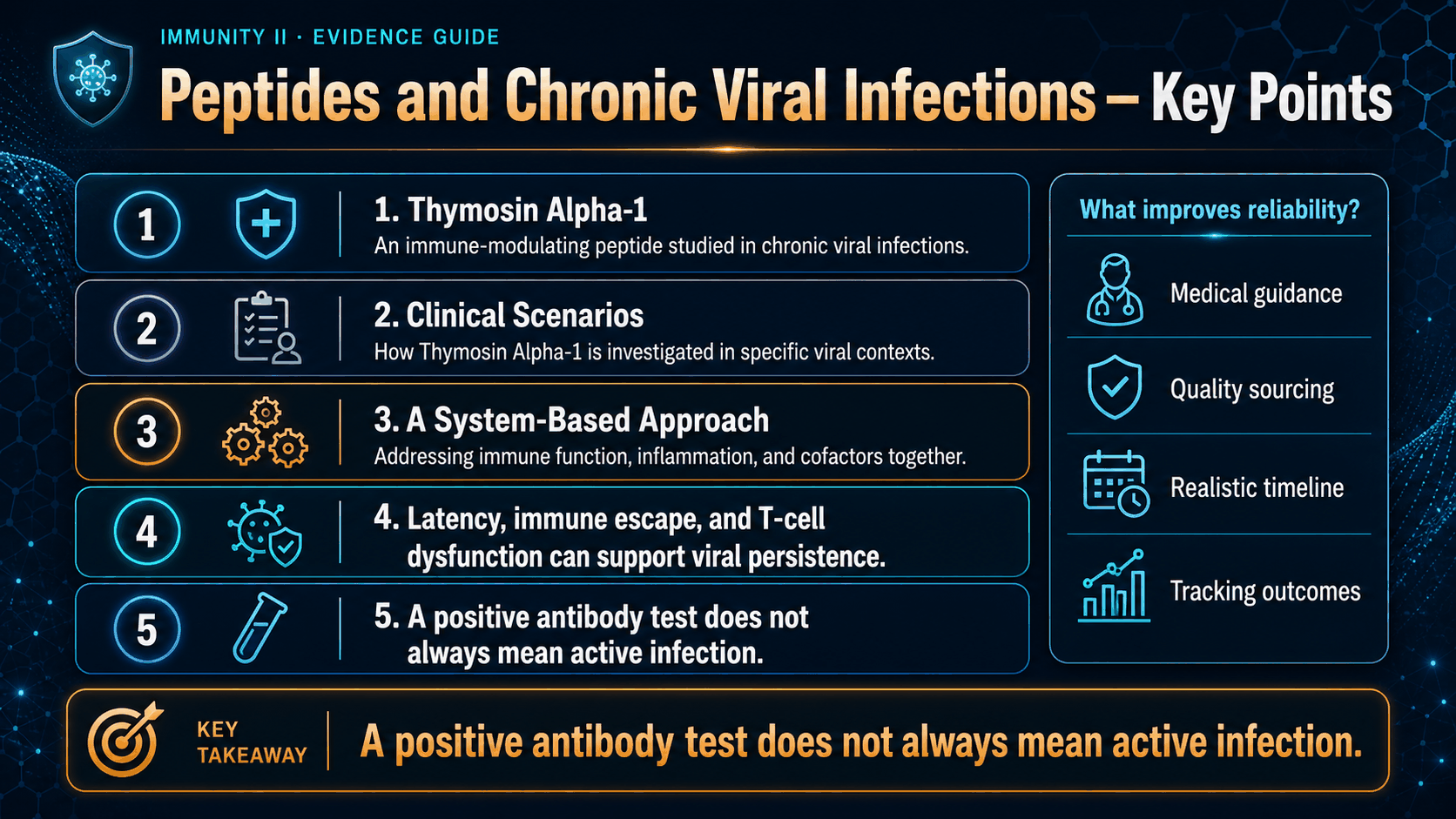
Clinical Scenarios
A System-Based Approach
Confirm Active Disease
Distinguish past exposure from active replication using PCR, antigen testing, liver tests, imaging, or specialist evaluation when appropriate.
Use Virus-Specific Treatment
Use HSV antivirals, modern HBV and HCV therapy, or CMV treatment and prophylaxis according to the diagnosis.
Support General Immune Health
Prioritize adequate sleep, nutrition, vaccination, exercise, and management of chronic disease.
Review Immune Suppression
Consider HIV, transplantation, chemotherapy, corticosteroids, biologics, and hematologic disease.
Two Common Myths
Myth: A course of thymosin alpha-1 permanently removes herpes.
Fact: Herpesviruses establish lifelong latency. Treatment aims to reduce symptoms, recurrence, complications, and transmission—not remove every latent viral genome.
Myth: Stronger immune stimulation is always better in chronic hepatitis.
Fact: Immune-mediated liver injury can worsen hepatitis. Treatment must balance viral suppression, inflammation, and long-term liver risk.
Frequently Asked Questions
Can thymosin alpha-1 cure herpes?
No. It does not eradicate latent herpesviruses from the body.
Does positive EBV IgG mean reactivation?
No. It usually indicates past exposure and must be interpreted with symptoms and other testing.
Is thymosin alpha-1 a treatment for hepatitis B?
It has historical and regional adjunctive research, but modern antiviral therapy remains the foundation of care.
Can peptides replace antiviral medication?
No. They should not replace proven virus-specific treatment.
What supports immune control most reliably?
Correct diagnosis, antiviral therapy when indicated, vaccination, sleep, nutrition, and management of immune suppression.
Key Takeaways
- Latency, immune escape, and T-cell dysfunction can support viral persistence.
- A positive antibody test does not always mean active infection.
- Thymosin alpha-1 is an immune modulator, not a universal antiviral cure.
- Modern antiviral treatment remains central for HSV, HBV, HCV, and high-risk CMV.
- EBV-related fatigue requires careful differential diagnosis.
- Do not replace prescribed antiviral therapy with peptide protocols.
- Sleep, nutrition, vaccination, and management of immune suppression remain essential.