
Why Joint Pain Is Complex
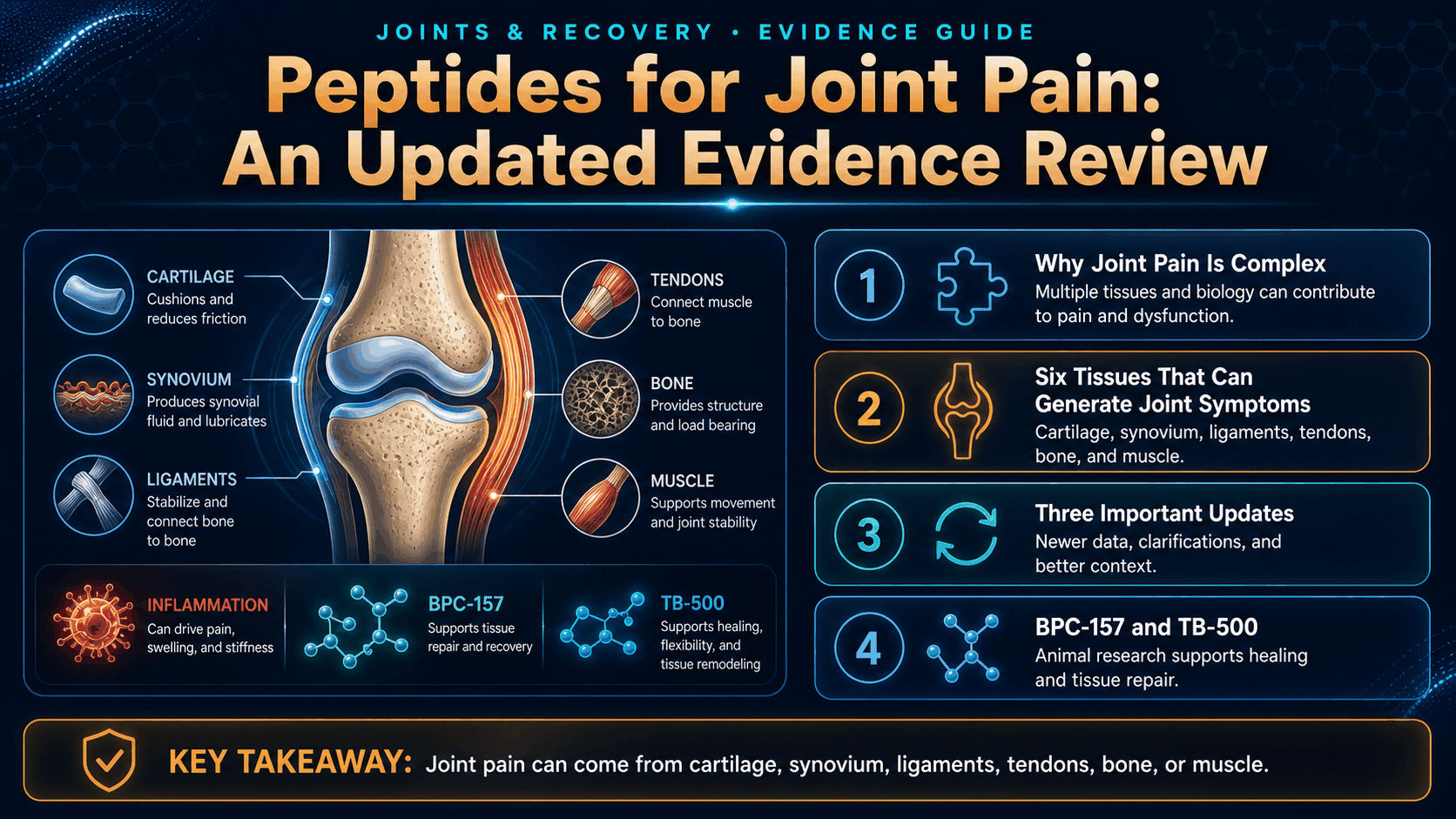
A joint is a system, not a single tissue.
Sleep loss, undernutrition, obesity, metabolic disease, excessive training load, inflammation, and stress can all affect pain and recovery. But these systemic factors do not replace the need to identify whether pain comes from cartilage, synovium, tendon, ligament, bone, or muscle.
Six Tissues That Can Generate Joint Symptoms
Articular Cartilage
Rich in type II collagen and proteoglycans. It has limited regenerative capacity, especially in advanced osteoarthritis.
Synovium
Inflammation can cause swelling, pain, and excess fluid. Persistent synovitis may indicate inflammatory arthritis.
Ligaments
Mostly type I collagen. Healing may be slow, and instability can require bracing, rehabilitation, or surgery.
Tendons
Tendinopathy often reflects failed adaptation rather than simple inflammation. Progressive loading has the strongest evidence.
Subchondral Bone
Bone beneath cartilage contains nerves and can contribute to osteoarthritis pain and bone-marrow lesions.
Periarticular Muscle
Strength supports joint stability and load absorption. Weakness can increase pain and disability.
 Sponsored / AffiliateApollo Peptide Sciences · Research-focused peptide science and molecular data
Three Important Updates
Collagen Before Loading
A small study found increased collagen-synthesis markers after gelatin plus vitamin C before exercise. This does not prove a universal 60% improvement in healing.
Sleep and Stress Matter
Poor sleep, chronic stress, undernutrition, and excessive training load can impair recovery and increase pain sensitivity.
Peptide Evidence Is Still Limited
BPC-157, TB-500, and GH secretagogues remain unapproved for osteoarthritis, tendinopathy, or ligament injury.
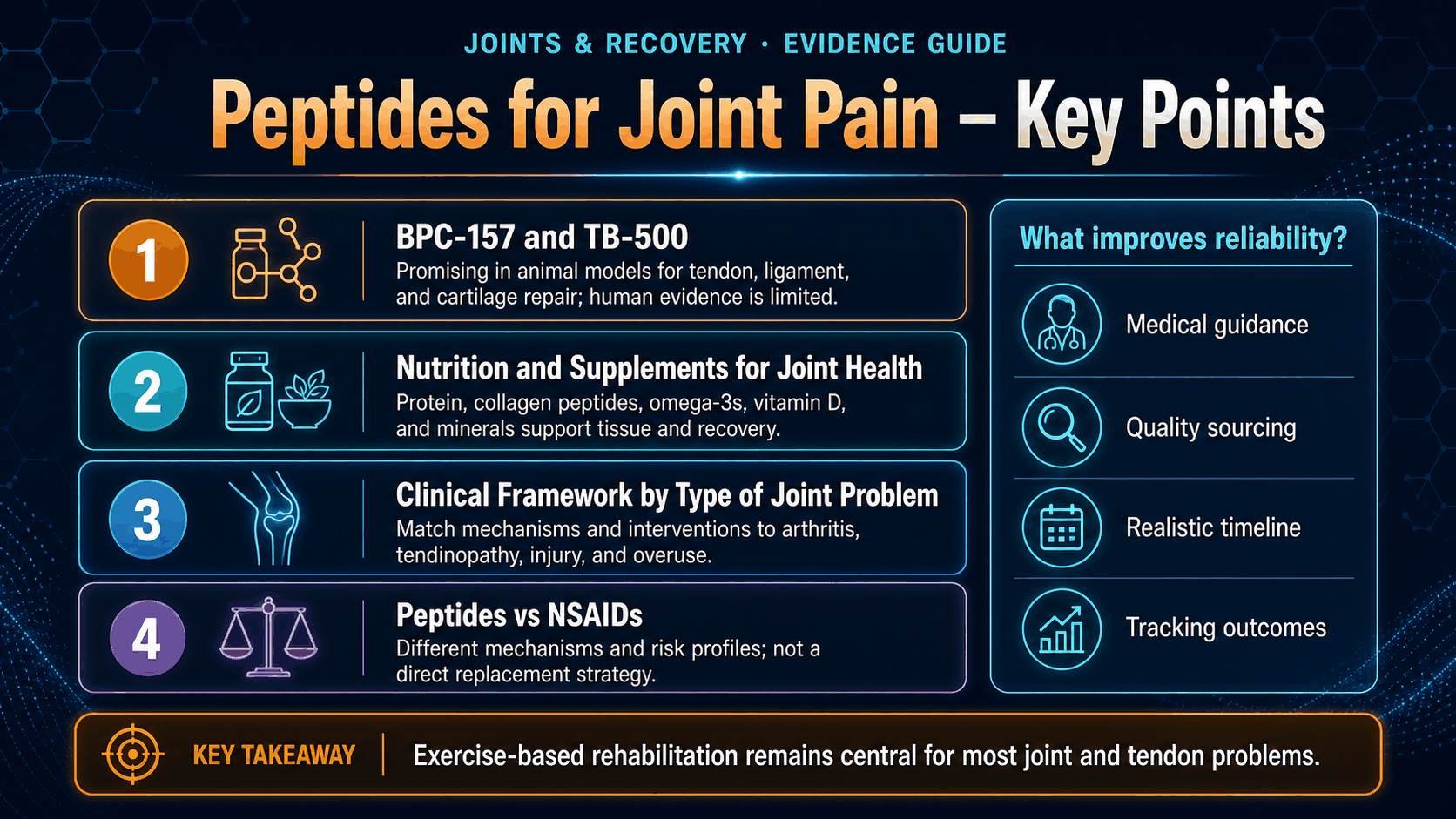
BPC-157 and TB-500
BPC-157
Animal studies have examined tendon healing, vascular signaling, inflammation, and tissue repair. Human benefits, safe dosing, and product quality remain uncertain.
TB-500 / Thymosin Beta-4
Preclinical research has examined cell migration, angiogenesis, wound repair, and inflammation. No validated injection protocol exists for chronic tendon injury or joint degeneration.
Nutrition and Supplements for Joint Health
Nutrition can support rehabilitation, but it does not rebuild advanced cartilage loss or replace diagnosis-specific treatment.
| Strategy | Potential Role | Evidence Interpretation |
|---|---|---|
| Adequate protein and calories | Supports tissue repair and muscle strength | Foundational |
| Vitamin C | Required for collagen synthesis | Useful when intake is low |
| Undenatured type II collagen | May modestly improve symptoms in some people with knee osteoarthritis | Product-specific evidence |
| Glucosamine sulfate | May help selected patients depending on formulation and guideline | Mixed evidence |
| Omega-3-rich foods | Support overall cardiometabolic and inflammatory health | Part of a broader diet |
| High-dose supplement stacks | Do not regenerate cartilage | Use caution |
 Sponsored / AffiliateMomentous · Performance nutrition and recovery supplements
Clinical Framework by Type of Joint Problem
Peptides vs NSAIDs
NSAIDs
- Established pain relief for many acute and inflammatory conditions
- Known quality and dosing standards
- Potential gastrointestinal, kidney, blood-pressure, and cardiovascular risks
- May be unsuitable with some conditions or medicines
BPC-157 / TB-500
- No established human indication for osteoarthritis or tendinopathy
- Uncertain product purity and dosing
- Long-term safety is unclear
- Interesting preclinical mechanisms but no proven superiority
Two Common Myths
Myth: BPC-157 grows new cartilage and reverses osteoarthritis.
Fact: BPC-157 has not been proven to regenerate human articular cartilage or reverse advanced osteoarthritis.
Myth: Injecting a peptide into or near the joint works best.
Fact: Intra-articular and periarticular injections carry infection and injury risks and should never be self-performed.
Frequently Asked Questions
Can BPC-157 heal a torn tendon?
Animal studies are promising, but there is no established human evidence showing reliable healing of tendon tears.
Is TB-500 effective for tendinopathy?
Evidence remains preclinical. Progressive loading and physical therapy have stronger support.
Can type II collagen help osteoarthritis?
Some studies suggest modest symptom improvement in selected people with knee osteoarthritis.
Are peptides safer than NSAIDs?
That cannot be assumed. NSAID risks are known, while peptide purity, dosing, and long-term safety are uncertain.
What has the strongest evidence for joint pain?
Correct diagnosis, progressive exercise, strength training, weight management when relevant, sleep, and condition-specific treatment.
Key Takeaways
- Joint pain can come from cartilage, synovium, ligaments, tendons, bone, or muscle.
- Exercise-based rehabilitation remains central for most joint and tendon problems.
- BPC-157 and TB-500 evidence is mainly preclinical.
- Undenatured type II collagen may modestly help some people with knee osteoarthritis.
- NSAIDs have established benefits and known risks; peptides are not proven replacements.
- Advanced osteoarthritis is not reversed by current peptide products.
- Intra-articular or periarticular injection should never be self-performed.