
Why Chronic Stress Matters
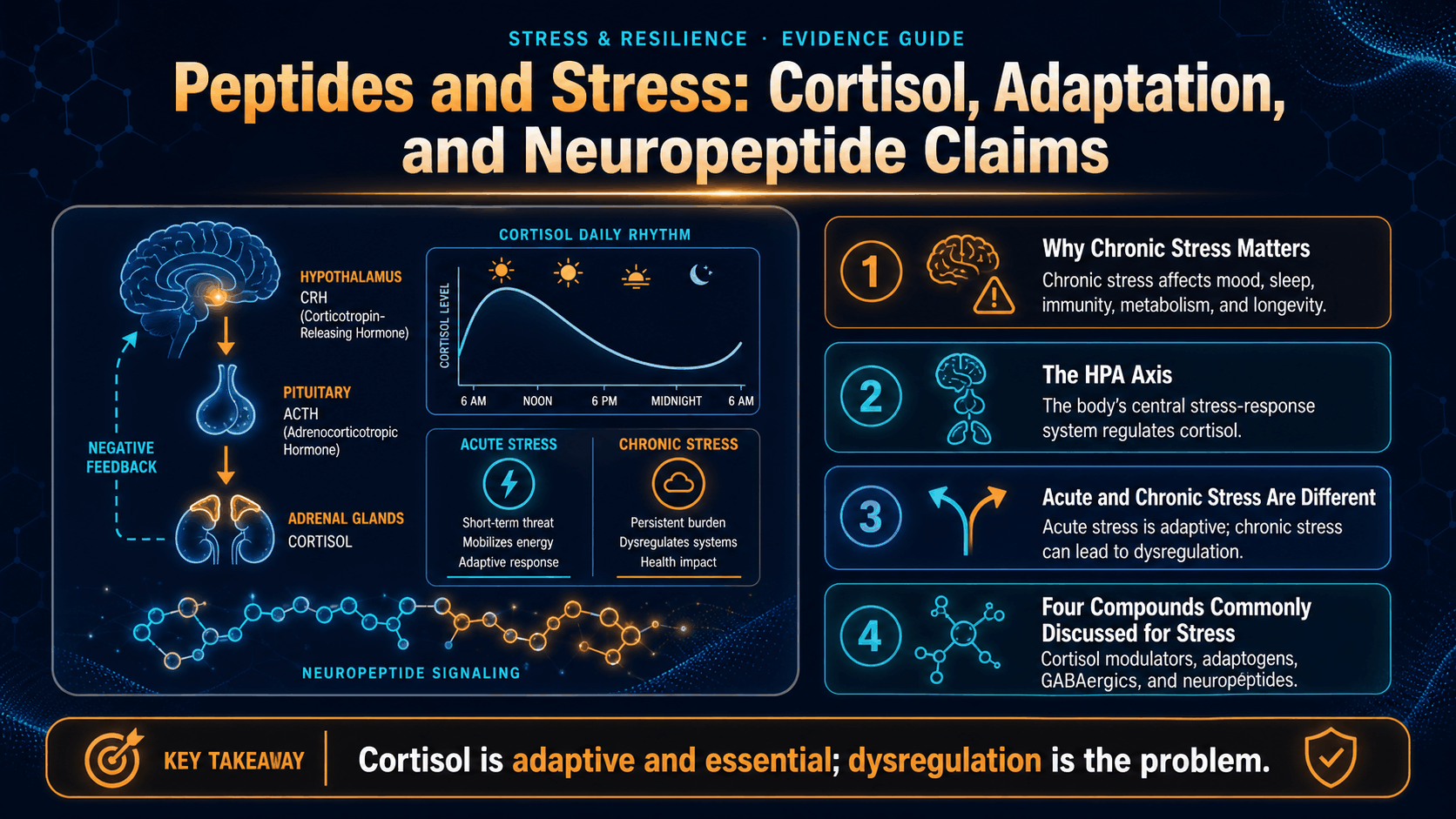
Persistent stress can disrupt sleep, glucose regulation, mood, appetite, pain tolerance, immune function, and recovery. Cortisol is not simply a “bad hormone”; it is essential for adaptation. The goal is healthy regulation, not indiscriminate suppression.
The HPA Axis
 Sponsored / AffiliateUlta Lab Tests · Lab testing for hormones, inflammation, and wellness
Acute and Chronic Stress Are Different
Acute Stress
Short term and often adaptive. It can support attention, energy mobilization, and rapid response.
Helpful strategies: breathing, grounding, preparation, movement, and social support.
Chronic Stress
Persistent stress is associated with sleep disruption, anxiety, depression, metabolic risk, and burnout symptoms.
Helpful strategies: workload changes, therapy, medical review, sleep, activity, and recovery.
Four Compounds Commonly Discussed for Stress
Selank
Studied regionally for anxiety and stress-related symptoms. Proposed mechanisms involve GABAergic and neurotrophic signaling, but independent replication and long-term safety data remain limited.
BPC-157
Has preclinical literature involving inflammation, injury, gastrointestinal protection, and animal stress models. It is not established for chronic stress, cortisol reduction, burnout, or anxiety in humans.
Epitalon
Promoted for circadian effects, but evidence is insufficient for treating burnout, restoring the HPA axis, or normalizing an “inverted cortisol rhythm.”
Glycine
May modestly support sleep in some people, but it has not been proven to treat chronic stress or reliably lower HPA-axis activity.
Adaptogens and Supplements
Ashwagandha
Small trials report improvements in perceived stress and sometimes lower cortisol. Thyroid, gastrointestinal, sedative, and immune interactions matter.
Rhodiola rosea
Studied for fatigue and stress-related symptoms. Evidence is mixed, formulations differ, and some people experience stimulation or medication interactions.
Magnesium
Deficiency can cause neurologic and muscular symptoms, but routine high-dose supplementation is not a universal stress treatment.
 Sponsored / AffiliateTeleWellnessMD · Telehealth wellness consultations and health optimization support
A Clinical Framework
Stress Testing: What Is Useful?
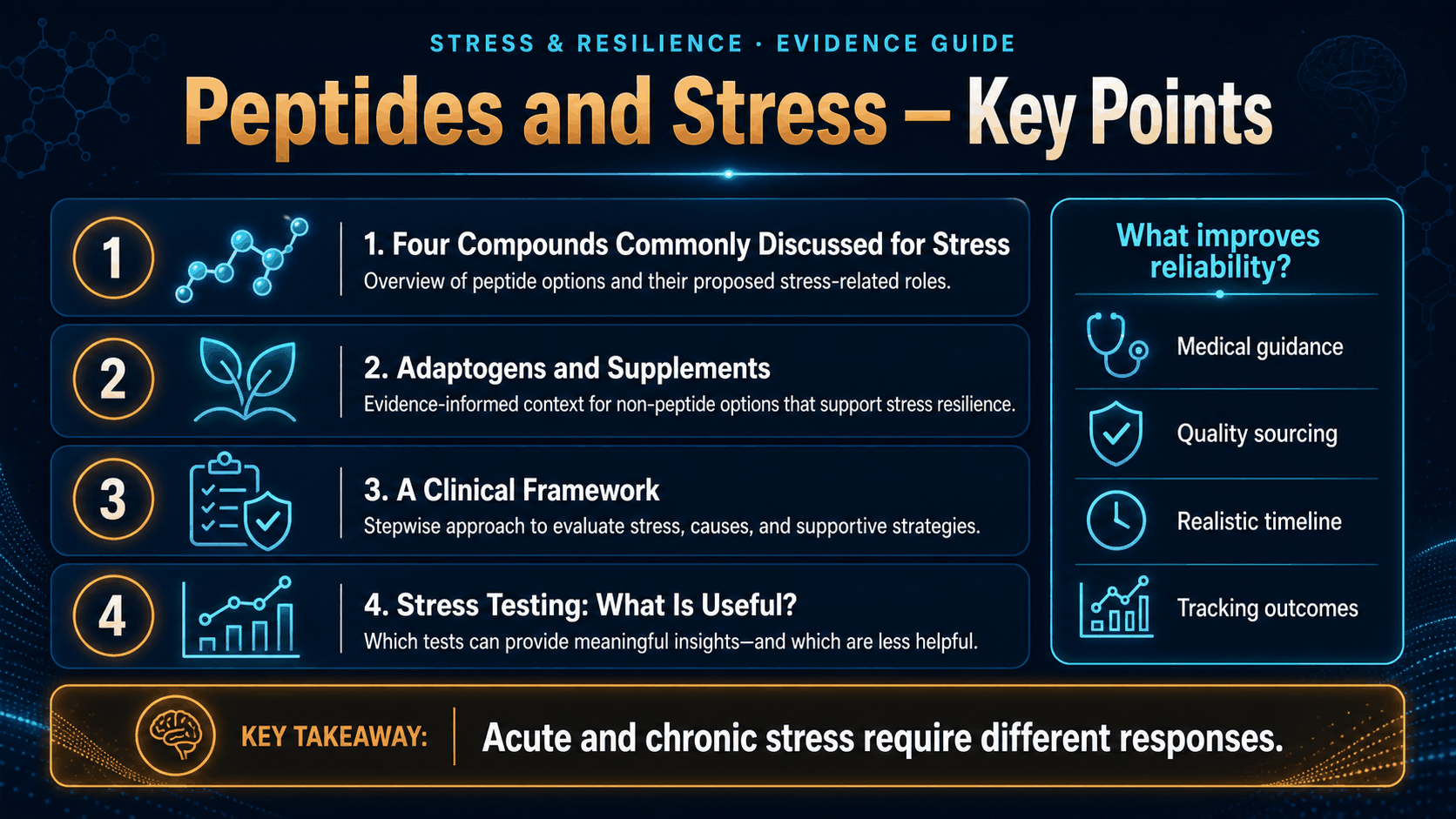
Cortisol testing is useful when adrenal excess or insufficiency is suspected. DHEA-S, hs-CRP, and the cortisol awakening response may answer specific questions, but they are not universal wellness scores.
Two Common Myths
Myth: Cortisol is the enemy and should be reduced as much as possible.
Fact: Cortisol is essential for blood pressure, glucose regulation, immune control, and adaptation. Too little cortisol can be life-threatening.
Myth: Continuous Selank use makes a person resistant to stress.
Fact: Selank has limited regional evidence and is not proven to prevent the consequences of chronic stress or eliminate its causes.
Frequently Asked Questions
Can Selank lower cortisol?
Regional studies suggest possible anxiolytic effects, but predictable cortisol reduction has not been established.
Can BPC-157 treat burnout?
No established human evidence supports BPC-157 for burnout, chronic stress, or anxiety.
Does Epitalon normalize cortisol rhythm?
This remains an experimental claim and is not established clinical practice.
Is one morning cortisol test useful for stress?
Not as a general stress score. It is mainly used when adrenal disease is suspected.
What has the strongest evidence for resilience?
Sleep, physical activity, therapy, social support, workload changes, and treatment of medical or psychiatric conditions.
Key Takeaways
- Cortisol is adaptive and essential; dysregulation is the problem.
- Acute and chronic stress require different responses.
- Selank has regional anxiety research but limited independent evidence.
- BPC-157 is not established for chronic stress, cortisol, or burnout.
- Epitalon circadian and cortisol claims remain experimental.
- Ashwagandha, rhodiola, and magnesium have product-specific benefits and risks.
- Sleep, therapy, exercise, social support, and workload changes have stronger evidence.