
Why Sleep Matters
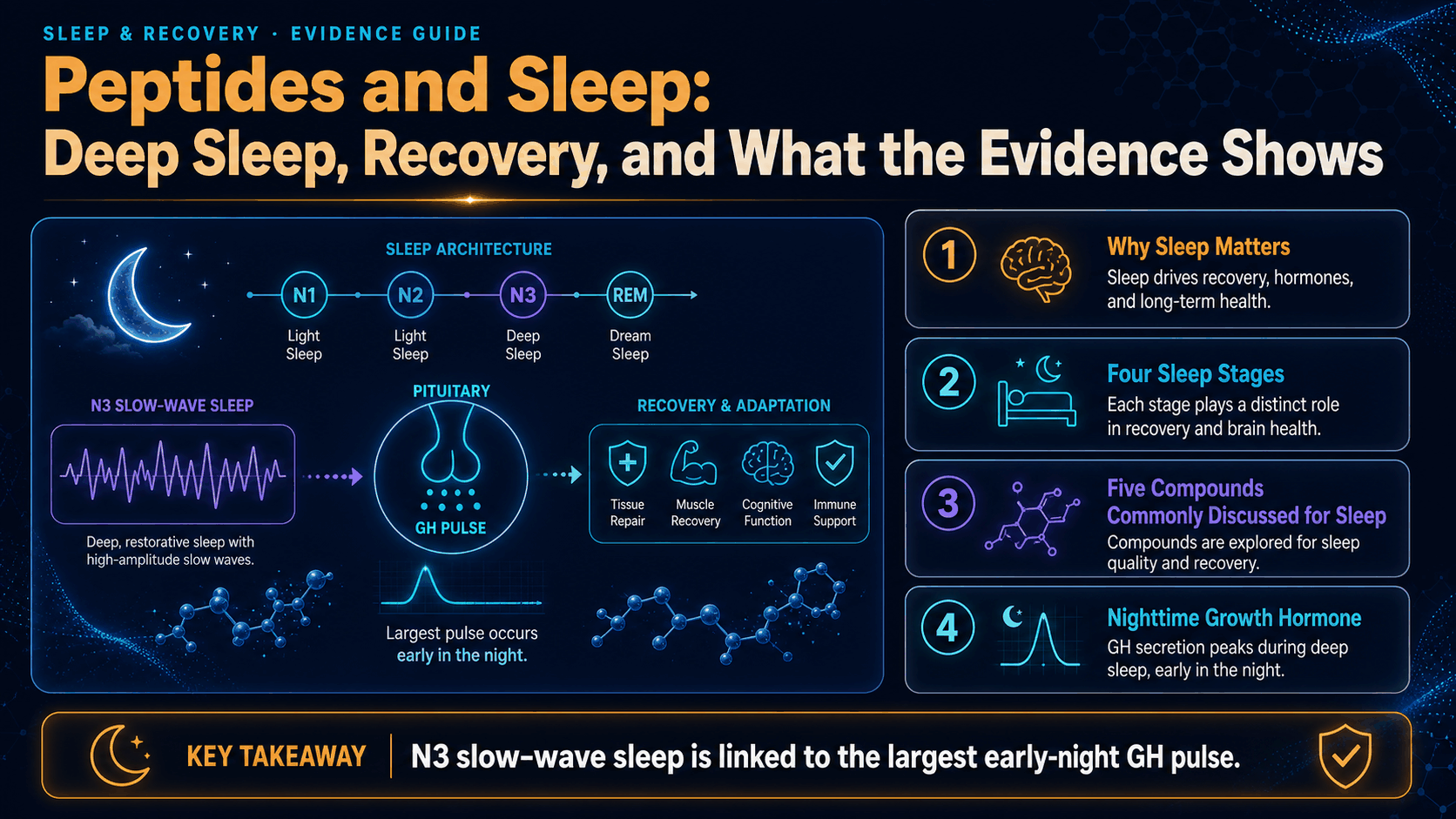
Sleep is an active biological process, not passive downtime.
During the night, the brain consolidates memory, autonomic systems reset, and important hormone pulses occur. In many healthy adults, the largest growth-hormone pulse is associated with early-night slow-wave sleep.
Four Sleep Stages
The transition from wakefulness. Muscle activity falls, awareness fades, and the sleeper is easily awakened.
The largest proportion of adult sleep. Sleep spindles and K-complexes appear, and memory processing continues.
Deep NREM sleep associated with physical restoration, immune regulation, and the largest early-night GH pulse.
Supports emotion processing, learning, and memory integration while most skeletal muscles remain inhibited.
 Sponsored / AffiliatePeptide ReGenesis · Peptide education, protocols, and wellness-focused resources
Five Compounds Commonly Discussed for Sleep
Epitalon
Promoted for pineal and circadian effects. Evidence for insomnia, non-dipping blood pressure, jet lag, or shift-work disorder remains insufficient.
Glycine
Small studies suggest modest improvements in subjective sleep quality or next-day fatigue in some people. It is not a treatment for sleep apnea or chronic insomnia.
Selank
Regional research has examined anxiety and stress-related symptoms. It is not an internationally established insomnia medicine.
Ipamorelin and GH Secretagogues
These compounds stimulate the GH axis but are not approved treatments for poor sleep. Risks include edema, glucose changes, headache, and worsening untreated sleep apnea.
BPC-157
Chronic pain can disrupt sleep, but BPC-157 has not been established as a treatment for pain-related insomnia.
Nighttime Growth Hormone
Growth hormone is released in pulses. In many healthy adults, the largest pulse occurs soon after sleep onset and is associated with the first period of slow-wave sleep. The exact contribution varies by age, sex, body composition, health, and sleep quality.
 Sponsored / AffiliatePeptide ReGenesis · Peptide education, protocols, and wellness-focused resources
Sleep Disruptors and Evidence-Based Allies
Common Sleep Disruptors
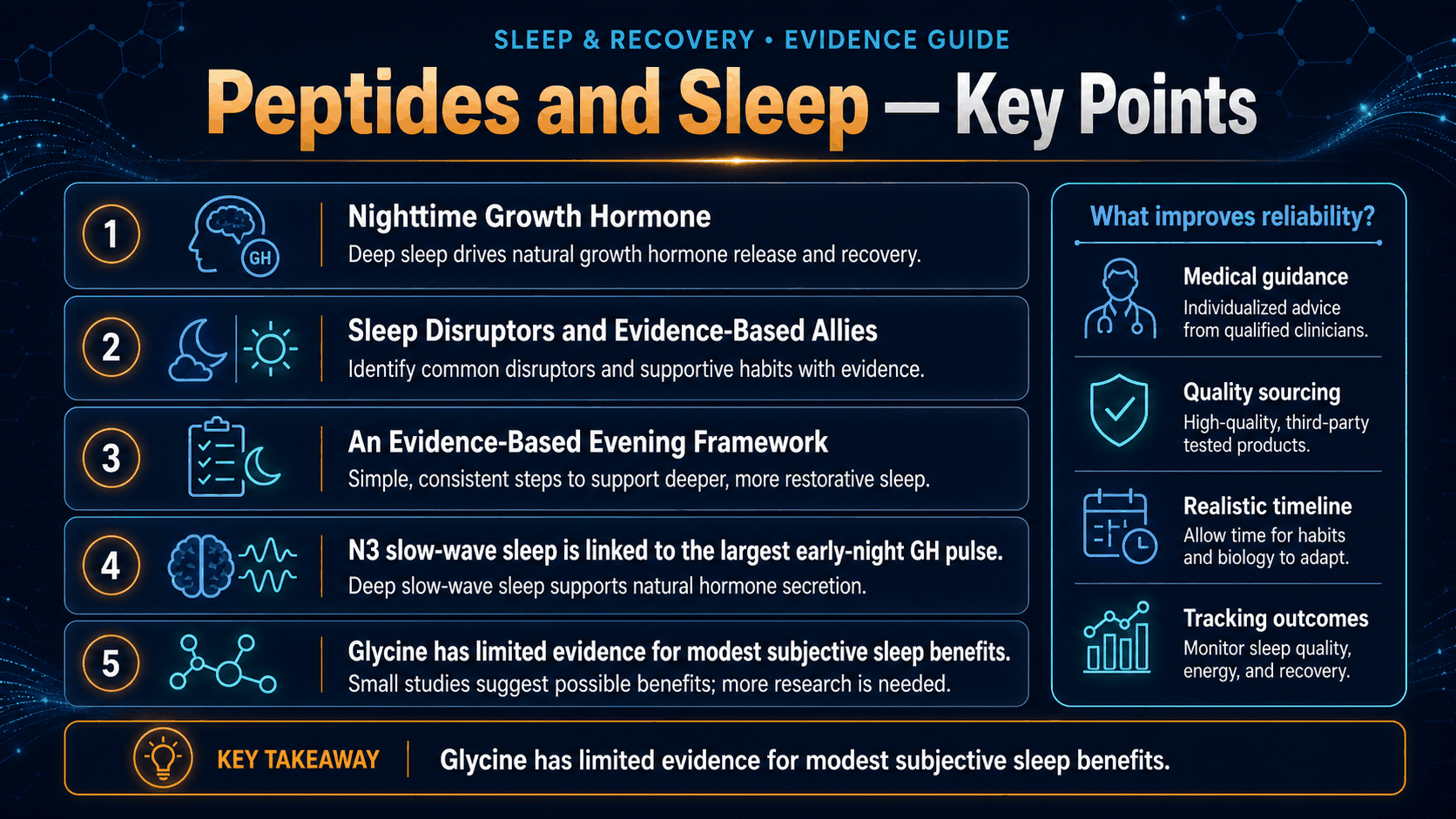
- Alcohol
- Late caffeine
- Bright evening light
- Irregular schedules
- Overheating
- Chronic pain or reflux
- Untreated sleep apnea
Better-Supported Sleep Allies
- Consistent wake time
- Morning daylight
- Regular exercise
- Cool, dark bedroom
- CBT-I for chronic insomnia
- Sleep-apnea treatment
- Medication and supplement review
An Evidence-Based Evening Framework
Two Common Myths
Myth: Epitalon is a deeper and safer replacement for melatonin.
Fact: Epitalon remains experimental. Melatonin has recognized clinical uses in selected circadian conditions, but timing, dose, product quality, and indication matter.
Myth: The longer you sleep, the more effective every peptide becomes.
Fact: Sleep need varies. Quality, regularity, untreated disorders, and daytime function matter more than maximizing time in bed.
Frequently Asked Questions
Does Ipamorelin improve deep sleep?
It is not an approved sleep treatment, and evidence for improving N3 sleep in healthy users is insufficient.
Can glycine improve sleep?
Small studies suggest modest subjective benefit in some people, but evidence remains limited.
Is Epitalon proven for insomnia?
No. It remains experimental and lacks strong clinical evidence for insomnia treatment.
Can BPC-157 help sleep by reducing pain?
There is no established human evidence that BPC-157 treats pain-related insomnia.
What is the best-supported treatment for chronic insomnia?
Cognitive behavioral therapy for insomnia, or CBT-I, is the first-line treatment.
Key Takeaways
- N3 slow-wave sleep is linked to the largest early-night GH pulse.
- Glycine has limited evidence for modest subjective sleep benefits.
- Epitalon and Selank remain regional or experimental for sleep.
- Ipamorelin is not an approved sleep treatment and may worsen untreated apnea or metabolic risk.
- BPC-157 is not established for pain-related insomnia.
- CBT-I, sleep-apnea treatment, regular schedules, exercise, and light timing have stronger evidence.