
Why the Gut Barrier Matters
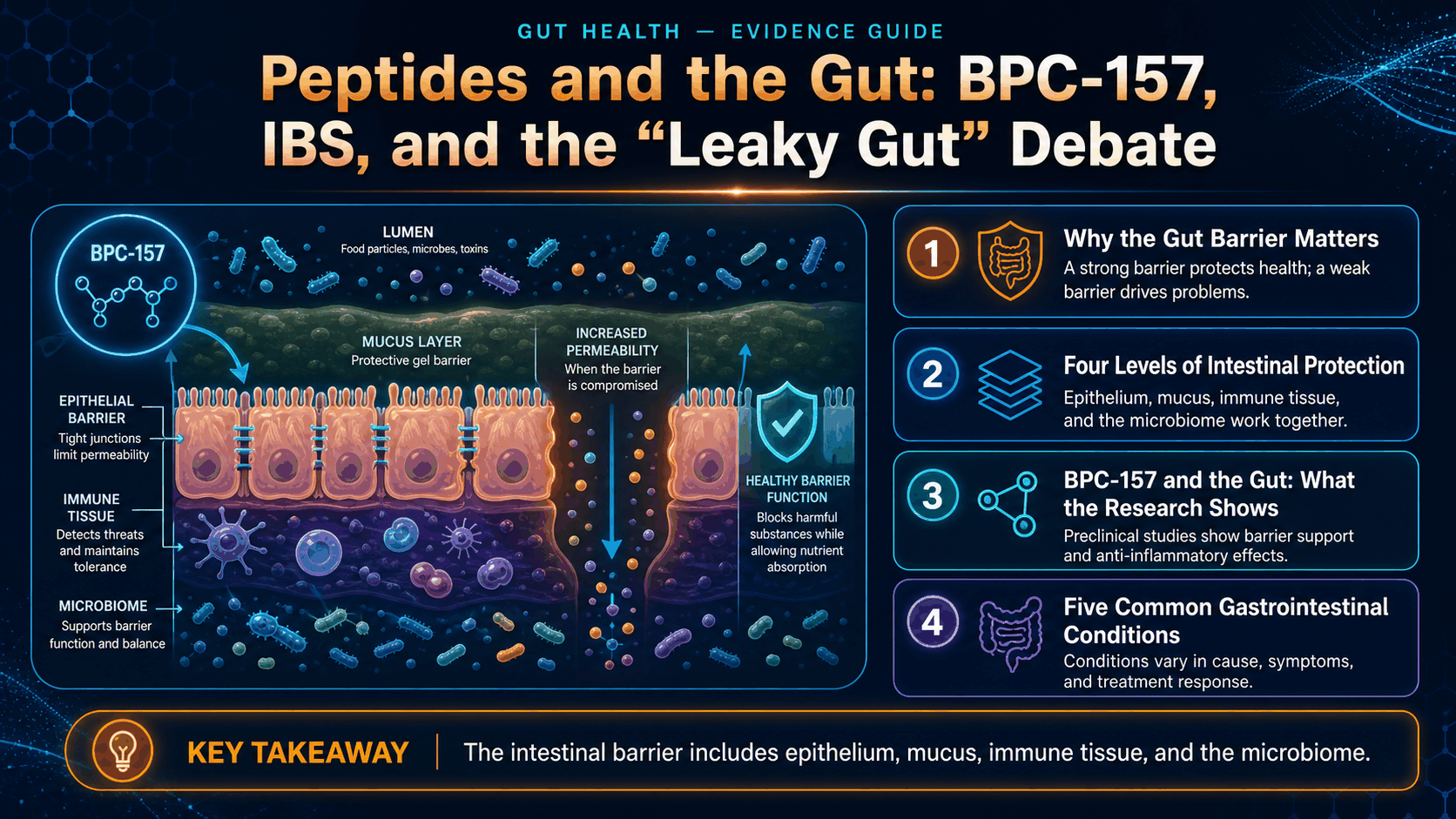
The intestinal barrier is a coordinated biological system, not a single wall.
It separates luminal contents from the bloodstream while allowing controlled absorption of nutrients and water. Barrier dysfunction can occur in recognized diseases, but the popular term “leaky gut” is often used far more broadly than current diagnostic science supports.
Four Levels of Intestinal Protection
 Sponsored / AffiliateMito Red Light · Red light therapy devices for recovery and wellness routines
BPC-157 and the Gut: What the Research Shows
BPC-157 has shown gastrointestinal effects in animal and laboratory models involving ulcers, intestinal injury, inflammation, and vascular repair. Reliable human evidence remains insufficient.
Barrier Pathways
Preclinical studies have examined tight-junction proteins and epithelial repair. This does not prove that BPC-157 “seals” the human gut.
Inflammatory Signaling
Animal models report changes in inflammatory mediators, but the effect, dose, safety, and product quality in humans remain uncertain.
Ulcer and Vascular Repair
Experimental studies suggest healing-related effects. BPC-157 has not been shown to equal proton-pump inhibitors or standard ulcer therapy in human trials.
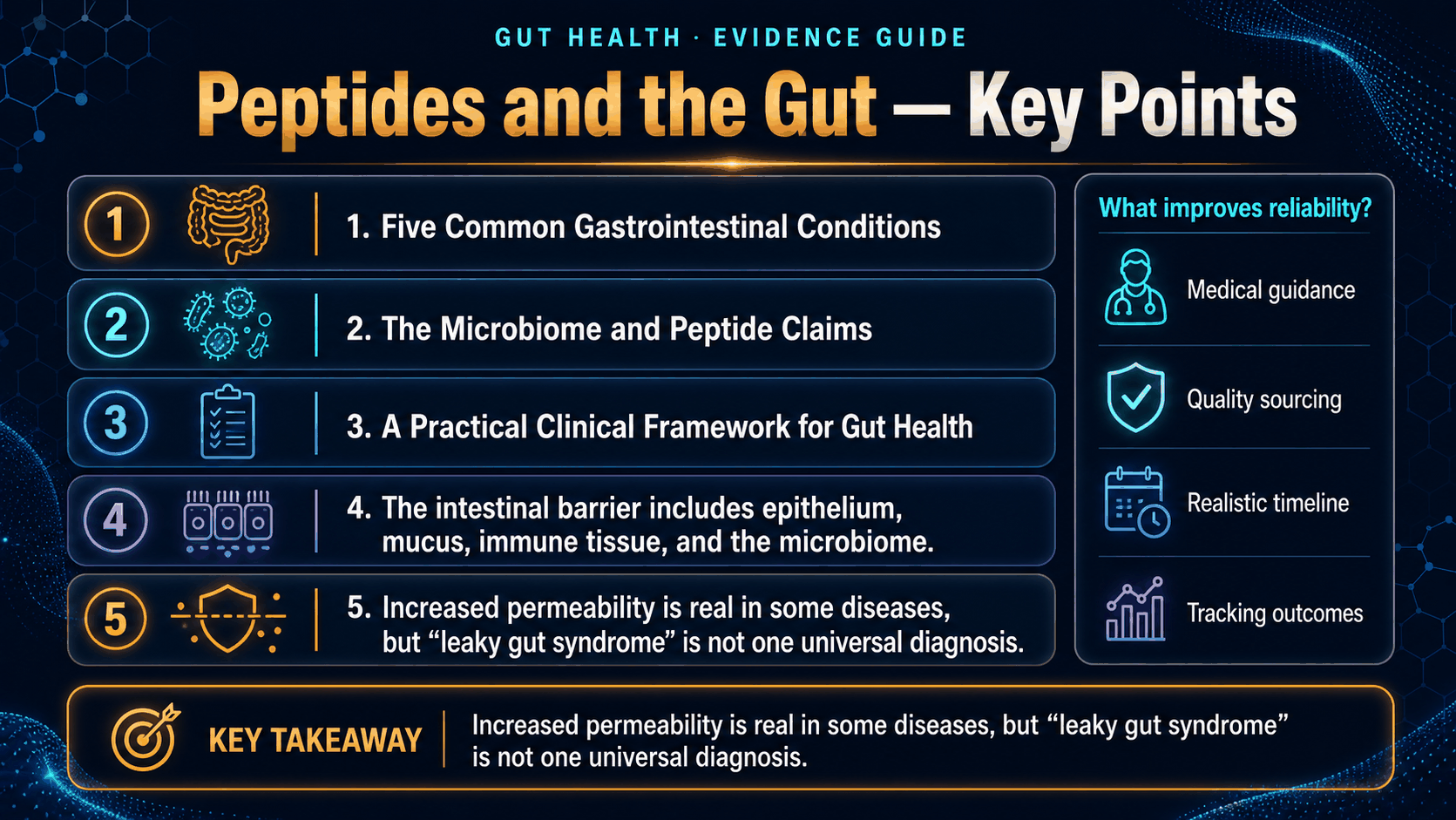
Five Common Gastrointestinal Conditions
 Sponsored / AffiliateTeleWellnessMD · Telehealth wellness consultations and health optimization support
The Microbiome and Peptide Claims
What Is Known About BPC-157?
BPC-157 is not an antibiotic. Preclinical changes in mucosal injury could theoretically alter the microbial environment, but reliable human microbiome studies are lacking.
What Has Better Evidence?
A varied diet rich in tolerable plant foods, fermentable fiber, and minimally processed foods can support microbial diversity. Probiotic effects are strain- and condition-specific.
A Practical Clinical Framework for Gut Health
Two Common Myths
Myth: BPC-157 treats Crohn’s disease, so standard therapy can be stopped.
Fact: Animal colitis findings do not replace evidence-based specialist treatment. Stopping biologic or immunosuppressive therapy can lead to serious relapse and complications.
Myth: Oral BPC-157 is proven to work as well as injections for gut disease.
Fact: Animal research suggests oral activity, but equivalent effectiveness in humans has not been demonstrated.
Frequently Asked Questions
Can BPC-157 treat IBS?
There is no established human evidence or approved indication for IBS.
Does BPC-157 heal a “leaky gut”?
Preclinical barrier-related effects have been reported, but meaningful human benefit has not been established.
Is oral BPC-157 approved?
No approved oral formulation or validated consumer dose exists.
Can BPC-157 replace Crohn’s or colitis medication?
No. It should not replace specialist-directed treatment.
What supports the microbiome?
Diet diversity, tolerable fiber, minimally processed foods, and condition-specific probiotics when appropriate.
Key Takeaways
- The intestinal barrier includes epithelium, mucus, immune tissue, and the microbiome.
- Increased permeability is real in some diseases, but “leaky gut syndrome” is not one universal diagnosis.
- BPC-157 gastrointestinal evidence is mainly preclinical.
- Oral BPC-157 is not proven equivalent to injection in humans.
- IBS, IBD, ulcers, and infectious diarrhea require diagnosis-specific care.
- Blood in stool, weight loss, night pain, or anemia require medical evaluation.