
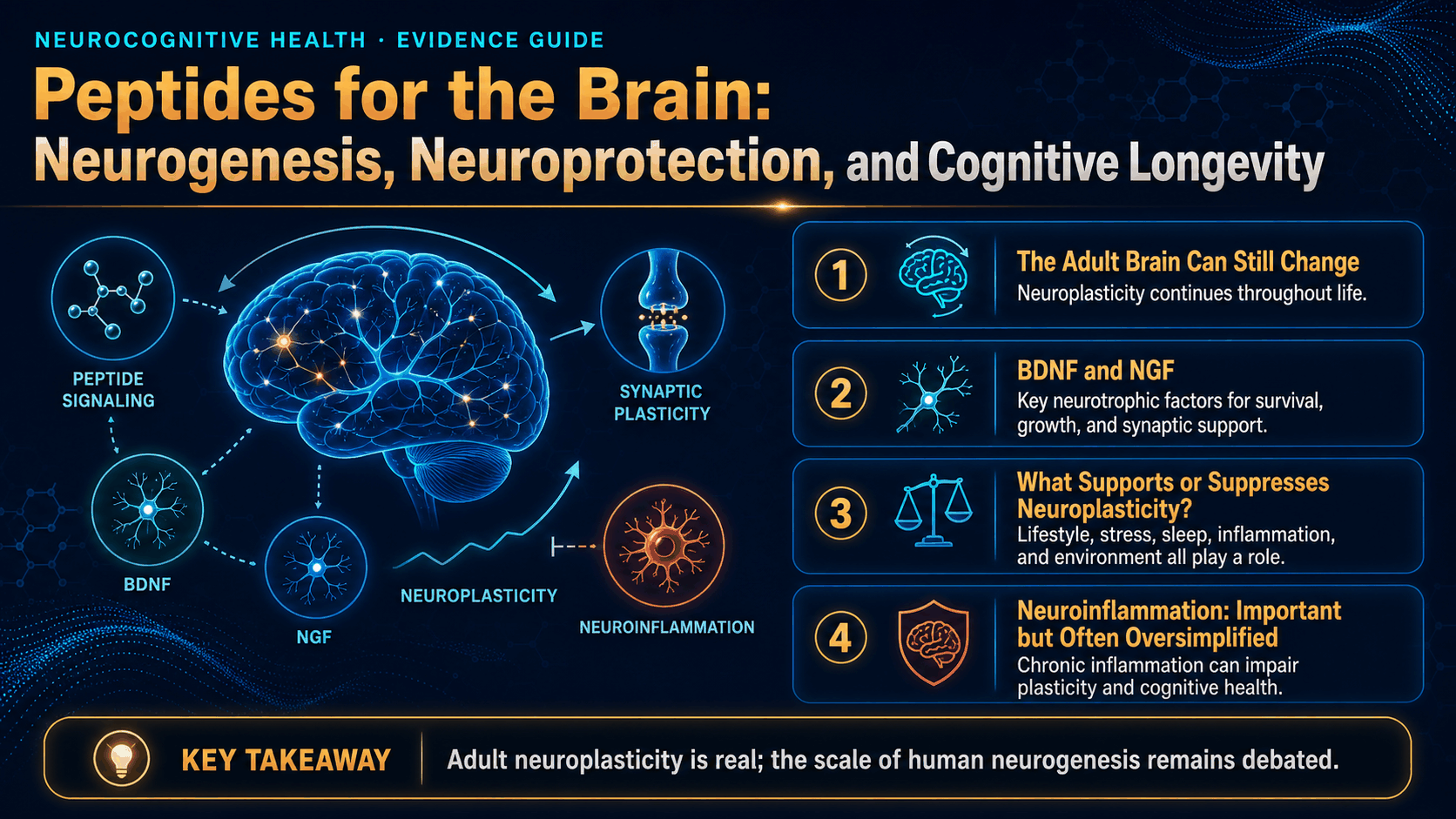
The Adult Brain Can Still Change
Adult neuroplasticity is real, but it should not be reduced to one peptide or one daily neuron count.
The brain can adapt, reorganize, form new connections, and respond to experience throughout life. Adult hippocampal neurogenesis is well documented in animal models, while its magnitude and clinical importance in humans remain actively debated.
BDNF and NGF
BDNF
Brain-Derived Neurotrophic Factor supports synaptic plasticity, learning, memory, and neuronal resilience. Exercise, sleep, mood, metabolic health, and stress can influence BDNF signaling.
NGF
Nerve Growth Factor supports selected sensory, sympathetic, and cholinergic neurons. Translating NGF biology into treatment is difficult because delivery, pain, and adverse effects matter.
 Sponsored / AffiliateMito Red Light · Red light therapy devices for recovery and wellness routines
What Supports or Suppresses Neuroplasticity?
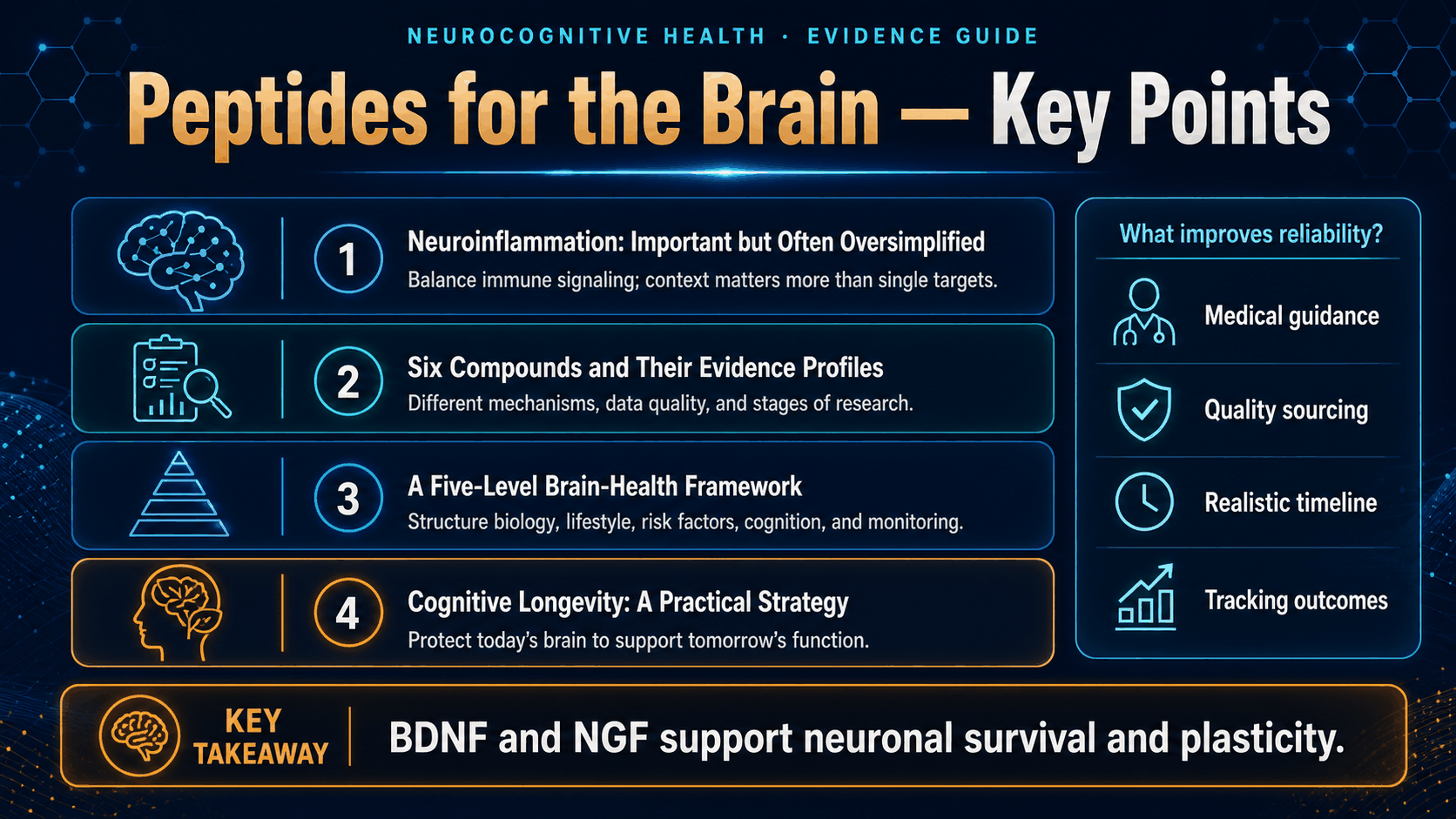
Neuroinflammation: Important but Often Oversimplified
Neuroinflammation involves microglia, astrocytes, cytokines, vascular cells, and the blood–brain barrier. It can be protective during acute injury and harmful when persistent or dysregulated.
Sleep disruption, obesity, diabetes, infection, smoking, vascular disease, and chronic systemic inflammation can influence brain health. But “neuroinflammation” is not a single diagnosis that can be treated with one peptide.
Six Compounds and Their Evidence Profiles
Semax
Studied for neurotrophic and ischemia-related effects in regional settings. It is not broadly approved as a cognitive-enhancement medicine.
Selank
Studied regionally for anxiety and stress-related effects. Independent replication and long-term safety data remain limited.
BPC-157
No established human indication exists for cognitive decline, neuroinflammation, stroke recovery, or dementia prevention.
Epitalon
Circadian, oxidative-stress, and longevity claims have not been confirmed as meaningful cognitive benefits in humans.
GH Secretagogues
Not established treatments for cognition, demyelination, or brain aging and may introduce metabolic or cardiovascular risks.
Thymosin Alpha-1
Has selected clinical uses, but there is no established cognitive-longevity or nootropic indication.
 Sponsored / AffiliatePeptide ReGenesis · Peptide education, protocols, and wellness-focused resources
A Five-Level Brain-Health Framework
Cognitive Longevity: A Practical Strategy
Short Term
Improve sleep, physical activity, blood pressure, glucose control, medication review, stress, and depression.
Medium Term
Build consistent exercise, nutrition, social engagement, hearing correction, and treatment of sleep apnea or metabolic disease.
Long Term
Maintain vascular health, continue learning, prevent stroke, avoid smoking, and seek evaluation for persistent cognitive symptoms.
Two Common Myths
Myth: Semax makes you smarter, so longer use always means better memory.
Fact: Evidence for cognitive enhancement in healthy users is limited, and there is no validated universal cycle or long-term protocol.
Myth: Neuropeptides prevent Alzheimer’s disease.
Fact: No peptide discussed here is proven to prevent or treat Alzheimer’s disease.
Frequently Asked Questions
Can Semax increase BDNF?
Regional and preclinical research suggests neurotrophic effects, but clinical relevance and generalizability remain limited.
Does Selank reduce cortisol?
Stress-related effects have been studied, but reliable evidence that it restores neurogenesis in humans is lacking.
Can BPC-157 improve memory?
There is no established human evidence supporting BPC-157 for memory or cognitive decline.
Is blood BDNF testing useful?
It is mainly a research measure and is not a routine stand-alone clinical target.
What has the strongest evidence for brain health?
Exercise, sleep, vascular-risk control, social and cognitive engagement, hearing correction, and treatment of depression or metabolic disease.
Key Takeaways
- Adult neuroplasticity is real; the scale of human neurogenesis remains debated.
- BDNF and NGF support neuronal survival and plasticity.
- Exercise, sleep, vascular health, and learning have the strongest evidence.
- Semax and Selank have regional or limited evidence, not universal approval.
- BPC-157, Epitalon, GH secretagogues, and immune peptides remain experimental for cognition.
- No peptide is proven to prevent Alzheimer’s disease or guarantee cognitive longevity.