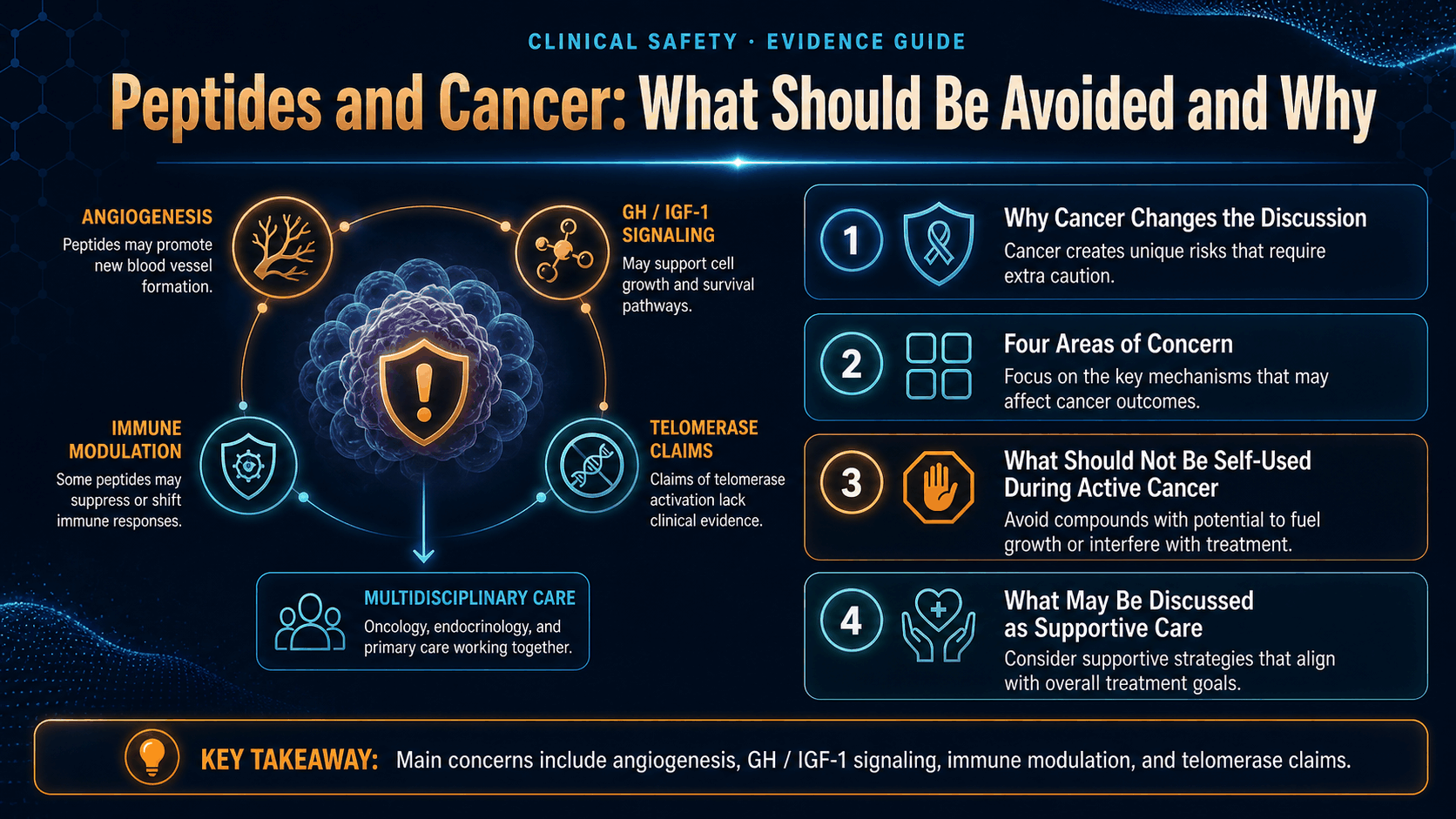
Why Cancer Changes the Discussion
In oncology, theoretical benefit is not enough.
A compound may appear promising in a wound-healing, anti-inflammatory, or animal model while still posing unanswered questions in active cancer. The concern is not that every peptide has been proven to accelerate every tumor. The concern is that benefit may be unproven, interactions may be unknown, and the consequences of being wrong can be serious.
Four Areas of Concern
Angiogenesis
New blood-vessel formation supports healing, but tumors may also depend on vascular growth. Human oncology safety for BPC-157, TB-500, and similar regenerative compounds is not established.
GH and IGF-1 Signaling
GH and IGF-1 support normal tissue growth but also activate pathways involved in proliferation and cell survival. Risk varies by tumor type and treatment.
Immune Modulation
Immune-active compounds may alter toxicity or treatment response during immunotherapy or other oncology protocols.
Telomerase Claims
Epitalon is promoted for telomerase-related longevity effects, but meaningful human evidence and cancer-safety data remain insufficient.
 Sponsored / AffiliateUlta Lab Tests · Lab testing for hormones, inflammation, and wellness
What Should Not Be Self-Used During Active Cancer
- CJC-1295, Ipamorelin, GHRP-6, and other GH secretagogues
- TB-500 or Thymosin Beta-4 products
- BPC-157
- Epitalon
- Systemic GHK-Cu or injectable copper-peptide products
- Thymalin or Thymosin Alpha-1 outside an oncology-directed protocol
What May Be Discussed as Supportive Care
Thymosin Alpha-1
Studied as an immunomodulatory adjunct in selected settings and countries. It is not a universal cancer therapy.
Nutrition Support
Adequate protein and oral nutrition supplements may help during weight loss or treatment-related malnutrition.
Symptom Management
Mucositis, nausea, diarrhea, and GI injury should be managed with evidence-based supportive care.
 Sponsored / AffiliatePeptide University · Peptide learning resources and educational programs
After Treatment: Why There Is No Universal Safe Timeline
Summary Table
| Compound | Active Cancer / Treatment | After Treatment | Evidence-Based Interpretation |
|---|---|---|---|
| CJC-1295 / Ipamorelin | Do not self-use | Oncology and endocrine review | Raises GH / IGF-1 signaling; no established oncology benefit |
| GHRP-6 | Do not self-use | Specialist review | Experimental; alters GH signaling and appetite |
| BPC-157 | Do not self-use | No established safe remission protocol | Human oncology safety and benefit are unproven |
| TB-500 | Do not self-use | Specialist review | Experimental regenerative and vascular effects |
| Epitalon | Do not self-use | No established safe timeline | Longevity and telomerase claims remain unproven |
| Thymalin | Only with oncology team | Individual review | Regional immune-modulating use; limited international evidence |
| Thymosin Alpha-1 | May appear in selected protocols | Individual review | Clinical use varies by country and indication |
| Topical GHK-Cu | Ask before use on affected skin | Usually lower systemic exposure, but product-specific | No universal cancer-safety guarantee |
| Oral collagen / protein | Often part of nutrition support | Usually acceptable if medically appropriate | Food protein, not an anticancer treatment |
Two Common Myths
Myth: BPC-157 treats cancer because it reduces inflammation.
Fact: Reducing inflammation is not the same as treating cancer. BPC-157 is not an approved anticancer drug, and its vascular and regenerative effects create unanswered safety questions.
Myth: If cancer was ten years ago, every peptide is now safe.
Fact: Long remission is encouraging, but recurrence risk varies by cancer type and may persist for years.
Frequently Asked Questions
Can BPC-157 be used during chemotherapy?
There is no established human evidence supporting safety or benefit during chemotherapy. Do not self-use it.
Are GH secretagogues safe after remission?
There is no universal safe timeline. Decisions require oncology and often endocrine review.
Is Thymosin Alpha-1 used in cancer care?
It has been studied or used in selected clinician-directed protocols in some countries, but it is not a universal anticancer therapy.
Is topical GHK-Cu safe after cancer?
Systemic exposure is usually lower, but safety depends on the skin site, treatment history, and product.
Is oral collagen safe during cancer treatment?
It is a protein supplement, not a cancer treatment. It may be acceptable as part of nutrition support when approved by the care team.
Key Takeaways
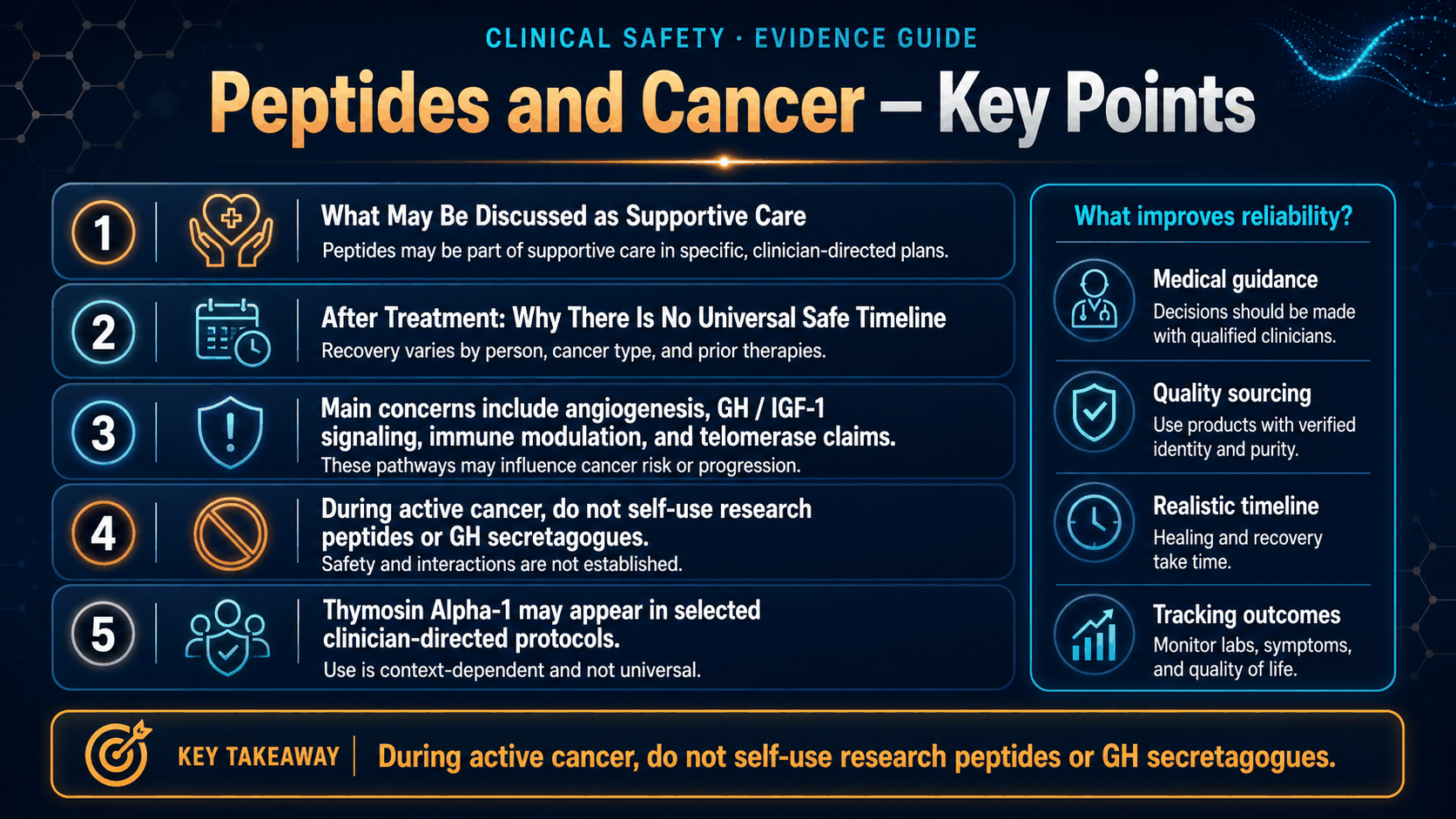
- Main concerns include angiogenesis, GH / IGF-1 signaling, immune modulation, and telomerase claims.
- During active cancer, do not self-use research peptides or GH secretagogues.
- Thymosin Alpha-1 may appear in selected clinician-directed protocols.
- There is no universal safe timeline after remission.
- GH secretagogues, BPC-157, TB-500, Epitalon, and systemic immune peptides require specialist review.
- Never replace or supplement cancer treatment without the oncology team.