
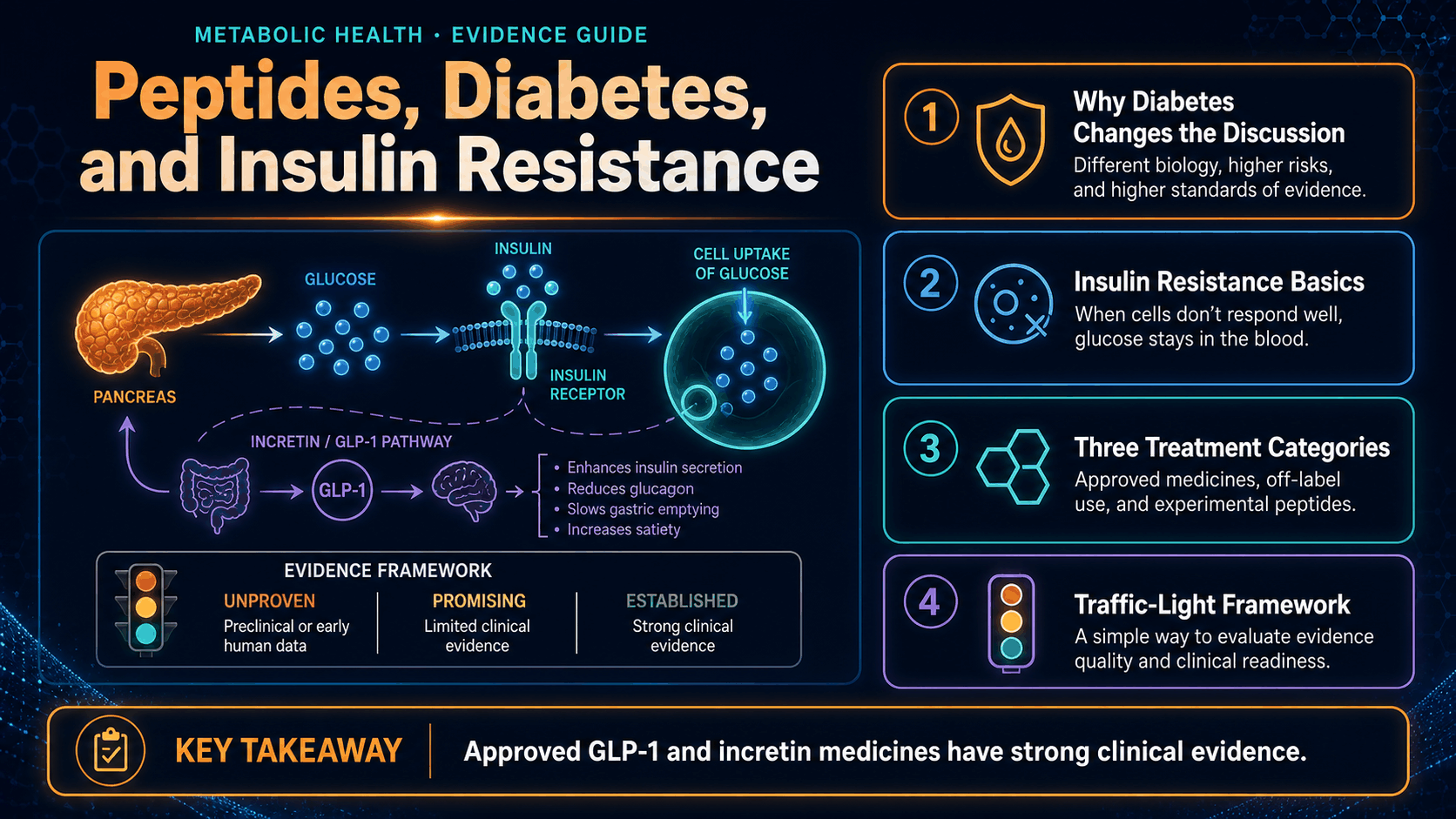
Why Diabetes Changes the Discussion
The word “peptide” covers both approved medicines and unapproved research compounds.
That distinction matters. GLP-1 receptor agonists and dual incretin medicines have extensive human clinical evidence. BPC-157, TB-500, Epitalon, and many GH secretagogues do not have an established role in diabetes care.
Insulin Resistance Basics
Muscle
Glucose uptake becomes less responsive to insulin.
Liver
Hepatic glucose production may remain elevated even when insulin is present.
Adipose Tissue
Fat-cell signaling, inflammation, and lipid release can worsen metabolic dysfunction.
Obesity-related inflammation, sleep disruption, fatty liver disease, inactivity, genetics, and some medications can contribute. Growth hormone has physiologic anti-insulin effects, so compounds that increase GH or IGF-1 deserve special caution.
 Sponsored / AffiliateQuest Health · Personal lab testing and health marker tracking
Three Treatment Categories
GLP-1 and Related Incretin Medicines
These prescription therapies can improve glucose control, reduce appetite, slow gastric emptying, and support clinically meaningful weight loss.
BPC-157 and Similar Research Peptides
Animal and laboratory studies have explored inflammation, tissue injury, vascular signaling, and experimental diabetes models.
GH Secretagogues
CJC-1295, Ipamorelin, GHRP-6, and similar compounds can increase GH or IGF-1 signaling.
Traffic-Light Framework
🟢 Established Medical Use
- Insulin where medically indicated
- GLP-1 receptor agonists
- Dual incretin medicines
- Metformin and guideline-directed therapies
- Nutrition, exercise, sleep, and weight management
🟡 Experimental or Uncertain
- BPC-157
- TB-500
- Epitalon
- Thymalin or Thymosin Alpha-1
- Collagen peptides as supplements, not diabetes treatment
🔴 Avoid Self-Directed Use
- CJC-1295, Ipamorelin, or GHRP-6
- Unapproved injectable stacks
- Stopping prescribed medication because of a peptide
- Using online HbA1c cutoffs as permission to self-inject
- Combining multiple research compounds
 Sponsored / AffiliateApollo Peptide Sciences · Research-focused peptide science and molecular data
The Real Metabolic Foundation
Nutrition
Adequate protein, high-fiber carbohydrates, minimally processed foods, and a sustainable eating pattern.
Exercise
Resistance and aerobic training improve glucose uptake and insulin sensitivity.
Weight Management
Even modest weight loss can improve glycemic control in many people with type 2 diabetes.
Sleep
Poor sleep and untreated sleep apnea can worsen insulin resistance and appetite regulation.
Medication
Treatment should reflect HbA1c, cardiovascular disease, kidney disease, weight goals, and hypoglycemia risk.
Monitoring
Home glucose readings, HbA1c, kidney function, and other markers should be interpreted in clinical context.
Two Common Myths
Myth: BPC-157 treats diabetes, so metformin can be stopped.
Fact: BPC-157 is not an approved glucose-lowering medicine. Animal findings do not justify replacing established therapy.
Myth: All peptides are too dangerous for anyone with diabetes.
Fact: Several major diabetes medicines are peptide-based. Safety depends on the exact molecule, evidence, approval status, condition, and product quality.
Frequently Asked Questions
Can BPC-157 lower blood sugar?
There is no strong human evidence that it meaningfully lowers glucose or HbA1c.
Are GH secretagogues safe with type 2 diabetes?
They may worsen insulin sensitivity and glucose control, so self-directed use is especially risky.
Are GLP-1 medicines peptides?
Yes. They are peptide-based prescription medicines with established clinical uses.
Can collagen powder raise glucose?
Pure collagen contains protein rather than sugar, but flavored products may contain added carbohydrates.
Should diabetes medication be changed when starting a peptide?
Medication changes should only be made by the prescribing clinician.
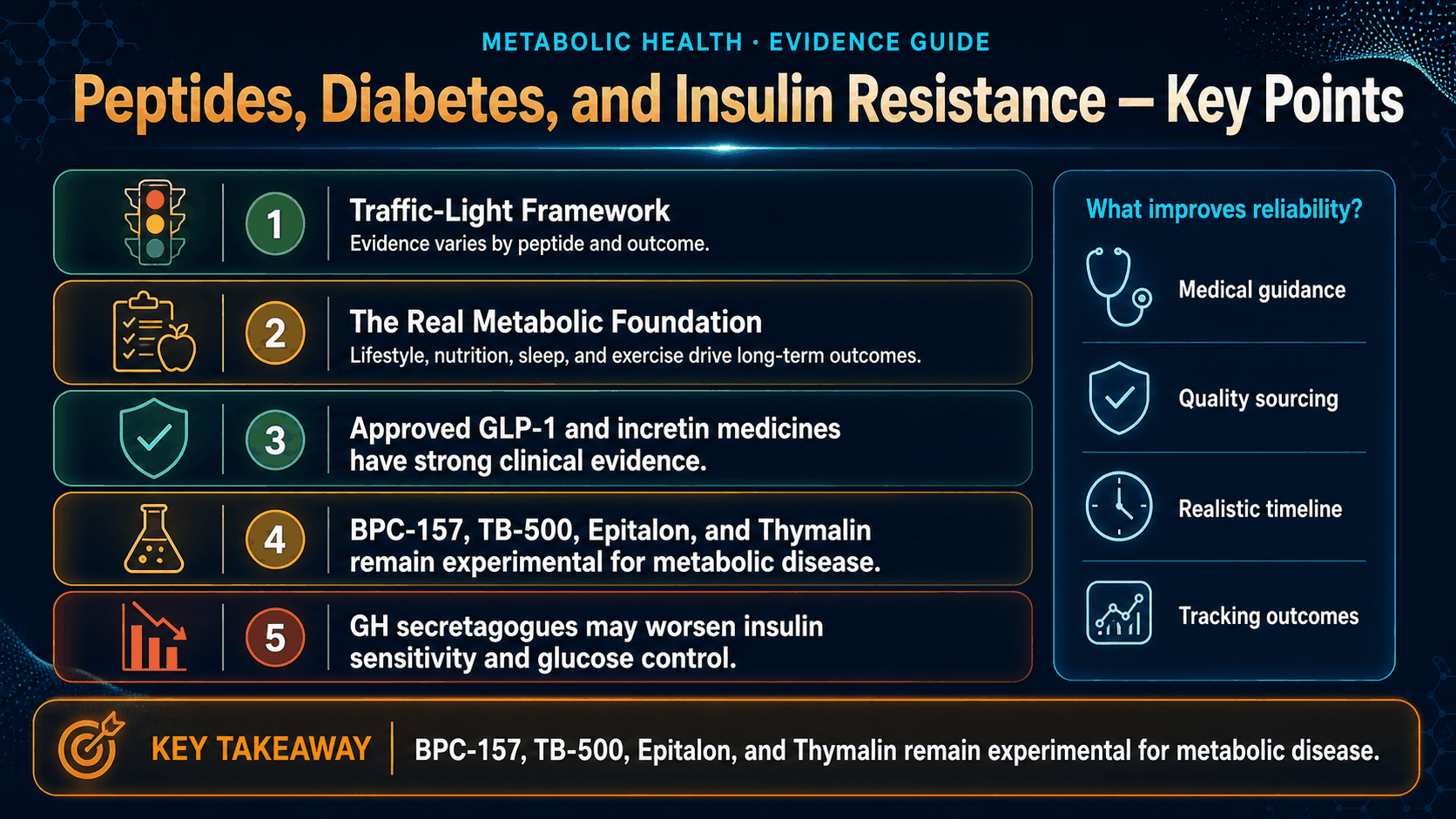
Key Takeaways
- Approved GLP-1 and incretin medicines have strong clinical evidence.
- BPC-157, TB-500, Epitalon, and Thymalin remain experimental for metabolic disease.
- GH secretagogues may worsen insulin sensitivity and glucose control.
- Type 1 diabetes requires insulin and specialist management.
- Never stop diabetes medication because of an experimental peptide.
- Clinical evidence and approval matter more than online mechanism claims.