
Why the Endothelium Matters
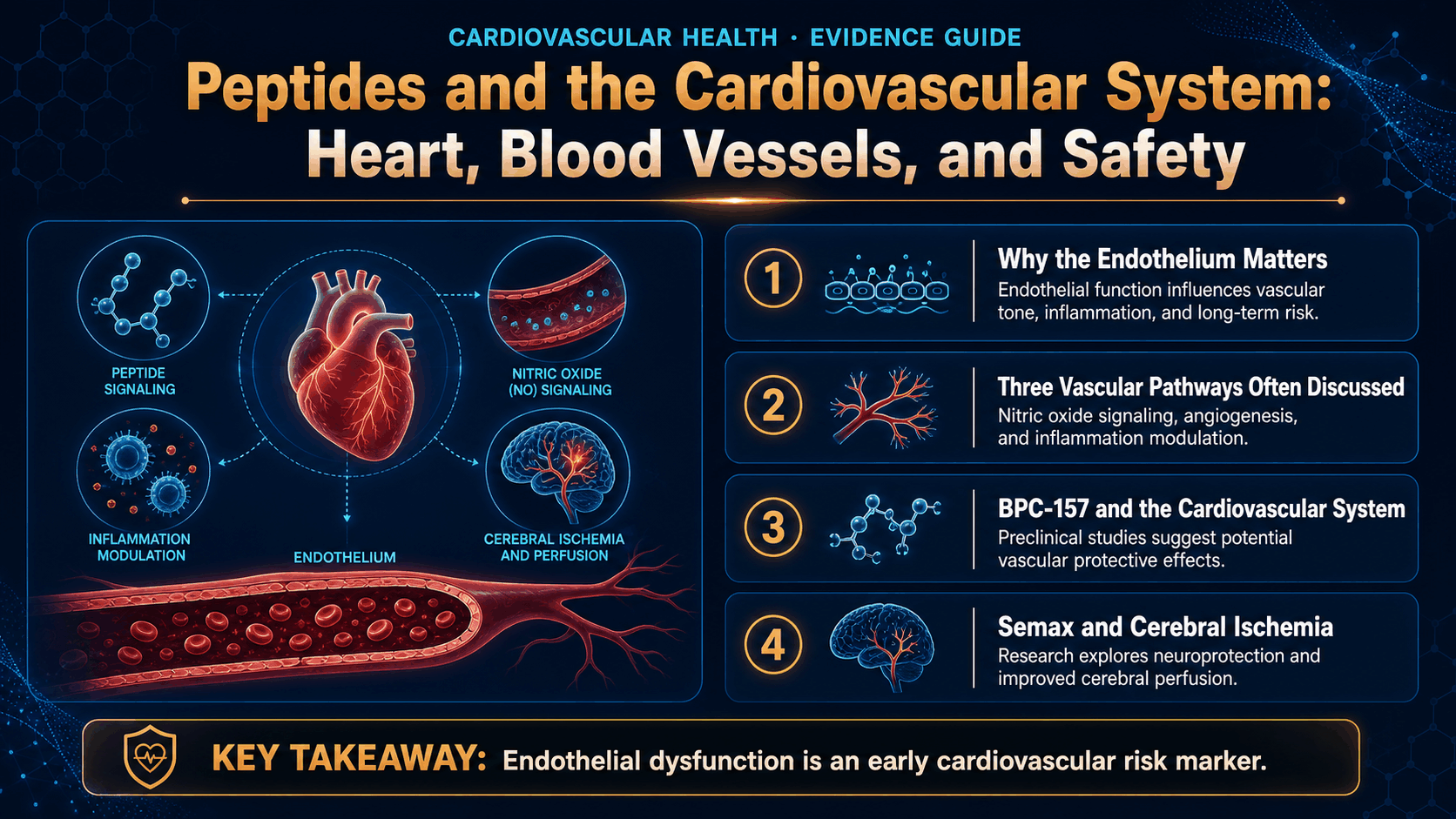
The endothelium is the thin cellular layer lining every blood vessel.
It helps regulate vascular tone, clotting, inflammation, and exchange between blood and tissue. Endothelial dysfunction is associated with hypertension, diabetes, smoking, dyslipidemia, obesity, and atherosclerosis.
Three Vascular Pathways Often Discussed
Vascular Inflammation
Animal and laboratory work has explored inflammatory pathways related to BPC-157. Cosmetic peptides should not be extrapolated into systemic cardiovascular treatment.
Angiogenesis and Microcirculation
BPC-157 and TB-500 are promoted for vascular growth and repair. Human benefit in peripheral arterial disease, diabetic-foot ischemia, or coronary disease is not established.
Nitric Oxide and Vascular Tone
Preclinical BPC-157 studies involve NO-related pathways, but predictable effects on human blood pressure have not been demonstrated.
 Sponsored / AffiliatePeptide ReGenesis · Peptide education, protocols, and wellness-focused resources
BPC-157 and the Cardiovascular System
Myocardial Injury Models
Rodent studies have reported changes in infarct size, inflammation, or cardiac function. These findings do not establish treatment for heart attack or heart failure in humans.
Arrhythmia Models
Some animal studies report fewer rhythm disturbances under specific conditions. BPC-157 is not an antiarrhythmic medicine.
Blood Pressure Claims
Animal findings do not prove a reliable “buffering” effect that raises low pressure and lowers high pressure in humans.
Clinical Status
BPC-157 is not an approved treatment for hypertension, atherosclerosis, heart attack, arrhythmia, peripheral arterial disease, or heart failure.
Semax and Cerebral Ischemia
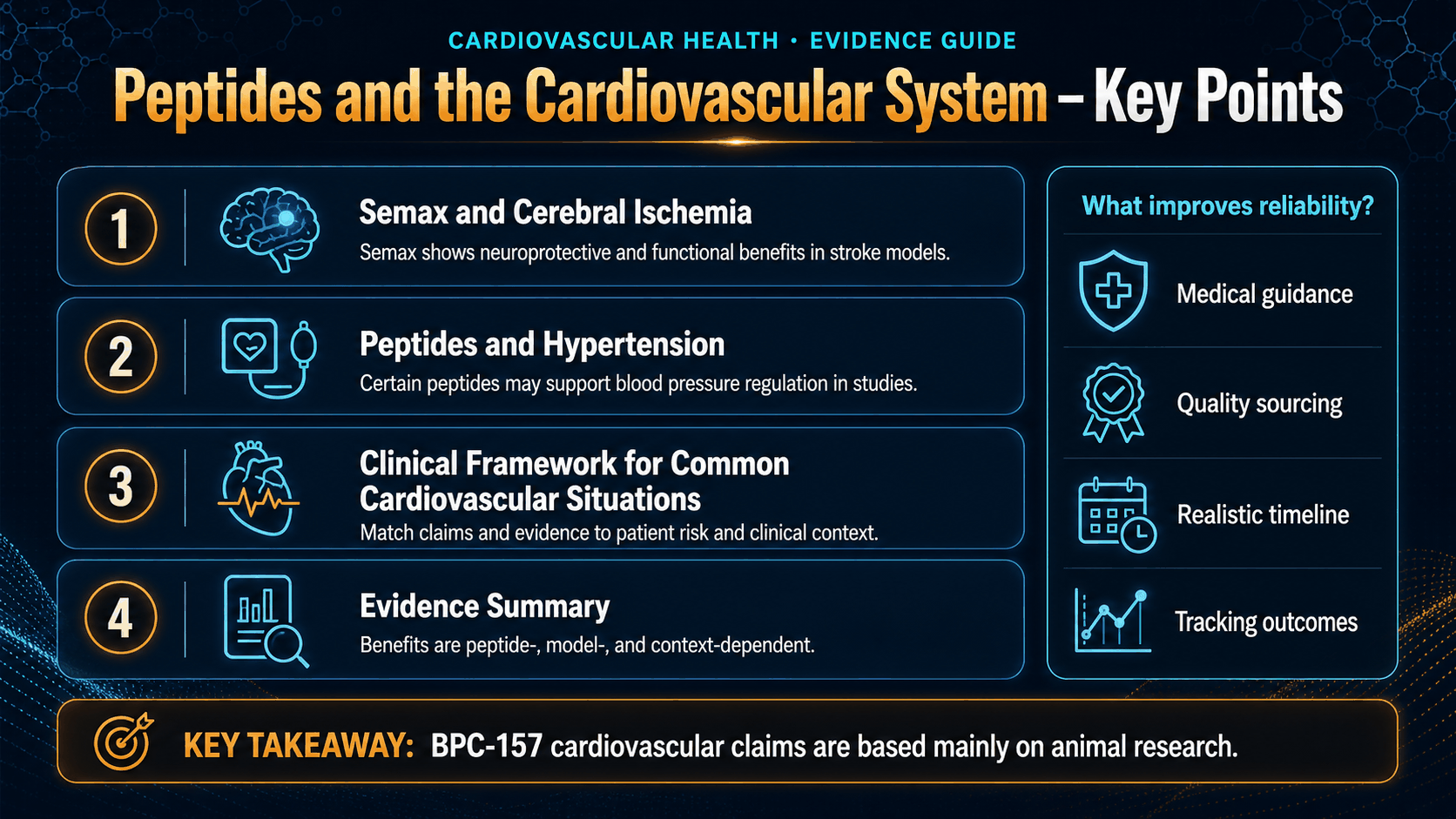
Semax is a synthetic peptide with regional clinical use in Russia and neighboring countries for selected neurologic indications. It is not broadly approved internationally as standard acute-stroke treatment.
Regional studies have examined neurotrophic signaling, oxidative-stress modulation, and protection of tissue surrounding an ischemic area. Independent international replication remains limited.
Peptides and Hypertension
Experimental peptides do not replace ACE inhibitors, ARBs, calcium-channel blockers, thiazide-type diuretics, or other guideline-directed treatment.
BPC-157
No reliable human evidence shows that it treats essential hypertension or a special “inflammatory hypertension” subtype.
Epitalon
Sleep and circadian rhythms affect nighttime blood pressure, but evidence that Epitalon treats a non-dipping pattern is insufficient.
Oral Collagen Peptides
Small nutrition studies have explored arterial stiffness and blood-pressure outcomes. Any effect appears modest.
GH Secretagogues
These compounds may cause fluid retention and may worsen blood pressure or untreated sleep apnea.
 Sponsored / AffiliateUlta Lab Tests · Lab testing for hormones, inflammation, and wellness
Clinical Framework for Common Cardiovascular Situations
Evidence Summary
| Compound | Endothelium | Blood Pressure | Ischemia | Clinical Status |
|---|---|---|---|---|
| BPC-157 | Preclinical vascular data | No established human effect | Animal cardioprotection studies | Unapproved / experimental |
| TB-500 | Preclinical repair and angiogenesis | Not established | No validated clinical role | Unapproved / experimental |
| Semax | Indirect neurovascular interest | No standard BP indication | Regional stroke research and use | Approval varies by country |
| Epitalon | Preclinical antioxidant claims | No proven hypertension role | Not established | Experimental |
| GH secretagogues | Complex GH / IGF-1 effects | Fluid-retention concern | No cardiovascular indication | Not for routine cardiac use |
| Oral collagen peptides | Nutrition research | Possible modest effect | No acute-ischemia role | Food supplement, not therapy |
Two Common Myths
Myth: BPC-157 lowers blood pressure, so medication can be stopped.
Fact: There is no reliable human evidence that BPC-157 treats hypertension. Stopping prescribed medication can cause stroke, heart attack, kidney injury, or hypertensive crisis.
Myth: Semax improves memory, so it protects against every cerebrovascular problem.
Fact: Cognitive effects do not prove protection in stroke, hemorrhage, aneurysm, or vascular malformation.
Frequently Asked Questions
Can BPC-157 improve endothelial function?
Preclinical research suggests vascular effects, but meaningful human cardiovascular benefit has not been established.
Is Semax approved for stroke?
It has regional clinical use in some countries, but it is not broadly accepted as standard acute-stroke treatment internationally.
Can collagen peptides lower blood pressure?
Some small studies suggest a modest effect, but collagen does not replace antihypertensive treatment.
Are GH secretagogues safe with hypertension?
They may cause fluid retention and can complicate blood-pressure control, especially without medical supervision.
What is the best way to protect the endothelium?
Control blood pressure, cholesterol, diabetes, smoking, physical activity, weight, sleep, and diet.
Key Takeaways
- Endothelial dysfunction is an early cardiovascular risk marker.
- BPC-157 cardiovascular claims are based mainly on animal research.
- Semax has regional neurologic use but must never delay emergency stroke care.
- No research peptide replaces blood-pressure, lipid, antiplatelet, or anticoagulant treatment.
- GH secretagogues may cause fluid retention and worsen cardiovascular risk.
- Proven prevention remains blood-pressure control, exercise, smoking cessation, diabetes care, and lipid management.