
How Peptides and Hormones Connect
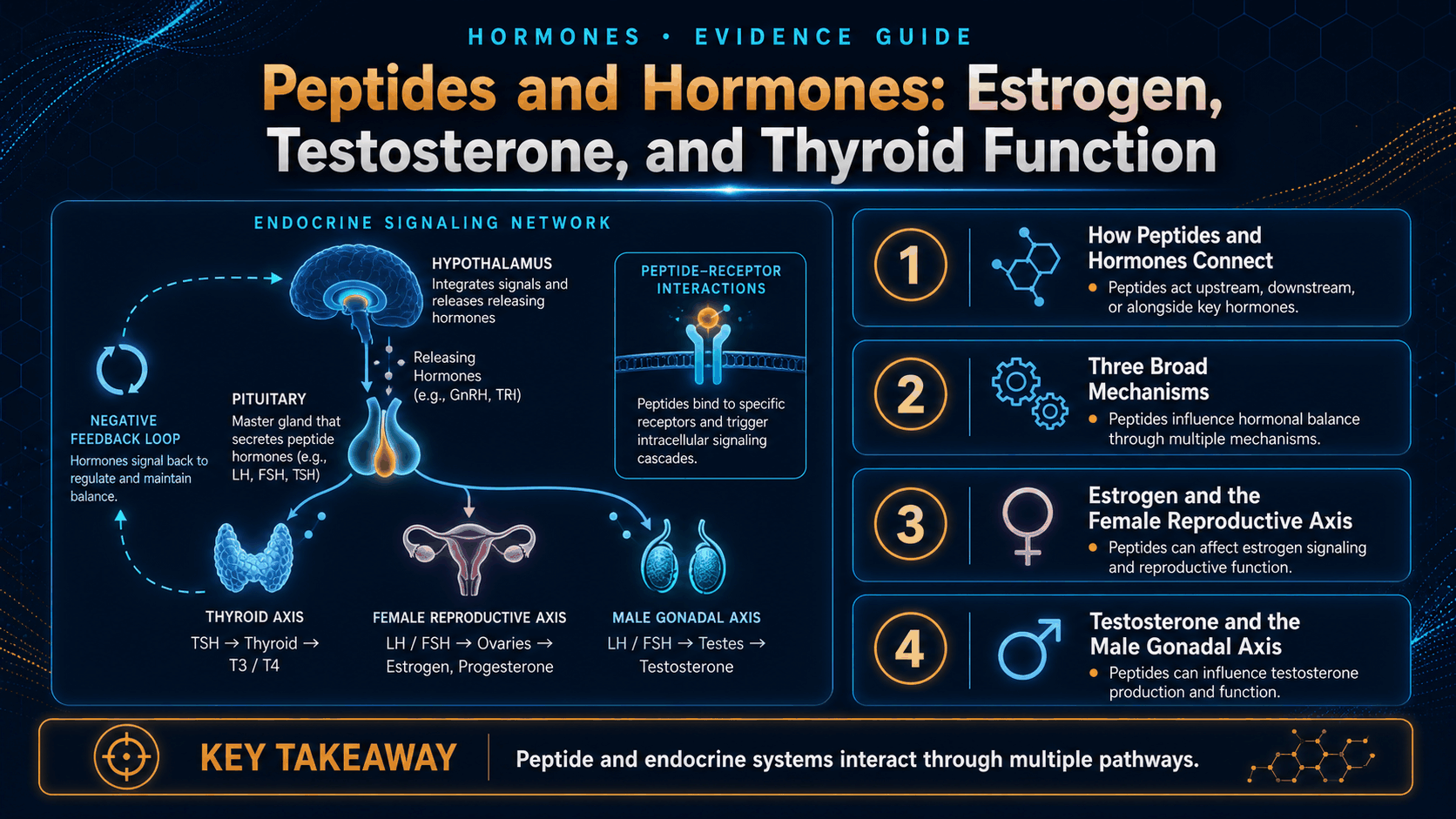
Peptide and endocrine systems are deeply interconnected.
Many natural hormones are peptides, and some peptide-based medicines act directly on endocrine pathways. Experimental compounds may also alter hormone release, metabolism, receptor signaling, or laboratory values. The challenge is distinguishing established pharmacology from plausible but unproven claims.
Three Broad Mechanisms
Direct Endocrine Stimulation
Growth-hormone secretagogues can stimulate pituitary GH release and increase IGF-1.
Indirect Health Effects
Sleep, inflammation, illness, body composition, and energy balance can influence hormone markers.
Circadian Signaling
Sleep and circadian rhythms affect melatonin, cortisol, GH pulses, and reproductive signaling.
 Sponsored / AffiliateMomentous · Performance nutrition and recovery supplements
Estrogen and the Female Reproductive Axis
What is biologically plausible?
GH and IGF-1 signaling interact with reproductive tissues, but increasing IGF-1 does not predictably improve ovarian function or estrogen status.
Epitalon has limited preclinical and regional literature related to reproductive aging and circadian pathways.
Collagen peptides may support protein intake and skin or bone health but do not replace estrogen therapy when medically indicated.
Clinical cautions
Cycle changes, fertility issues, prolactin changes, thyroid disease, body-weight changes, and low energy availability can alter reproductive hormones independently of peptides.
PCOS, abnormal bleeding, infertility, pregnancy planning, or persistent cycle changes require gynecologic assessment.
Testosterone and the Male Gonadal Axis
What is known?
GH and IGF-1 interact with testicular physiology, but GH secretagogues are not established treatments for male hypogonadism.
Older GHRPs may affect prolactin or cortisol in some settings.
Claims that BPC-157 or TB-500 lower SHBG or increase free testosterone are not supported by robust human evidence.
What should be evaluated?
Low libido, fatigue, erectile dysfunction, infertility, and muscle loss can arise from sleep apnea, obesity, diabetes, medication effects, depression, thyroid disease, or true hypogonadism.
A diagnosis usually requires symptoms plus repeat morning testosterone testing and interpretation of SHBG and LH.
Thyroid Function
GH-axis interaction
Growth hormone can alter peripheral thyroid-hormone metabolism, including T4-to-T3 conversion.
Untreated hypothyroidism can cause fatigue, weight change, poor exercise tolerance, lipid abnormalities, and reproductive symptoms.
Claims that BPC-157 reduces autoimmune thyroid inflammation in humans remain unproven.
Practical guidance
Known thyroid disease should be properly assessed and treated before interventions that affect the GH axis.
There is no established evidence that Thymosin Alpha-1 or Thymalin predictably improve or worsen Hashimoto thyroiditis.
TSH should be interpreted with free T4, symptoms, medications, pregnancy status, and age.
 Sponsored / AffiliateMito Red Light · Red light therapy devices for recovery and wellness routines
Evidence Matrix
| Compound | Estrogen Axis | Testosterone Axis | GH / IGF-1 | Thyroid | Cortisol / Prolactin |
|---|---|---|---|---|---|
| CJC-1295 / Ipamorelin | No predictable effect established | Not a hypogonadism treatment | Can increase GH / IGF-1 | May alter thyroid-hormone metabolism | Variable |
| GHRP-6 | No established direct role | Indirect effects uncertain | Can stimulate GH release | No established role | May affect prolactin or cortisol |
| BPC-157 | Insufficient human evidence | No proven SHBG effect | No established effect | No proven thyroid benefit | Insufficient evidence |
| Epitalon | Preclinical / regional claims | No reliable effect established | No established effect | No established role | Circadian claims uncertain |
| Thymosin Alpha-1 | No established direct effect | No established direct effect | No established direct effect | Insufficient Hashimoto evidence | No routine endocrine role |
| TB-500 | No reliable human evidence | No reliable human evidence | No established effect | No established effect | No proven cortisol effect |
Nine Common Laboratory Markers
IGF-1
GH-axis evaluationUseful when GH excess or deficiency is suspected. Interpretation is age- and assay-dependent.
TSH + Free T4
Thyroid symptomsStandard first-line thyroid testing. Free T3 and antibodies are added selectively.
Morning Cortisol
Suspected adrenal diseaseNot a universal monitoring test for every peptide user.
Total Testosterone + SHBG
Male hypogonadism symptomsMorning testing and repeat confirmation may be needed.
Estradiol
Cycle, fertility, or therapy questionsInterpretation depends on sex, menstrual phase, medications, and assay quality.
Prolactin
Low libido, infertility, pituitary concernsCan be affected by stress, medications, sleep, and pregnancy.
TPO Antibodies
Suspected autoimmune thyroid diseaseUseful diagnostically in selected cases; repeated tracking may not guide treatment.
LH + FSH
Infertility, menopause, hypogonadismHelp distinguish gland failure from hypothalamic or pituitary causes.
Fasting Glucose / HbA1c
Metabolic riskGH-axis interventions may affect glucose regulation.
Two Common Myths
Myth: GH secretagogues affect only growth hormone.
Fact: The GH–IGF-1 axis interacts with metabolism, thyroid-hormone conversion, reproductive tissues, and glucose regulation.
Myth: Everyone using peptides needs the same nine-test panel.
Fact: The right tests depend on symptoms, history, age, sex, medications, and the exact intervention.
Frequently Asked Questions
Can CJC-1295 or Ipamorelin increase testosterone?
They are not established treatments for low testosterone, and effects on the male gonadal axis are not predictable.
Can BPC-157 lower SHBG?
There is no robust human evidence supporting that claim.
Does Epitalon improve menopause symptoms?
Reliable human evidence is insufficient.
Can GH-related compounds affect thyroid tests?
Yes. GH can influence thyroid-hormone metabolism, especially T4-to-T3 conversion.
Should everyone test IGF-1?
No. IGF-1 testing is most useful when a clinician is evaluating the GH axis.
Key Takeaways
- Peptide and endocrine systems interact through multiple pathways.
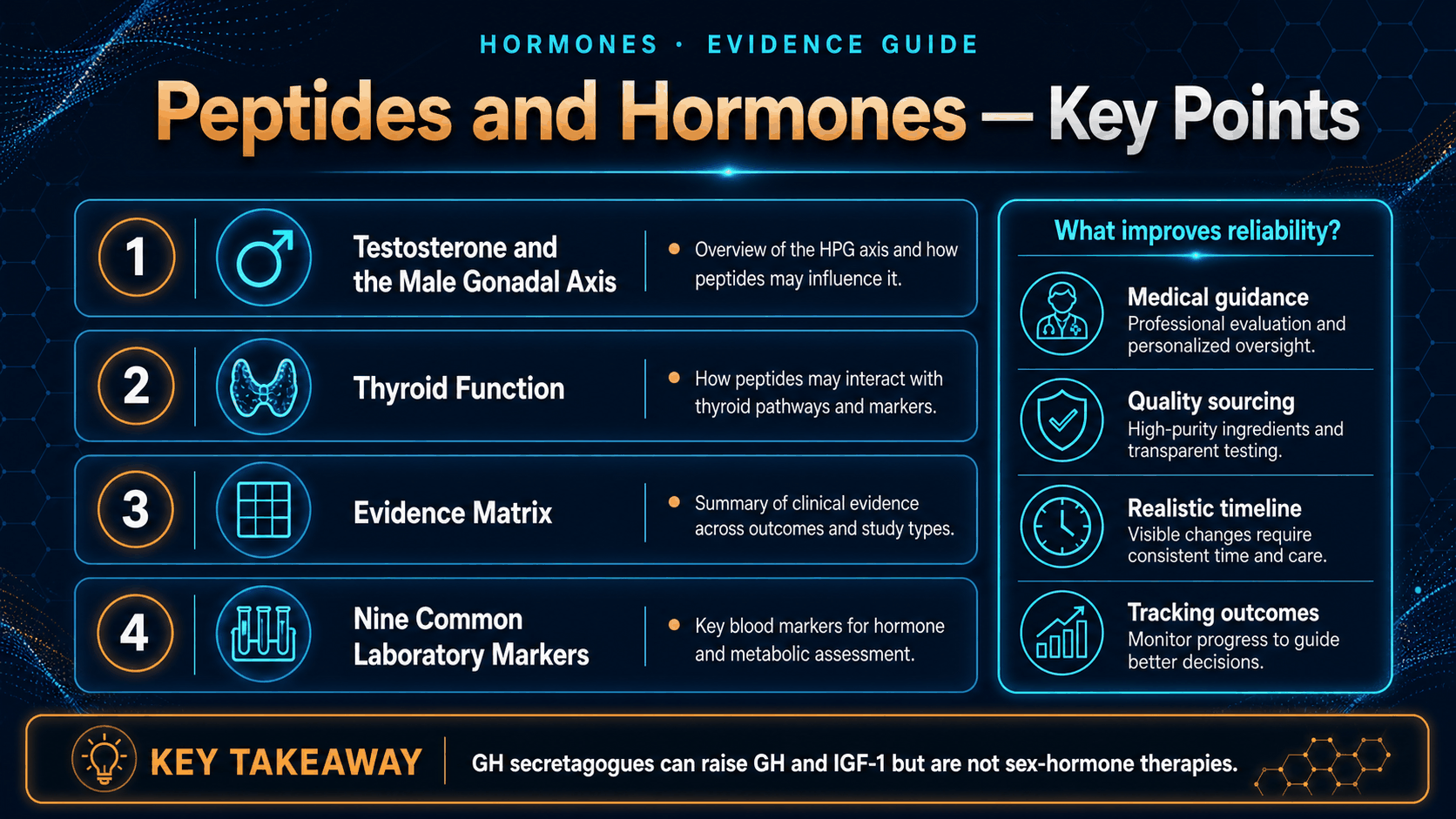
- GH secretagogues can raise GH and IGF-1 but are not sex-hormone therapies.
- BPC-157, TB-500, and Epitalon hormone claims remain unproven in humans.
- GH-axis interventions may affect glucose and thyroid-hormone metabolism.
- Thyroid, fertility, and testosterone symptoms require formal diagnosis.
- Laboratory testing should answer a clinical question—not validate an online protocol.