
What Is TB-500?
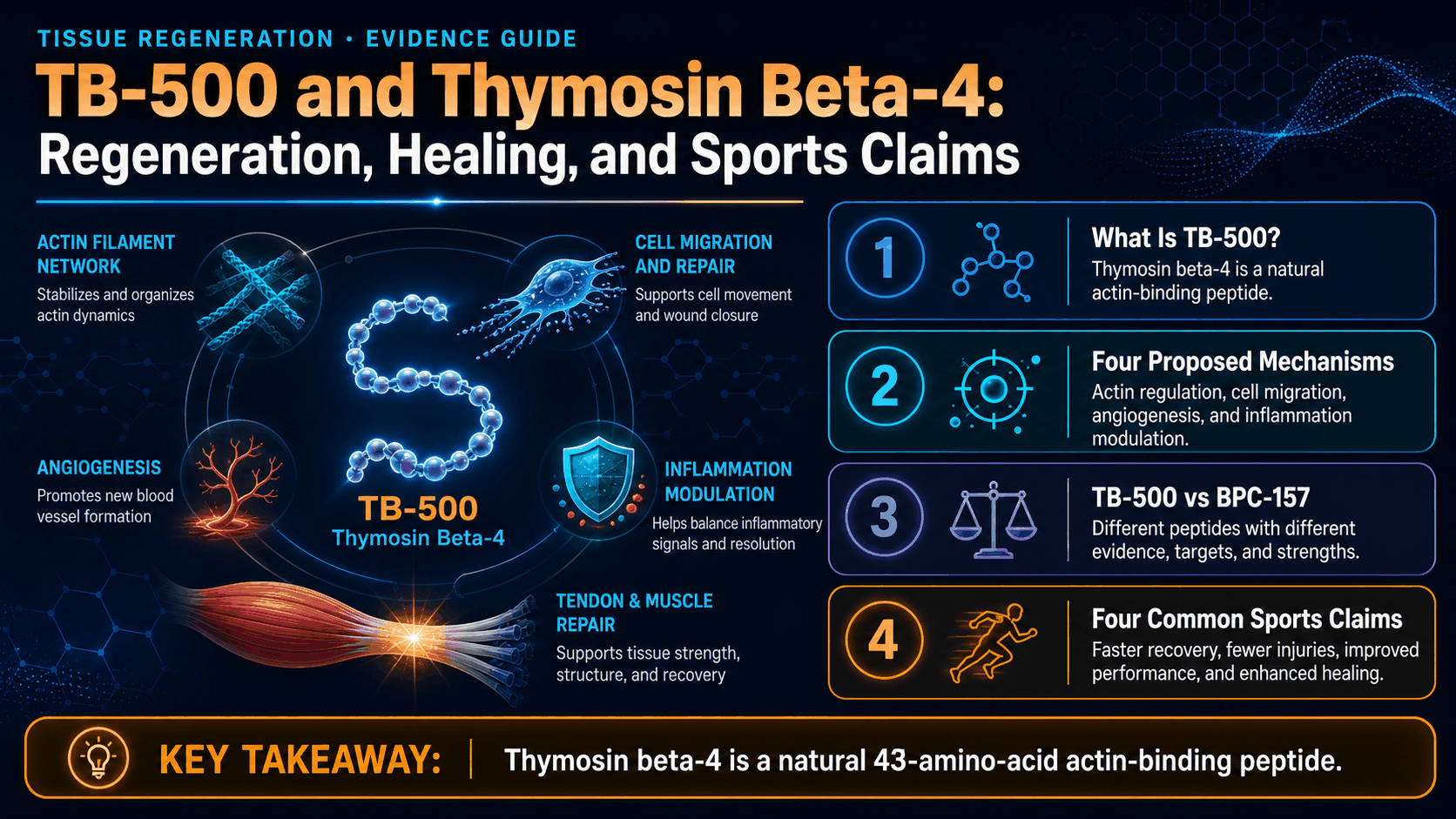
Thymosin beta-4 is a naturally occurring 43-amino-acid peptide involved in actin regulation and repair biology.
Commercial products labeled TB-500 may contain full-length thymosin beta-4, a fragment, or an analogue. That distinction matters because product identity, purity, and biological activity may differ.
Four Proposed Mechanisms
Actin Binding and Cell Migration
Thymosin beta-4 binds G-actin and influences the balance between monomeric and filamentous actin, affecting cell movement in experimental models.
Progenitor-Cell Signaling
Preclinical studies have examined epicardial, vascular, and muscle progenitor responses. This does not prove stem-cell regeneration in human athletes.
Fibrosis and Matrix Remodeling
Animal studies suggest possible effects on scar formation, collagen deposition, and matrix-remodeling enzymes. Human evidence remains limited.
Inflammatory Signaling
Research has explored NF-κB-related and cytokine pathways. TB-500 is not an approved anti-inflammatory treatment.
 Sponsored / AffiliateMito Red Light · Red light therapy devices for recovery and wellness routines
TB-500 vs BPC-157
TB-500 / Thymosin β4
- Parent molecule43 amino acids
- Main pathwayActin and cell migration
- Research areasWound, vascular, cardiac models
- Human injury trialsVery limited
- Clinical statusUnapproved / experimental
BPC-157
- Molecule15 amino acids
- Main pathwaysVascular and NO-related models
- Research areasGI and tendon models
- Human injury trialsInsufficient
- Clinical statusUnapproved / experimental
Four Common Sports Claims
Chronic Muscle Microtrauma
Claims focus on satellite cells and reduced fibrosis. Human evidence for faster recovery from chronic training damage is not established.
Tendinopathy and Overuse Injury
Actin-related migration provides biological plausibility, but progressive loading remains the best-supported treatment.
Acute Muscle Tears
There is no validated evidence that early TB-500 use improves muscle-tear healing in humans.
“General Regeneration”
No clinical evidence supports preventive courses for accumulated micro-scarring in healthy athletes.
 Sponsored / AffiliateiHerb · Supplements, wellness products, and daily health essentials
A Safer Clinical Framework
Risks and Limitations
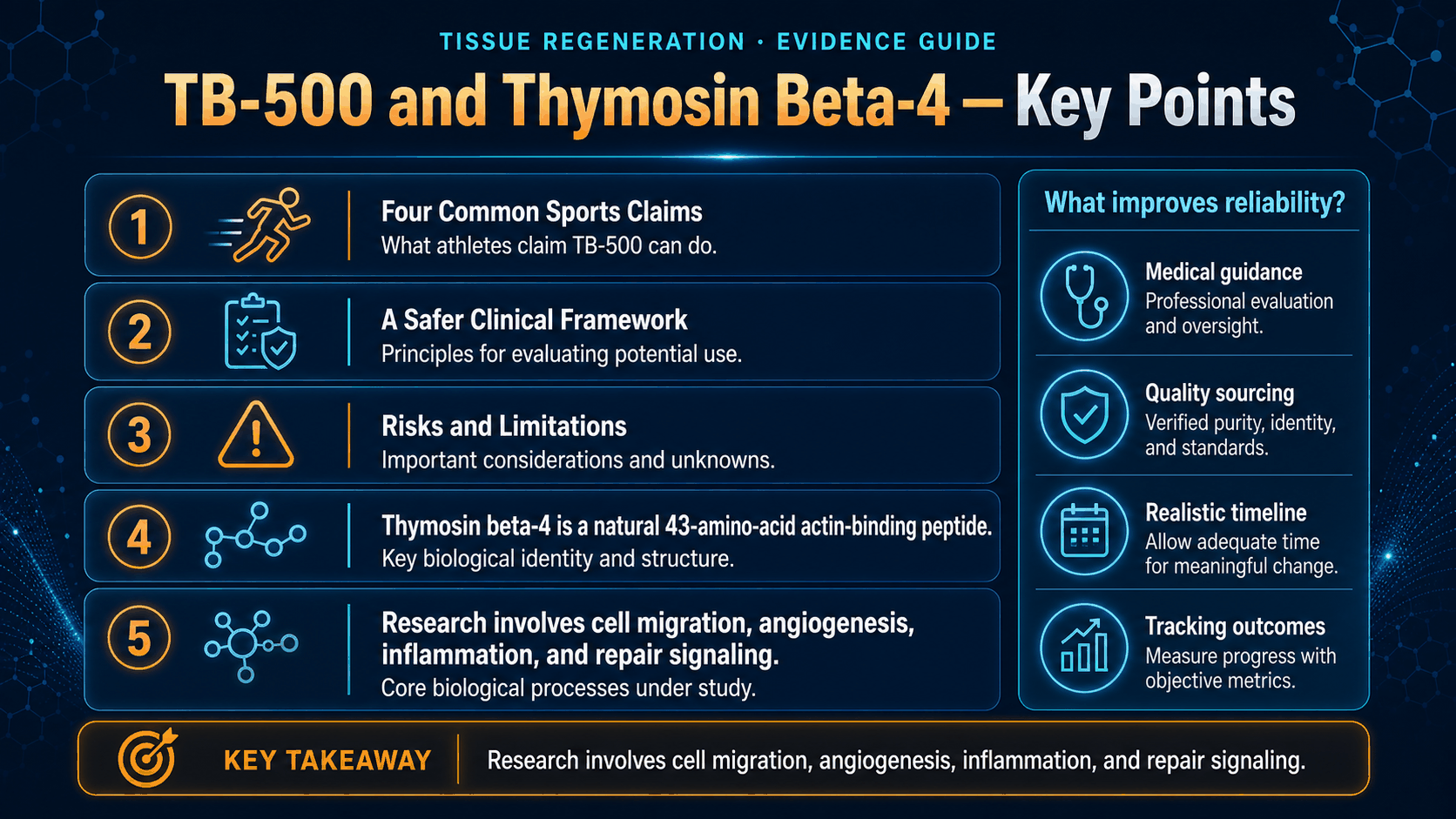
- Active cancer or unexplained mass: avoid unapproved pro-angiogenic repair compounds without specialist guidance.
- Pregnancy or breastfeeding: safety is unknown.
- Autoimmune or inflammatory disease: immune effects are unpredictable.
- Product quality: mislabeled or contaminated research products are possible.
- Injection risk: infection, abscess, dosing error, and tissue injury.
- Competitive sport: prohibited under anti-doping rules.
Two Common Myths
Myth: TB-500 is basically the same as BPC-157, only more expensive.
Fact: The molecules and proposed pathways differ, but neither has enough human evidence to define ideal indications or validated combinations.
Myth: Injecting closer to the painful area always works better.
Fact: There is no validated evidence that local self-injection improves outcomes. Injection into a tendon, muscle tear, or joint can cause infection and injury.
Frequently Asked Questions
Is TB-500 the same as thymosin beta-4?
Not always. Commercial TB-500 may be full-length thymosin beta-4, a fragment, or an analogue.
Can TB-500 heal tendons?
Preclinical research is interesting, but reliable human evidence is lacking.
Is TB-500 better than BPC-157?
No direct human trials establish superiority.
Can athletes use TB-500?
Tested athletes should not use it because it is prohibited under anti-doping rules.
What has stronger evidence for recovery?
Correct diagnosis, progressive rehabilitation, sleep, adequate protein, load management, and approved medical care.
Key Takeaways
- Thymosin beta-4 is a natural 43-amino-acid actin-binding peptide.
- Research involves cell migration, angiogenesis, inflammation, and repair signaling.
- Most sports and injury claims are based on preclinical evidence.
- TB-500 products may not be identical to full-length thymosin beta-4.
- No validated human dosing or injection protocol exists.
- Product quality and long-term safety are uncertain.
- TB-500 is prohibited in tested sport.