
Can Cartilage Repair?
Articular cartilage has limited healing capacity, but joint symptoms and function can still improve substantially.
Cartilage does not regenerate quickly like skin or muscle. It has no direct blood supply, its cells turn over slowly, and advanced structural loss is difficult to reverse. Still, pain, strength, movement, and quality of life can improve through rehabilitation, load management, body-weight control, appropriate medication, and selected supplements.
Four Important Joint Targets
Articular cartilage
Contains type II collagen and proteoglycans and helps distribute load.
Load distributionSynovial fluid
Supports lubrication and nutrition. Hyaluronic acid contributes to viscosity.
LubricationSynovial lining
Can become inflamed and produce mediators that increase pain.
InflammationSubchondral bone
The bone beneath cartilage changes as osteoarthritis progresses.
Structural support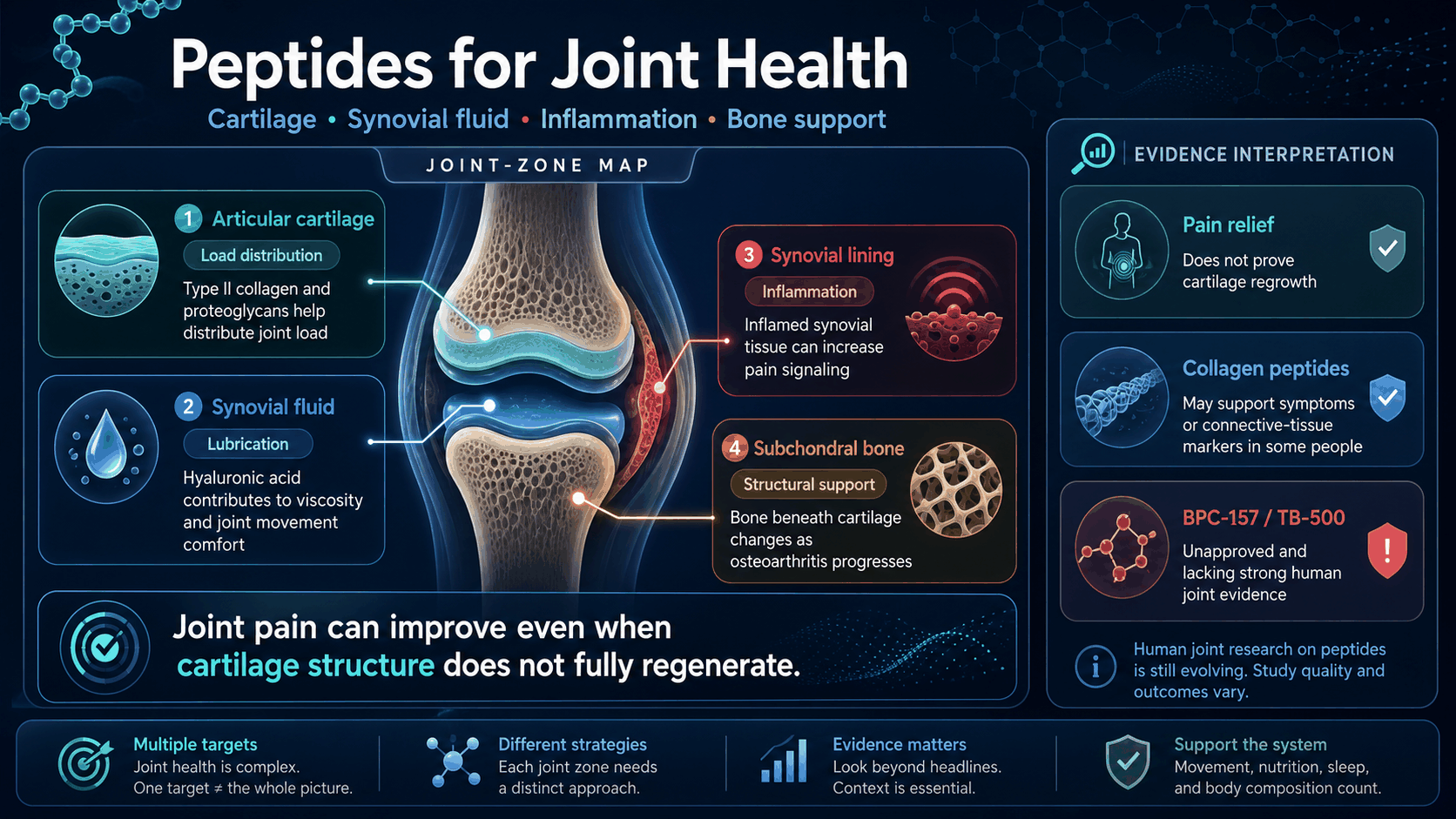
 Sponsored / AffiliatePeptide University · Peptide learning resources and educational programs
Products and Strategies by Joint Target
- Hydrolyzed collagen peptides
- Undenatured type II collagen
- Adequate protein and vitamin C
- Progressive loading and strength work
- Oral hyaluronic acid
- Clinician-administered intra-articular hyaluronic acid
- Movement and load management
- Diagnosis of the cause
- Appropriate anti-inflammatory care
- Weight and load management
- Exercise therapy
- Resistance exercise
- Protein sufficiency
- Vitamin D when deficient
- Medical treatment for bone disease
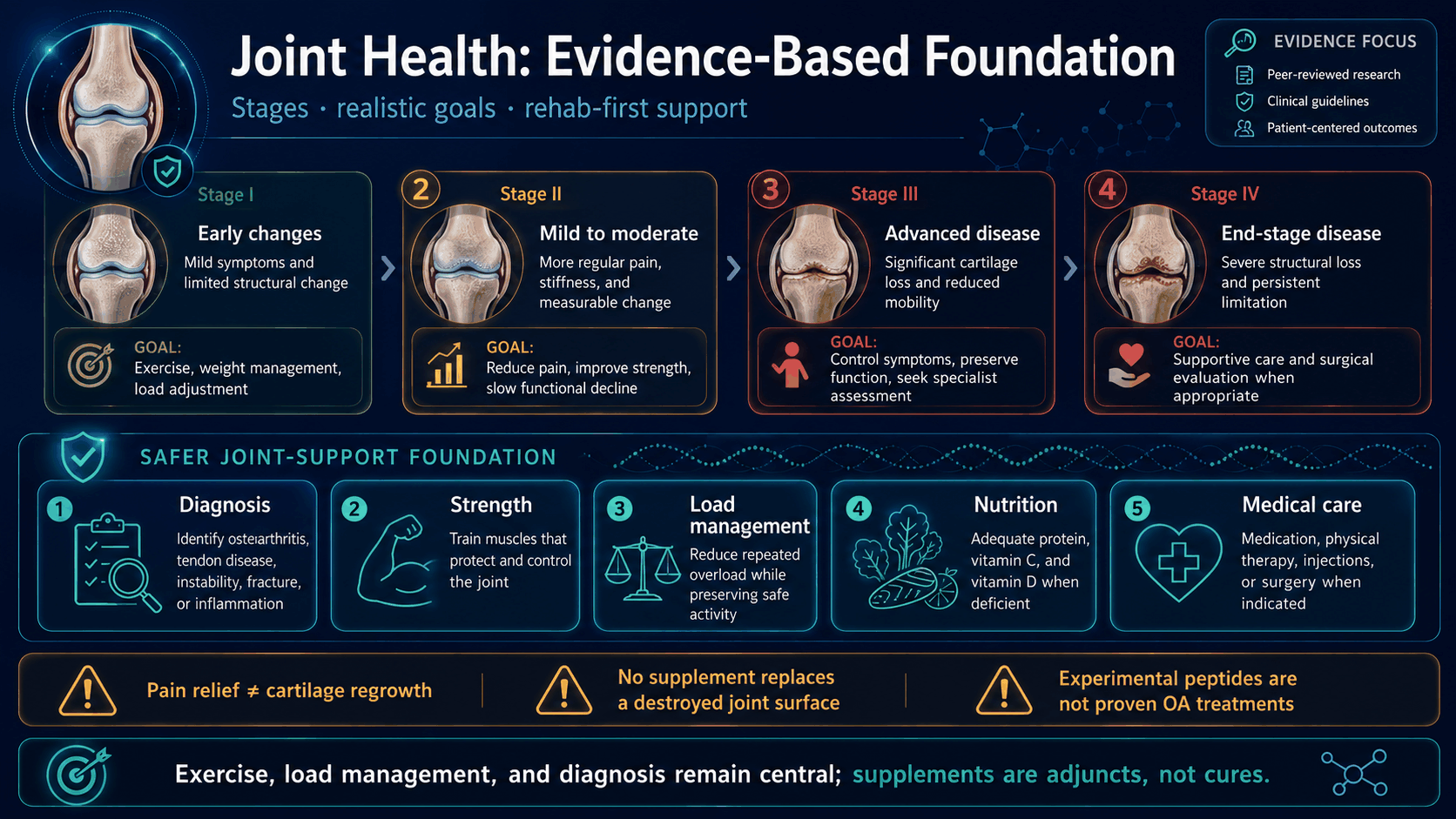
Osteoarthritis Stages and Realistic Goals
Mild symptoms and limited structural change.
Exercise, weight management, load adjustment, optional evidence-based supplements.
More regular pain, stiffness, and measurable change.
Reduce pain, improve strength, slow functional decline.
Significant cartilage loss and reduced mobility.
Control symptoms, preserve function, seek specialist assessment.
Severe structural loss and persistent limitation.
Supportive care and surgical evaluation when appropriate.
Approaches by Problem Type
Acute swollen joint
- Seek assessment after trauma, fever, or inability to bear weight
- Rule out fracture, infection, gout, or internal injury
- Use diagnosis-appropriate rest and symptom control
Chronic osteoarthritis
- Use progressive exercise and strength training
- Consider collagen or UC-II as adjuncts
- Track pain and function rather than expecting cartilage regrowth
Sports loading
- Adjust training volume and intensity
- Maintain adequate protein and vitamin C
- Rebuild tissue capacity progressively
Prevention
- Maintain strength, mobility, and healthy body weight
- Address persistent pain early
- Avoid relying on experimental-peptide cycles
A Safer Joint-Support Foundation
Identify osteoarthritis, tendon disease, instability, fracture, or inflammation.
Train muscles that protect and control the joint.
Reduce repeated overload while preserving safe activity.
Adequate protein, vitamin C, and vitamin D when deficient.
Medication, physical therapy, injections, or surgery when indicated.
 Sponsored / AffiliateQuest Health · Personal lab testing and health marker tracking
Three Common Joint-Care Mistakes
Short-term pain relief and long-term tissue adaptation are different outcomes.
Collagen, UC-II, or hyaluronic acid may be adjuncts, but strength, sleep, body weight, and diagnosis usually matter more.
Recovery requires load adjustment followed by progressive rebuilding.
Two Common Myths
Myth: Glucosamine, chondroitin, collagen peptides, and research peptides are basically the same.
Fact: They are different compounds with different proposed mechanisms and evidence bases. None is a guaranteed cartilage-regrowth treatment.
Myth: Injecting BPC-157 or TB-500 directly into a joint is the most effective approach.
Fact: Self-injection into a joint is dangerous and unsupported. Intra-articular procedures require diagnosis, sterile technique, and a qualified clinician.
Frequently Asked Questions
Can collagen peptides regrow cartilage?
They may help symptoms or connective-tissue markers in some people, but evidence for regrowing lost articular cartilage is limited.
Is hyaluronic acid a peptide?
No. It is a glycosaminoglycan used in some oral products and clinician-administered injections.
Are BPC-157 and TB-500 proven for osteoarthritis?
No. Human joint evidence is insufficient, and these products are not approved osteoarthritis treatments.
What has the strongest evidence for joint function?
For many chronic joint conditions, progressive exercise, strength training, load management, and body-weight control have stronger evidence than supplements.
When should joint pain be evaluated?
Seek care for major trauma, fever, inability to bear weight, severe swelling, locking, instability, deformity, or persistent worsening pain.
Key Takeaways
- Joint health involves cartilage, synovial fluid, inflammation, bone, and muscle control.
- Cartilage repairs slowly and has limited regenerative capacity.
- Exercise and load management remain central.
- Collagen products may help some people but are not a cure.
- BPC-157 and TB-500 are unapproved and lack strong human joint evidence.
- Advanced osteoarthritis may require specialist or surgical care.