
Peptides and Steroids Are Not the Same Thing
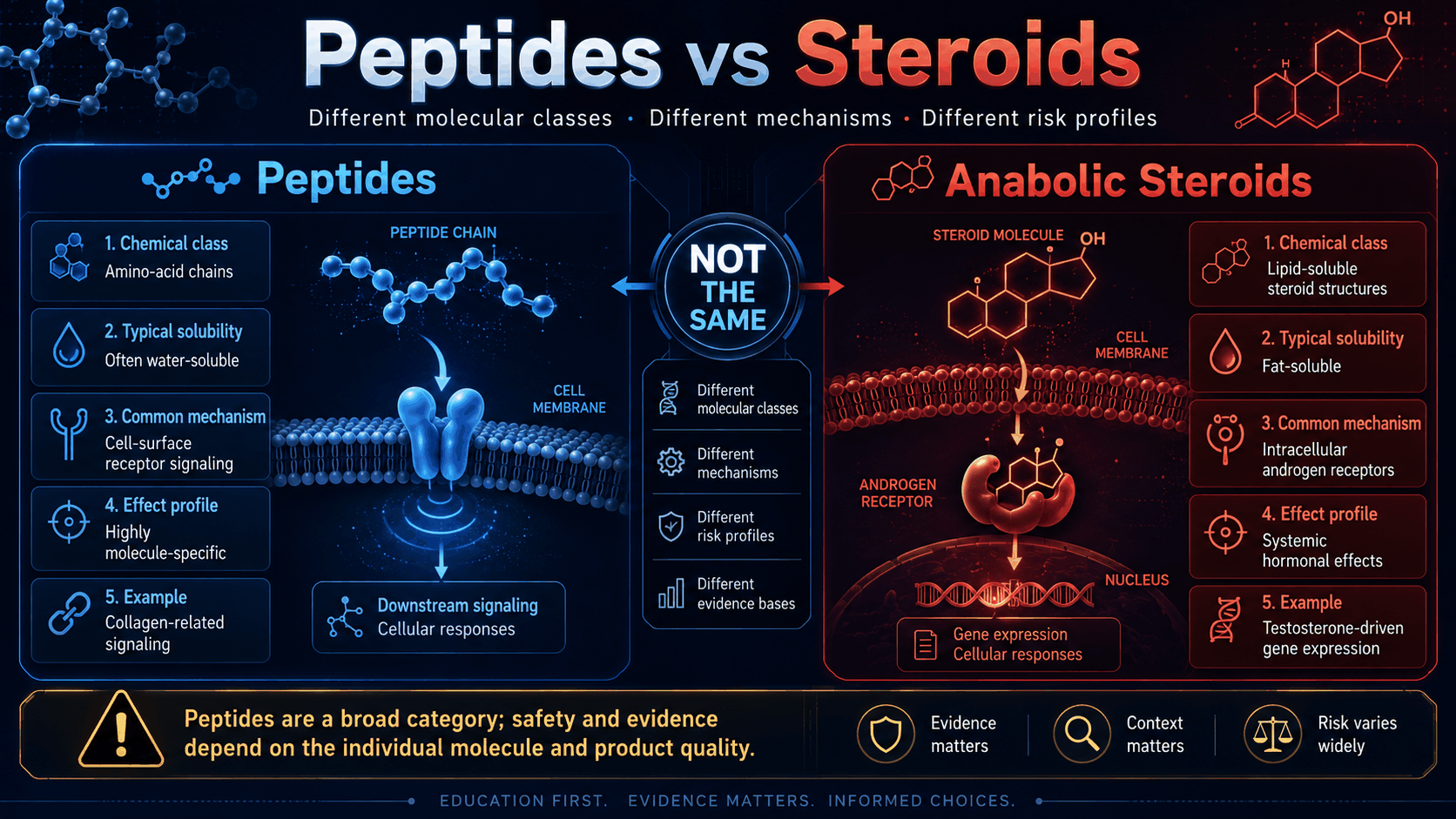
They belong to different molecular classes and produce effects through different biological pathways.
Peptides are amino-acid chains. Some are approved medicines, some are cosmetic ingredients, and some are experimental compounds with limited human data. Steroids are lipid-soluble molecules related to cholesterol structures. Anabolic-androgenic steroids activate androgen receptors and can produce strong systemic effects on muscle, reproductive hormones, blood lipids, and the cardiovascular system.
How Their Mechanisms Differ
Peptides
Anabolic steroids
 Sponsored / AffiliateUlta Lab Tests · Lab testing for hormones, inflammation, and wellness
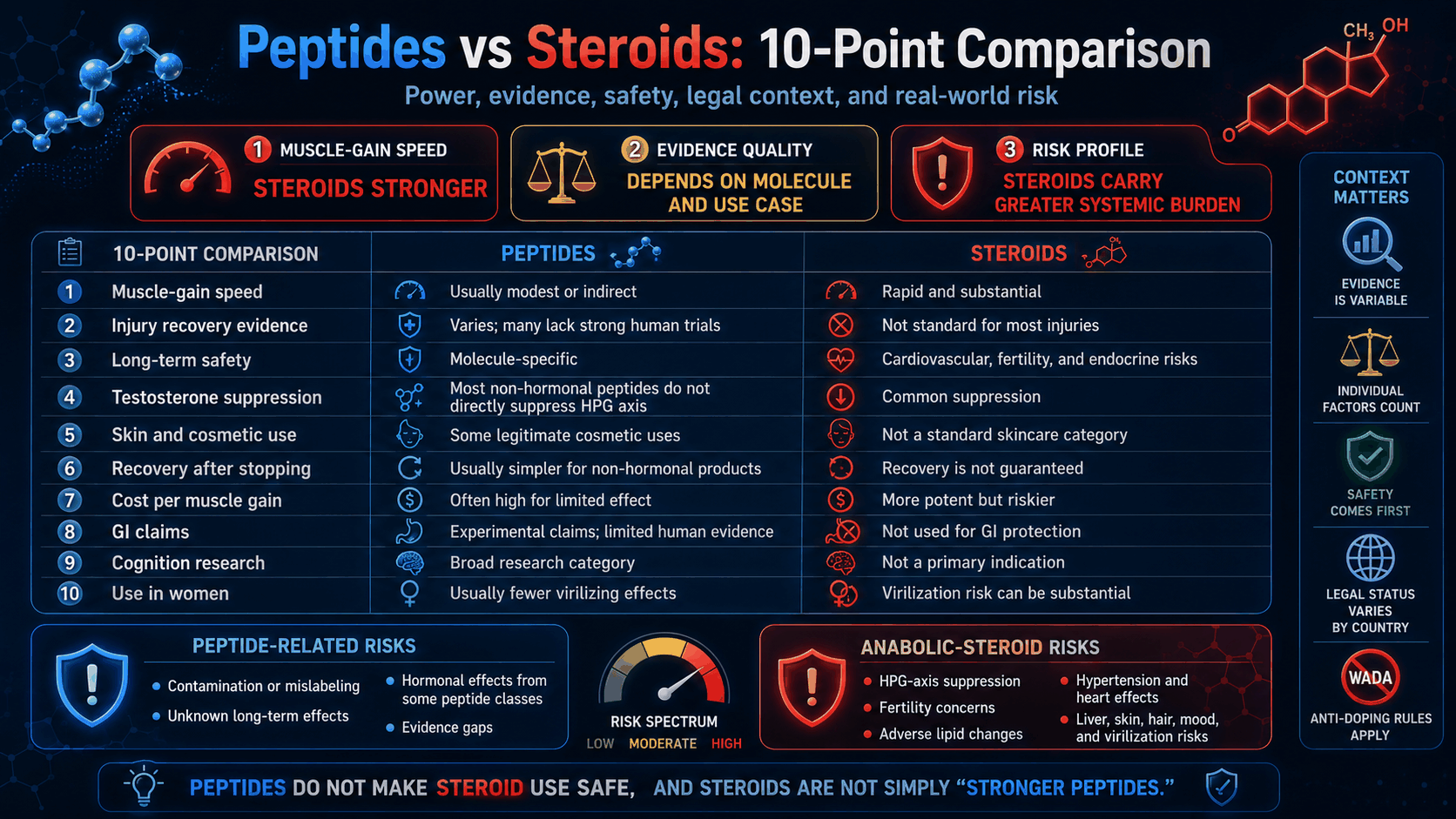
A Ten-Point Comparison
| Parameter | Peptides | Practical interpretation | Anabolic steroids |
|---|---|---|---|
| Muscle-gain speed | Usually modest or indirect | Steroids clearly stronger | Rapid and substantial |
| Evidence for injury recovery | Varies; many popular compounds lack strong human trials | No simple winner | Not a standard treatment for most injuries |
| Long-term safety | Depends on the specific peptide and product quality | Often lower endocrine burden | Meaningful cardiovascular, fertility, and endocrine risks |
| Natural-testosterone suppression | Most non-hormonal peptides do not directly suppress the HPG axis | Peptides usually lower risk here | Common with exogenous anabolic-androgenic steroids |
| Skin and cosmetic use | Some cosmetic peptides have legitimate skincare uses | Peptides have broader cosmetic relevance | Not a standard anti-aging skincare category |
| Hormonal recovery after stopping | Usually irrelevant for cosmetic or non-hormonal peptides | Peptides usually simpler | Recovery may be incomplete; PCT is not a guarantee |
| Cost per unit of muscle gained | Often high for limited effect | Steroids are more potent | More dramatic effect, with greater risk |
| Gastrointestinal claims | Some experimental claims exist; strong human evidence is limited | Insufficient evidence | Not used to protect the GI tract |
| Cognition and neuroprotection | Some peptides are being studied; evidence varies widely | Broader research category | Not a primary indication |
| Use in women | Depends on the product; cosmetic peptides are broadly used | Usually fewer virilizing effects | Virilization risk can be substantial |
Side Effects and Risks
Peptide-related risks
- Contamination or mislabeling in unapproved online products
- Injection-related infection, abscess, or tissue injury
- Unknown long-term effects for many research peptides
- Hormonal effects from GH secretagogues or hormone analogs
- Evidence gaps for compounds promoted mainly from animal studies
Anabolic-steroid risks
- HPG-axis suppression and reduced endogenous testosterone
- Impaired fertility and possible testicular atrophy
- Adverse lipid changes, hypertension, and structural heart effects
- Liver injury, especially with some oral 17-alpha-alkylated compounds
- Gynecomastia, acne, hair loss, virilization, and psychiatric effects
Who Each Category Is Actually For
Regulated medical or skincare products
Approved peptide medicines and well-formulated cosmetic peptides may have legitimate uses when the product and indication are appropriate.
Start with diagnosis and rehabilitation
Sleep, nutrition, progressive loading, and rehabilitation have stronger evidence than most experimental recovery peptides.
Clear clinical indications
Testosterone or other anabolic agents may be prescribed under medical supervision for specific conditions. This is different from bodybuilding use.
High performance potential, high risk
Anabolic-steroid use for bodybuilding carries significant medical, fertility, cardiovascular, psychiatric, and legal risks.
Can Peptides Reduce the Harm of Steroid Use?
There is no strong evidence that unapproved peptides can cancel the cardiovascular, endocrine, fertility, or psychiatric risks of anabolic steroids.
Disclose every substance being used.
Blood pressure, lipids, blood count, liver markers, and hormone testing may be clinically relevant.
Counterfeit and contaminated products increase risk.
Seek care for chest pain, shortness of breath, severe mood changes, jaundice, or neurological symptoms.
No peptide makes non-medical steroid use safe.
Legal and Anti-Doping Context
Peptides
Some peptide drugs are approved and prescription-only. Many research peptides are not approved medicines. Import, sale, compounding, and advertising rules may differ from possession rules.
Anabolic steroids
Anabolic steroids are controlled or prescription-only in many countries. Possession, importation, supply, and trafficking laws vary. Medical testosterone therapy is legally distinct from non-medical performance enhancement.
Two Common Myths
Myth: Peptides are as powerful as steroids for muscle gain.
Fact: Anabolic steroids are much more potent for rapid muscle gain. GH secretagogues and other performance-oriented peptides usually produce smaller and less predictable changes.
Myth: One steroid cycle is harmless if PCT is done correctly.
Fact: Full recovery is not guaranteed, and PCT does not eliminate cardiovascular, fertility, psychiatric, or endocrine risks.
Frequently Asked Questions
Are peptides safer than steroids?
Some are, but the category is too broad for a universal answer. Approved cosmetic or medical peptides are very different from unapproved injectable research chemicals.
Which is better for muscle gain?
Anabolic steroids are far more powerful for rapid muscle gain, but they also carry substantially greater systemic risks.
Can peptides replace steroid post-cycle therapy?
No. Peptides do not guarantee hormonal recovery, and PCT itself does not guarantee normalization.
Can peptides protect the heart or fertility during steroid use?
There is no strong evidence that they remove those risks.
Are both categories banned in sport?
Many anabolic agents and many peptide-related growth factors or secretagogues are prohibited. Check the current rules for your sport.
 Sponsored / AffiliatePeptide ReGenesis · Peptide education, protocols, and wellness-focused resources
Key Takeaways
- Peptides and steroids are different molecular classes.
- Steroids are much stronger for rapid muscle gain.
- Peptide evidence and safety vary widely by molecule.
- Approved products are different from research chemicals.
- Peptides do not make steroid use safe.
- Legal and anti-doping rules matter.
- Medical supervision is essential for hormone treatment and steroid-related complications.