
Why the Gut Matters
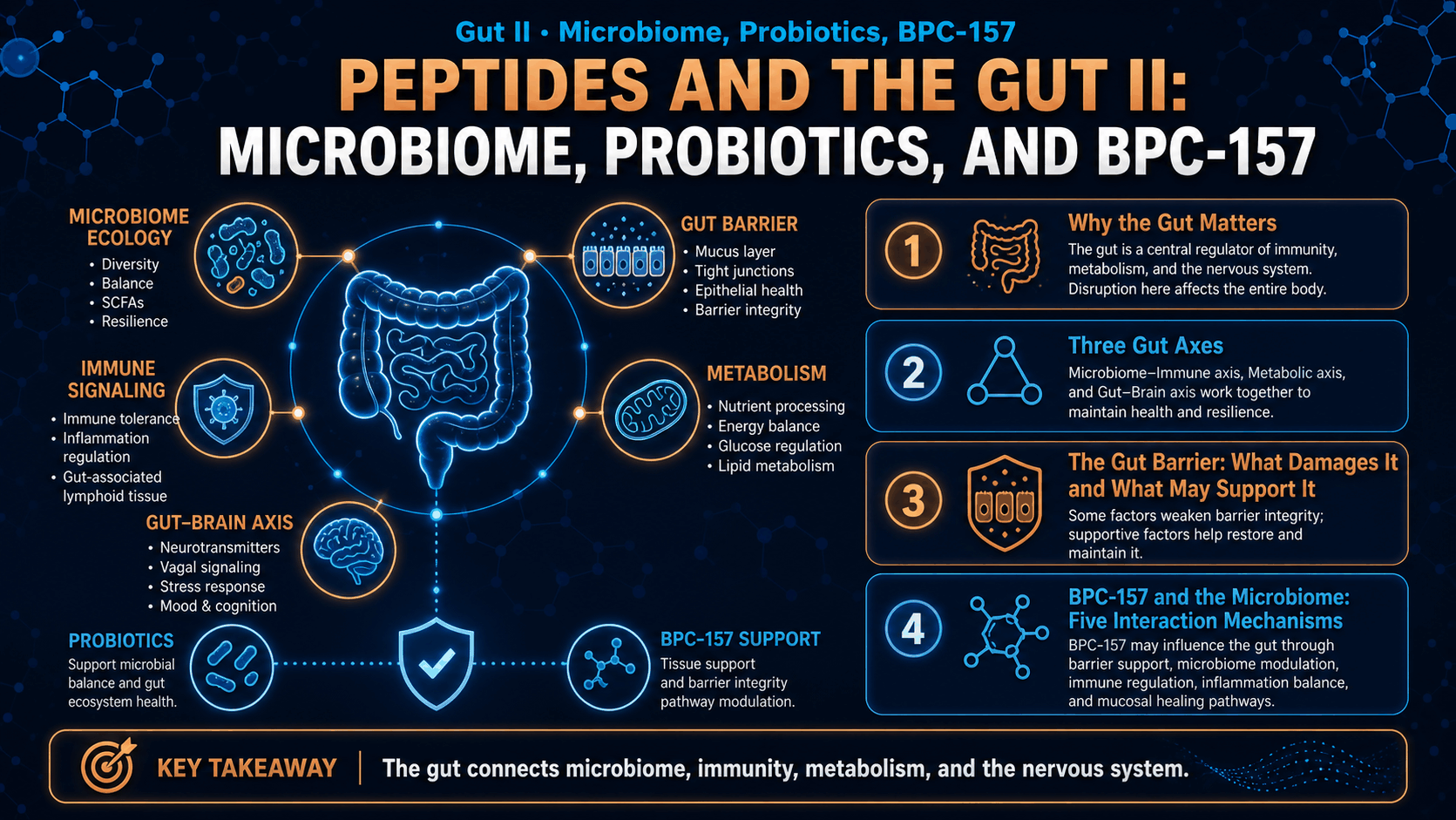
The gut is a biological interface between food, microbes, immune cells, nerves, and metabolism.
Microbiome research changed how we think about digestion. Gut microbes help metabolize fiber, influence immune tolerance, produce short-chain fatty acids, interact with bile acids, and communicate with the nervous system. When barrier integrity or microbiome balance is disrupted, the effects may extend far beyond the digestive tract.
Three Gut Axes
Microbiome → neurochemistry
Vagus-nerve signaling, inflammatory mediators, and serotonin-related pathways connect gut biology with mood, cognition, and “brain fog” discussions.
Microbiome → immune regulation
Peyer’s patches, IgA, and regulatory T-cells are strongly connected to gut biology. Dysbiosis may disturb immune tolerance and inflammatory balance.
Microbiome → insulin resistance
Butyrate, bile acids, LPS exposure, inflammatory cytokines, and epithelial health connect the microbiome with metabolic syndrome and insulin-resistance discussions.
 Sponsored / AffiliatePeptide ReGenesis · Peptide education, protocols, and wellness-focused resources
The Gut Barrier: What Damages It and What May Support It
The intestinal barrier is a thin epithelial layer that separates gut contents from systemic circulation. When barrier function is impaired, bacterial components such as LPS may contribute to systemic inflammatory signaling.
Barrier disruptors
Alcohol, unnecessary NSAID exposure, chronic stress, dysbiosis, and antibiotic disruption can affect mucus, tight junctions, microbiome balance, or epithelial repair.
Barrier-support discussion
BPC‑157 is discussed around epithelial repair, tight-junction support, mucosal protection, and inflammatory modulation.
Enterocyte support
L‑glutamine is discussed as a substrate for enterocytes, especially in gut-barrier and mucosal-health contexts.
Gastroprotective context
Zinc-carnosine is commonly discussed as a mucosal-support and gastroprotective tool.
Microbial support
Probiotics may support microbial balance and competitive exclusion of pathogens, depending on strain, product quality, and individual tolerance.
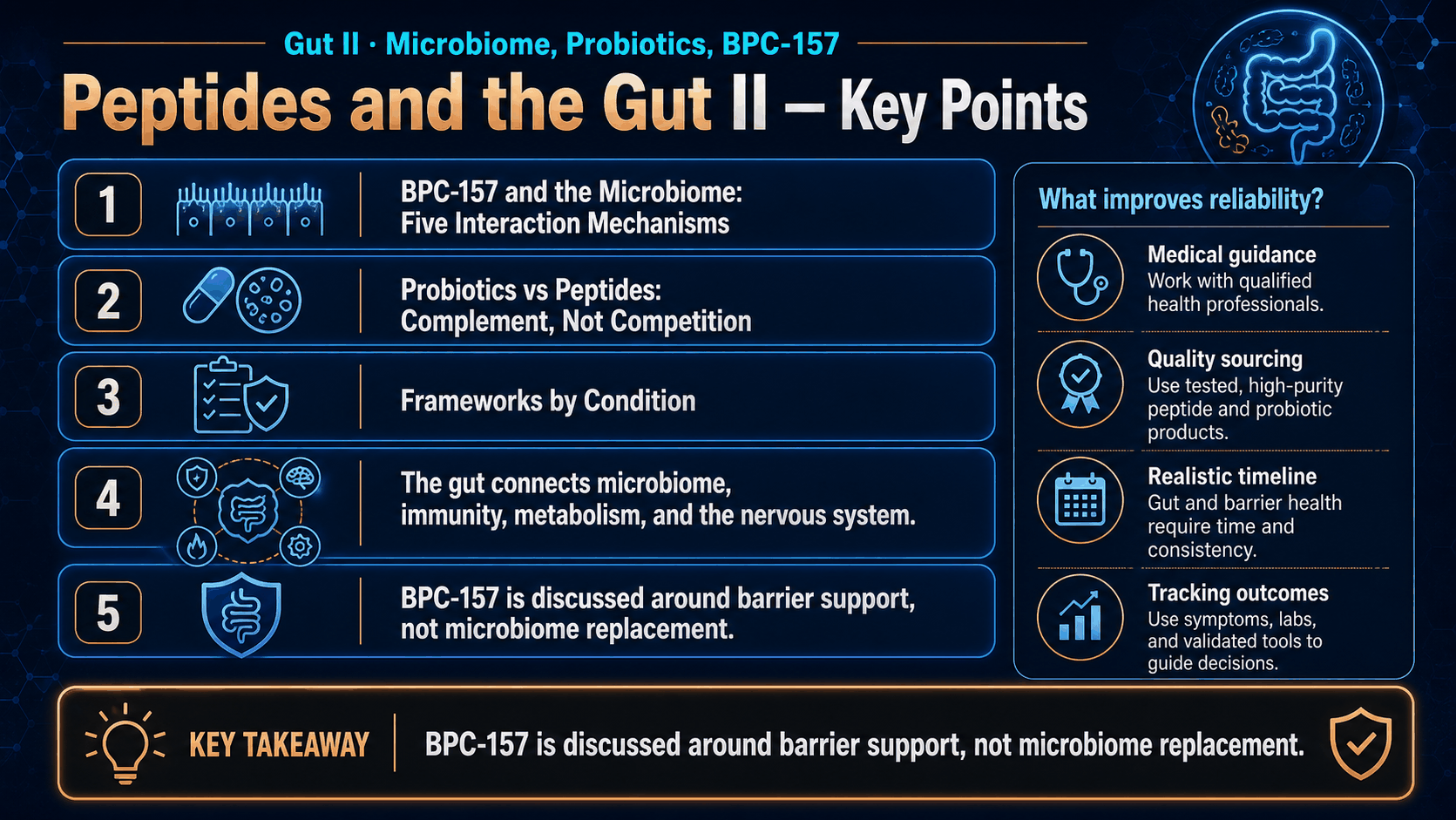
BPC‑157 and the Microbiome: Five Interaction Mechanisms
 Sponsored / AffiliatePeptide ReGenesis · Peptide education, protocols, and wellness-focused resources
Probiotics vs Peptides: Complement, Not Competition
Microbial balance layer
- May introduce beneficial strains.
- May support short-chain fatty acid context when combined with fiber.
- May support competitive exclusion of pathogens.
- Effects vary by strain, product quality, storage, and host microbiome.
- Do not directly rebuild the barrier as a structural repair tool.
Barrier-support layer
- Discussed around tight junctions and epithelial repair.
- Discussed around mucosal protection.
- Discussed around lower gut-wall inflammatory signaling.
- Does not populate the gut with bacteria.
- Does not provide prebiotic fiber or butyrate substrate.
Frameworks by Condition
Dysbiosis and “leaky gut” discussion
Possible signs include bloating, food intolerance, fatigue, inflammatory markers, and brain fog. Support logic may include clinician-guided barrier-support discussion, probiotics when appropriate, gradual fiber introduction, L-glutamine, zinc, and reducing alcohol, unnecessary NSAIDs, refined sugar, and poorly tolerated foods.
IBD in remission
Ulcerative colitis and Crohn’s disease belong with a gastroenterologist. BPC‑157 is an investigational/support discussion, not IBD treatment. Do not replace mesalamine, biologics, steroids, immunomodulators, or prescribed therapy.
IBS and gut-brain axis
IBS is a functional disorder often linked with stress, dysbiosis, motility, and gut-brain signaling. Support discussions may include BPC‑157, stress-axis tools, probiotic selection by subtype, peppermint oil, and stress management.
Two Common Myths
Myth: BPC‑157 kills gut bacteria because it has antibacterial effects.
Fact: BPC‑157 is not an antibiotic and is not used to directly kill gut bacteria. Its main GI discussion is barrier repair, mucosal protection, motility, and inflammatory modulation.
Myth: Pharmacy probiotics fully restore the microbiome, so BPC‑157 is unnecessary.
Fact: Commercial probiotics provide limited strains compared with the full gut ecosystem. Barrier function, fiber, diet, tolerance, and diagnosis all matter.
Frequently Asked Questions
Is BPC‑157 a probiotic?
No. BPC‑157 is discussed around barrier-support and mucosal-protection pathways. It does not seed the gut with beneficial bacteria.
Can BPC‑157 treat IBD?
No. It should not be presented as IBD treatment. IBD requires gastroenterology care and prescribed therapy where indicated.
Are probiotics always helpful?
No. They are strain-specific and person-specific. Some people with SIBO, histamine intolerance, immune compromise, or IBS sensitivity may react poorly.
What symptoms need medical evaluation?
Blood in stool, unexplained weight loss, severe diarrhea, fever, anemia, malabsorption, persistent pain, nighttime symptoms, or suspected IBD.
What is the safest first layer?
Diagnosis, food/symptom tracking, sleep, stress management, tolerated fiber, hydration, and clinician-guided gut care.
Key Takeaways
- The gut connects microbiome, immunity, metabolism, and the nervous system.
- BPC‑157 is discussed around barrier support, not microbiome replacement.
- Probiotics and peptides act on different layers.
- Fiber and butyrate support are essential to microbial ecology.
- IBD and persistent GI symptoms require medical diagnosis and clinician oversight.
- Gut-brain-axis symptoms often require stress and nervous-system support, not only gut supplements.