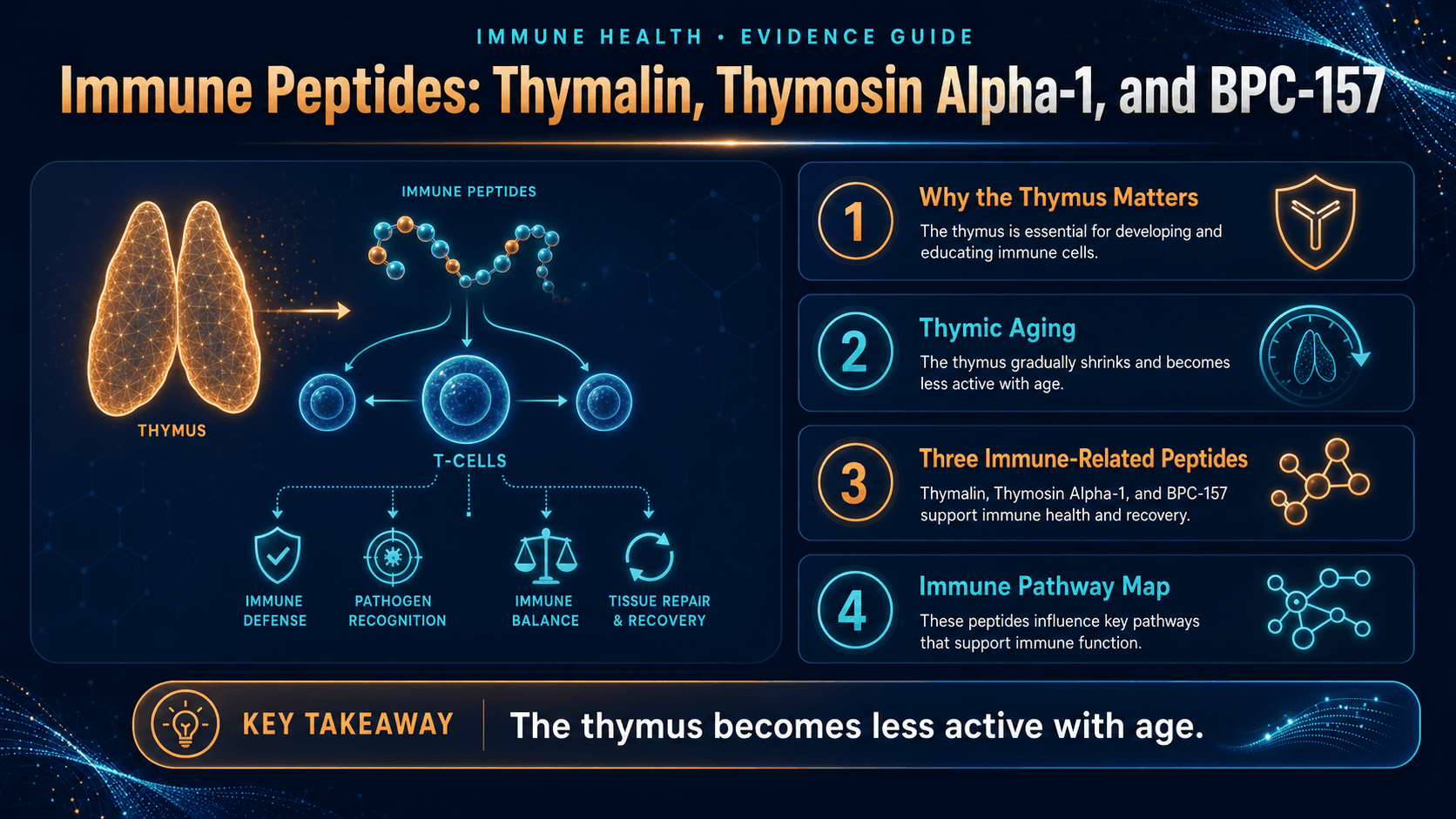
Why the Thymus Matters
The thymus helps immature T cells learn the difference between “self” and “non-self.”
This immune education supports both defense against infections and tolerance toward the body’s own tissues. With age, the thymus gradually becomes smaller and less active, which contributes to lower production of naïve T cells and weaker immune adaptability.
Thymic Aging
Conceptual decline across the lifespan
Thymic activity is highest in childhood and adolescence. Functional tissue is progressively replaced by fat during adulthood.
 Sponsored / AffiliateMomentous · Performance nutrition and recovery supplements
Three Immune-Related Peptides
Thymalin
A thymus-derived peptide preparation used in parts of Eastern Europe and the former Soviet clinical tradition.
Thymosin Alpha-1
A 28-amino-acid synthetic peptide, also called thymalfasin, with clinical use in selected countries.
BPC-157
Not primarily an immune peptide. Most immune and gut-barrier claims come from laboratory and animal studies.
Immune Pathway Map
T Lymphocytes
- Thymalin: regional evidence for regulation
- Thymosin Alpha-1: studied for activation
- BPC-157: no established clinical role
Natural Killer Cells
- Thymalin: possible activity changes
- Thymosin Alpha-1: possible indirect effects
- BPC-157: not established
Dendritic Cells
- Thymosin Alpha-1: major research focus
- Thymalin: less clearly defined
- BPC-157: not established
Interferon Pathways
- Thymosin Alpha-1: studied most directly
- Thymalin: regional claims
- BPC-157: no direct clinical role
Gut Immune Barrier
- BPC-157: mainly preclinical interest
- Thymalin: no primary role
- Thymosin Alpha-1: no primary role
Inflammatory Cytokines
- BPC-157: laboratory and animal data
- Thymosin Alpha-1: context-dependent effects
- Thymalin: limited regional data
 Sponsored / AffiliateDynamic Peptides · Research peptide catalog and product education resources
Seasonal Immune Support
Autumn
Review vaccinations, sleep, nutrition, and hand hygiene before respiratory-virus season.
Winter
Use testing and medical evaluation when symptoms are severe, persistent, or high risk.
Spring
Review deficiencies, chronic stress, sleep, and recurrent infection patterns.
Summer
Maintain physical activity, balanced nutrition, sun safety, and travel-vaccine planning.
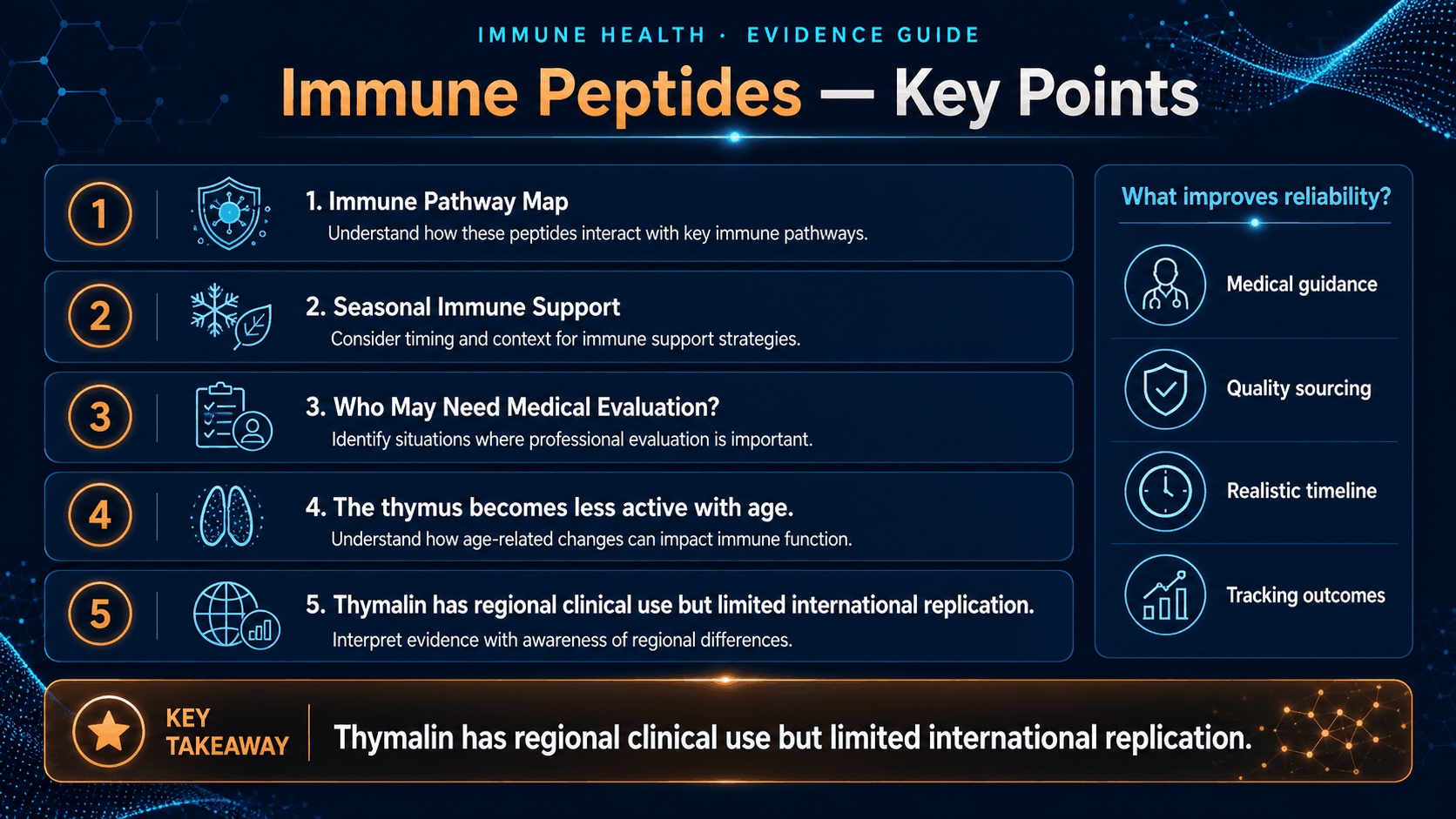
Who May Need Medical Evaluation?
Older age alone is not a reason to begin peptide therapy. Recurrent, unusually severe, or persistent infections may require assessment for asthma, sinus disease, diabetes, nutritional deficiency, medication effects, or immune disorders.
- Autoimmune disease
- Active cancer or recent cancer treatment
- Organ transplantation or immunosuppressive therapy
- Pregnancy or breastfeeding
- Severe allergy, recurrent anaphylaxis, or complex atopic disease
Two Common Myths
Myth: The stronger the immune system, the better.
Fact: Immune health is about regulation, not maximum activation. Excessive activation can contribute to autoimmunity, allergy, and inflammatory damage.
Myth: Thymalin is proven to rejuvenate the immune system.
Fact: Thymalin has a long regional clinical history, but independent international evidence is limited. Immune-rejuvenation and longevity claims remain unproven.
Frequently Asked Questions
Is Thymalin approved in the United States?
No. It is not broadly approved in the United States.
Is Thymosin Alpha-1 an immune booster?
It is better described as an immunomodulatory medicine used for selected indications in some countries.
Does BPC-157 improve immunity?
Human evidence is too limited to support it as an immune treatment.
Can these peptides be combined?
There is no validated universal combination. Combining them should not be routine preventive care.
What helps immune health most?
Vaccination, sleep, balanced nutrition, exercise, chronic-disease control, and condition-specific medical care have much stronger evidence.
Key Takeaways
- The thymus becomes less active with age.
- Thymalin has regional clinical use but limited international replication.
- Thymosin Alpha-1 has a stronger clinical evidence base in selected countries.
- BPC-157 remains experimental and is not an approved immune therapy.
- There is no validated universal immune-peptide stack.
- Autoimmune disease, cancer, transplantation, and pregnancy require specialist guidance.
- Evidence-based prevention remains the foundation of immune health.