
What Changes During Fasting?
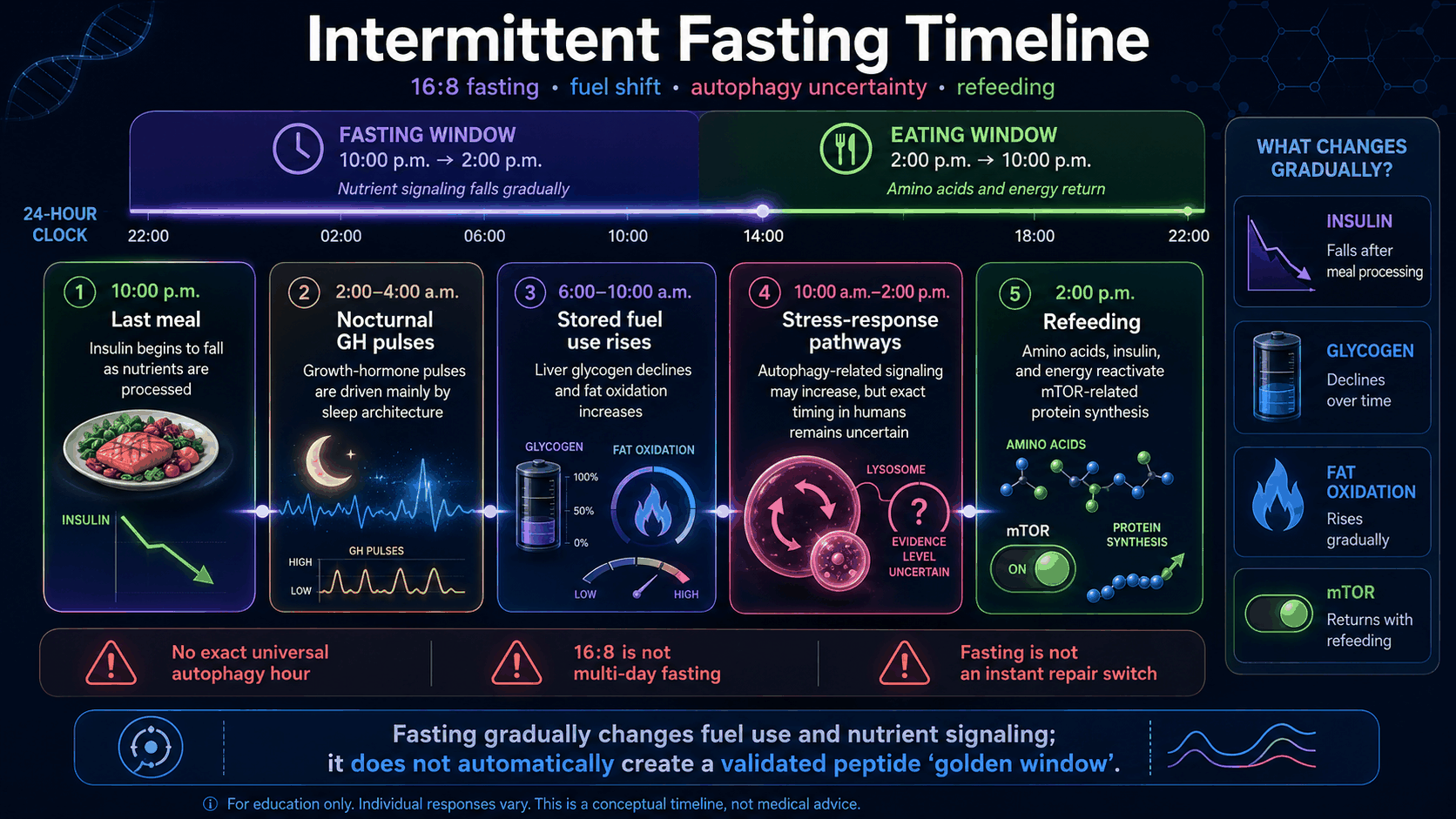
Fasting gradually shifts the body from processing a meal toward using stored fuel.
Insulin falls, liver glycogen declines, fat oxidation rises, and nutrient-sensitive pathways become less active. When food returns, amino acids and energy reactivate mTOR-related signaling and protein synthesis.
A Conceptual 16:8 Timeline
 Sponsored / AffiliateUlta Lab Tests · Lab testing for hormones, inflammation, and wellness
Four Phases of Fasting
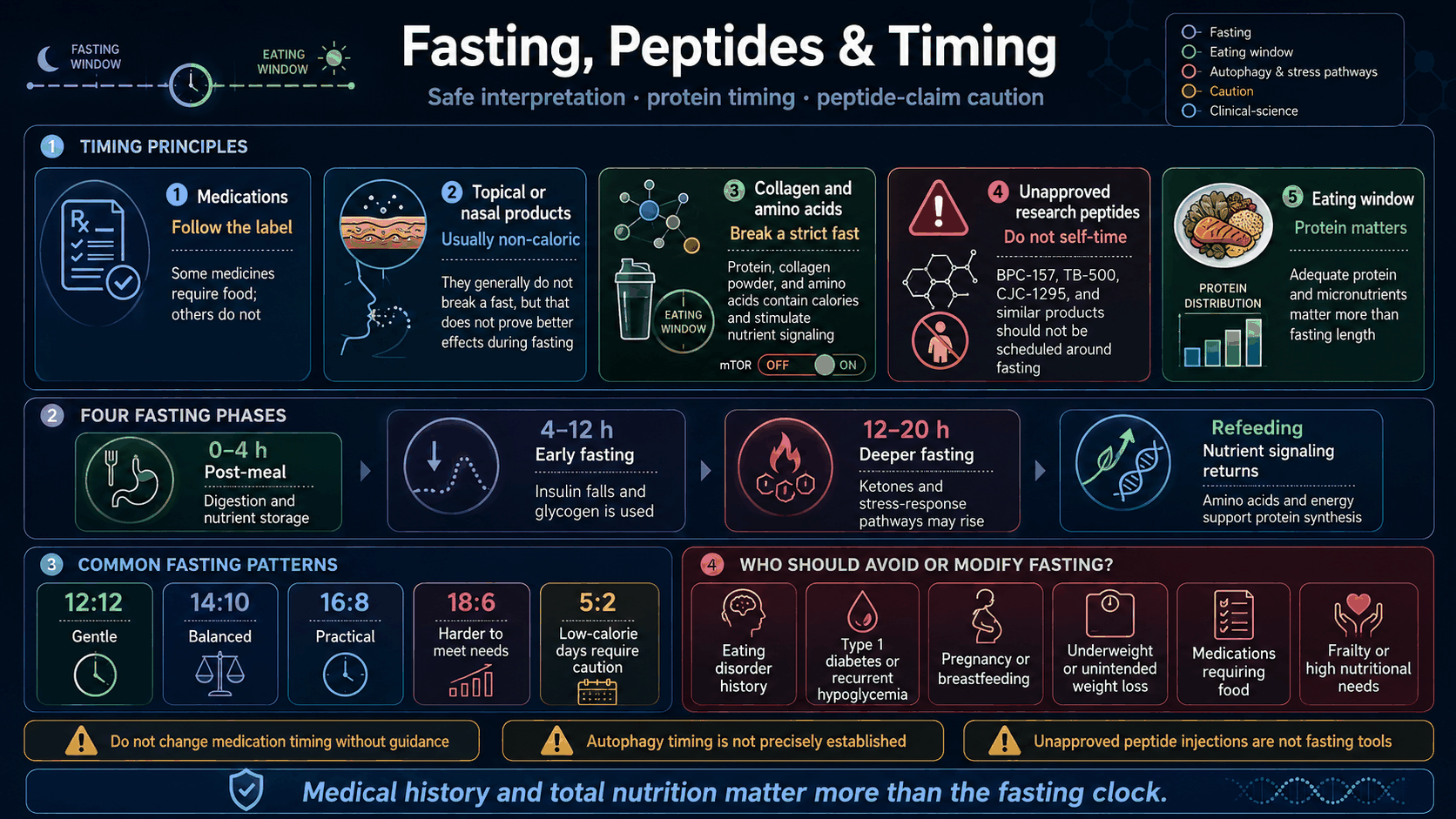
Post-Meal Phase
The body is still digesting and storing nutrients from the previous meal.
Early Fasting
Insulin falls, liver glycogen is used, and fat oxidation rises.
Deeper Fasting
Ketone production and cellular stress-response pathways may increase.
Nutrient Signaling Returns
Amino acids, insulin, and energy availability reactivate protein synthesis.
Common Intermittent-Fasting Patterns
| Pattern | Structure | Advantages | Limitations |
|---|---|---|---|
| 12:12 | 12-hour fast, 12-hour eating window | Gentle and easy to sustain | Smaller fasting interval |
| 14:10 | 14-hour fast, 10-hour eating window | Balanced and practical | Still requires meal planning |
| 16:8 | 16-hour fast, 8-hour eating window | Allows several balanced meals | May be difficult with early training or medication schedules |
| 18:6 | 18-hour fast, 6-hour eating window | Longer fasting interval | Harder to meet energy, protein, and micronutrient needs |
| 5:2 | Five usual days, two low-calorie days | Weekly rather than daily structure | Low-calorie days may impair training and recovery |
Peptides and Fasting: Safe Interpretation
 Sponsored / AffiliateiHerb · Supplements, wellness products, and daily health essentials
What Autophagy Actually Means
Autophagy is cellular self-recycling. Lysosomes break down damaged proteins and organelles and reuse their components.
It is important for protein quality control and cellular maintenance. Exercise, fasting, and energy restriction can influence autophagy-related pathways, but precise timing in humans remains difficult to measure.
Who Should Avoid or Modify Fasting?
- Current or previous eating disorder
- Type 1 diabetes or recurrent hypoglycemia
- Pregnancy or breastfeeding
- Underweight or unintended weight loss
- Childhood or adolescence with active growth needs
- Medications that must be taken with food
- Frailty, serious chronic illness, or high nutritional needs
Two Common Myths
Myth: A 16:8 fast automatically causes muscle loss.
Fact: Muscle retention depends on total protein, resistance training, energy intake, sleep, and training load.
Myth: Fasting makes every injectable peptide work better.
Fact: There is no universal evidence that fasting improves all injectable peptides. Timing depends on the specific approved medicine and its prescribing instructions.
Frequently Asked Questions
Does collagen break a fast?
Yes. Collagen contains protein and calories, so it breaks a strict fast.
Does black coffee break a fast?
Plain black coffee contributes very little energy, but it should not be promoted as a guaranteed autophagy enhancer.
When does autophagy start?
There is no precise universal hour in humans. Timing varies by tissue, energy balance, and individual physiology.
Is 16:8 better than 14:10?
Not automatically. The better schedule is the one that is safe, sustainable, and nutritionally adequate.
Can fasting increase growth hormone?
Longer fasting can increase growth-hormone secretion, but the effect during a routine 16-hour fast is likely smaller and highly variable.
Key Takeaways
- 12:12, 14:10, and 16:8 are practical starting patterns.
- Fasting lowers nutrient signaling and increases reliance on stored fuel.
- Autophagy timing in humans is not precisely established.
- Refeeding restores amino acids and supports protein synthesis.
- Collagen and protein drinks break a strict fast.
- Unapproved peptide injections should not be self-timed around fasting.
- Medical history and total nutrition matter more than the clock.