
Why Protein Matters
Dietary protein is broken down into amino acids that the body uses throughout metabolism.
These amino acids support muscle, enzymes, transport proteins, connective tissue, antibodies, and peptide hormones. A low-protein diet can make it harder to maintain lean mass and recover from training, but eating more than needed does not automatically improve outcomes.
How Much Protein Do You Need?
 Sponsored / AffiliateApollo Peptide Sciences · Research-focused peptide science and molecular data
Calculate Your Daily Target
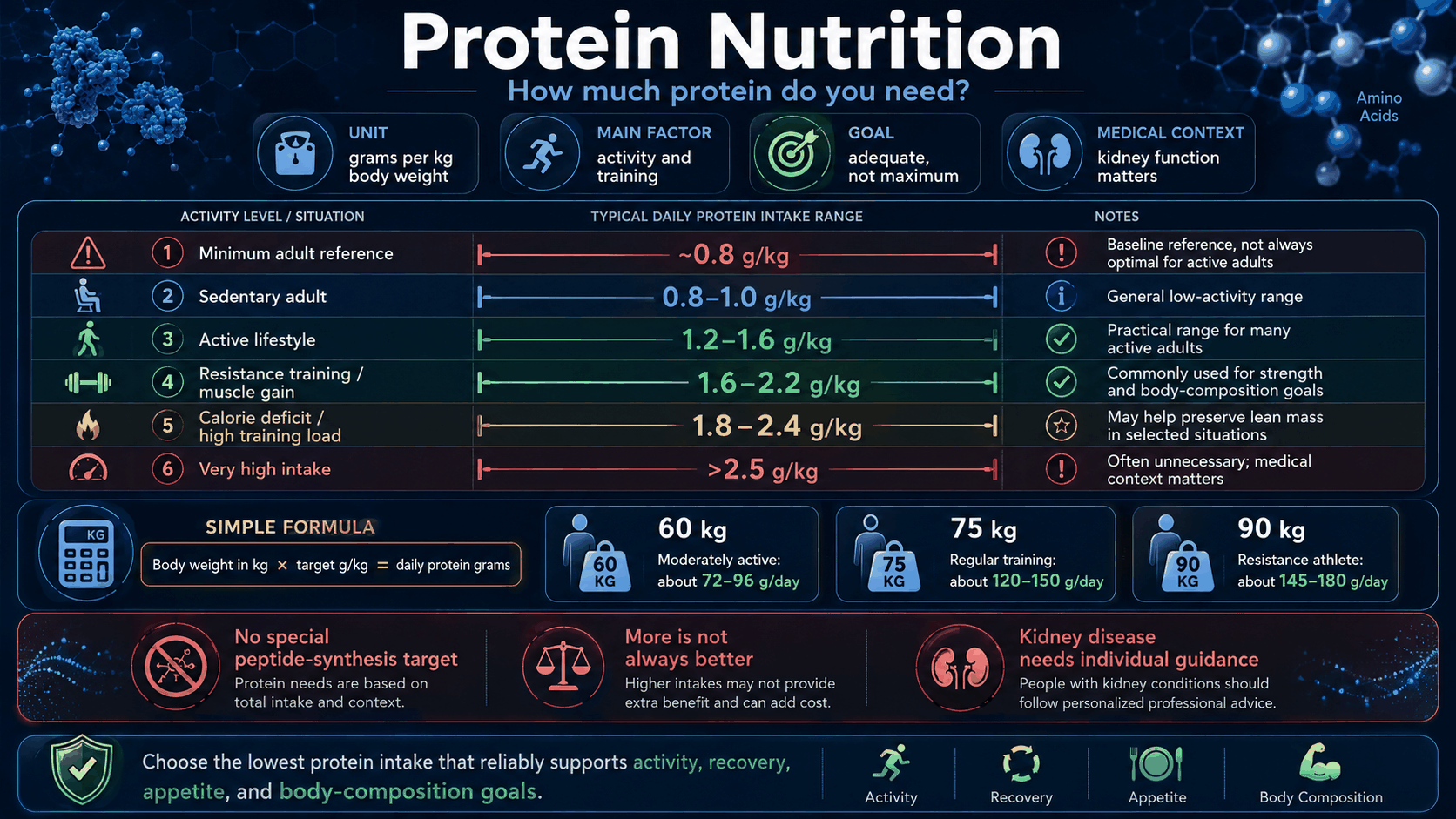
Simple formula
Moderately active: about 72–96 g/day.
Regular training: about 120–150 g/day.
Resistance athlete: about 145–180 g/day.
Animal vs Plant Protein
Animal Protein
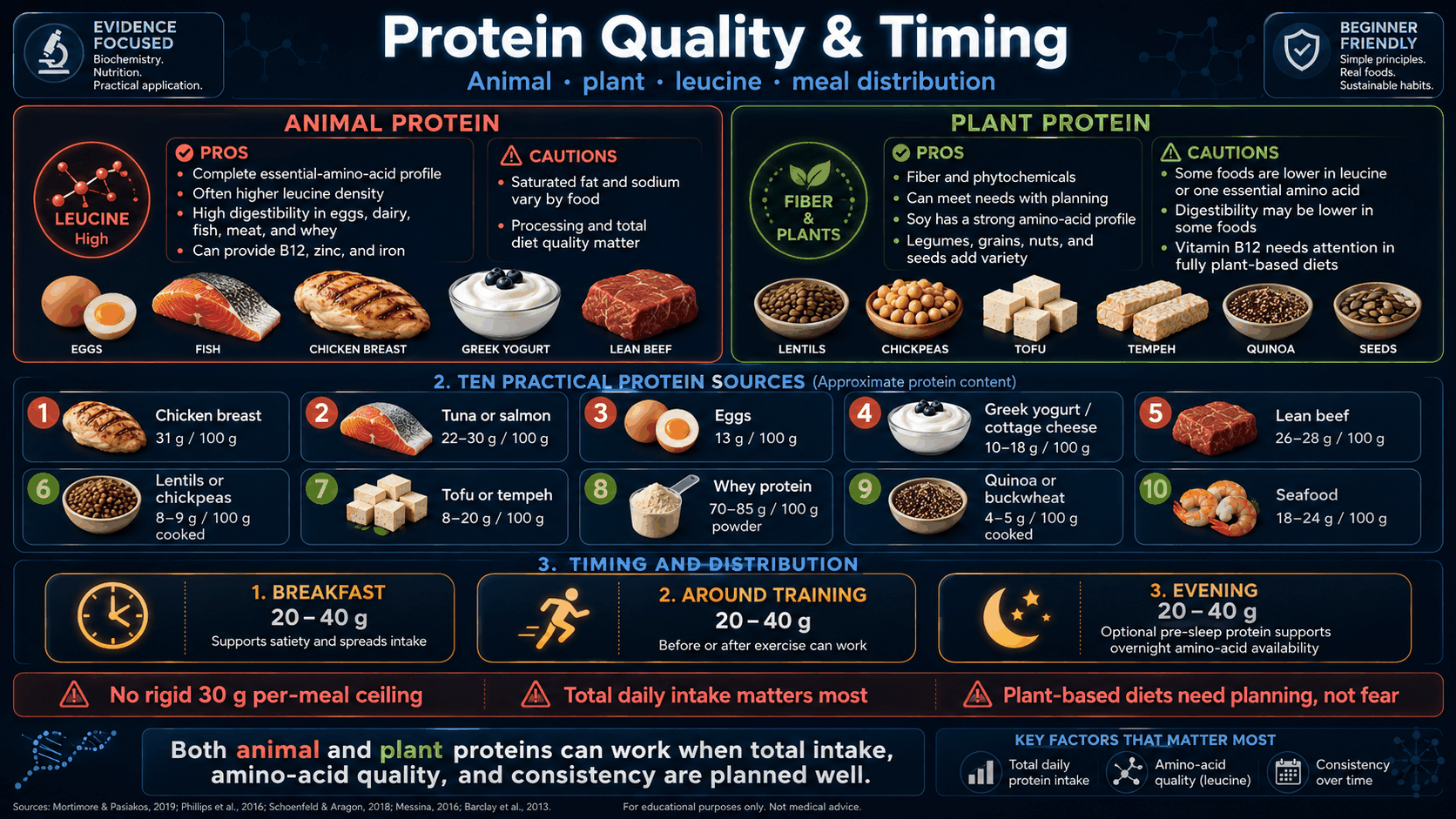
- Complete essential-amino-acid profile
- Often higher leucine density
- High digestibility in eggs, dairy, fish, meat, and whey
- Can provide B12, zinc, and iron
- Some foods are high in saturated fat or sodium
- Processing and overall diet quality matter
Plant Protein
- Provides fiber and phytochemicals
- Can fully meet protein needs with adequate planning
- Soy foods offer a strong amino-acid profile
- Legumes, grains, nuts, and seeds add dietary variety
- Some foods are lower in leucine or one essential amino acid
- Digestibility may be lower in some foods
- Vitamin B12 needs attention in fully plant-based diets
 Sponsored / AffiliateDynamic Peptides · Research peptide catalog and product education resources
Ten Practical Protein Sources
Protein Timing and Distribution
Breakfast
20–40 g
A meaningful serving may improve satiety and distribute intake more evenly.
Around Training
20–40 g
Protein before or after exercise can support recovery. Total daily intake matters more than a narrow anabolic window.
Evening
20–40 g
Optional pre-sleep protein can support overnight amino-acid availability.
A Practical High-Protein Day
Complete protein with a practical morning serving.
A high-protein main meal with fiber and micronutrients.
Convenient way to close the gap.
Complete the day with a balanced protein-rich meal.
Two Common Myths
Myth: More than 1.5 g/kg damages every healthy person’s kidneys.
Fact: Higher-protein diets have not consistently been shown to damage healthy kidneys in short- to medium-term studies. Kidney disease requires individualized guidance.
Myth: Protein powder is artificial chemistry and always inferior to food.
Fact: Protein powders are concentrated food proteins. Whole foods should form the foundation, while powders can improve convenience.
Frequently Asked Questions
How much protein does an active adult need?
Many active adults do well around 1.2–1.6 g/kg/day, with higher ranges often used for resistance training or calorie restriction.
Is 2 g/kg necessary for everyone?
No. Needs vary. Many people achieve their goals at lower intakes.
Can plant protein build muscle?
Yes. Adequate total protein, food variety, and sufficient essential amino acids matter most.
Does protein timing matter?
Meal distribution can help, but total daily protein and consistency are more important than perfect timing.
Is whey protein safe?
For most healthy adults, whey is a convenient food-derived protein. Allergies, lactose tolerance, and medical conditions should be considered.
Key Takeaways
- The minimum adult reference is about 0.8 g/kg/day.
- Many active adults use roughly 1.2–1.6 g/kg/day.
- Resistance training commonly uses about 1.6–2.2 g/kg/day.
- Animal and plant proteins can both contribute.
- Even distribution across meals is practical, but there is no rigid per-meal ceiling.
- Total intake and consistency matter more than perfect timing.
- The goal is adequate, sustainable protein—not maximum protein.