
Why Food Still Matters
Collagen synthesis depends on more than taking a powder.
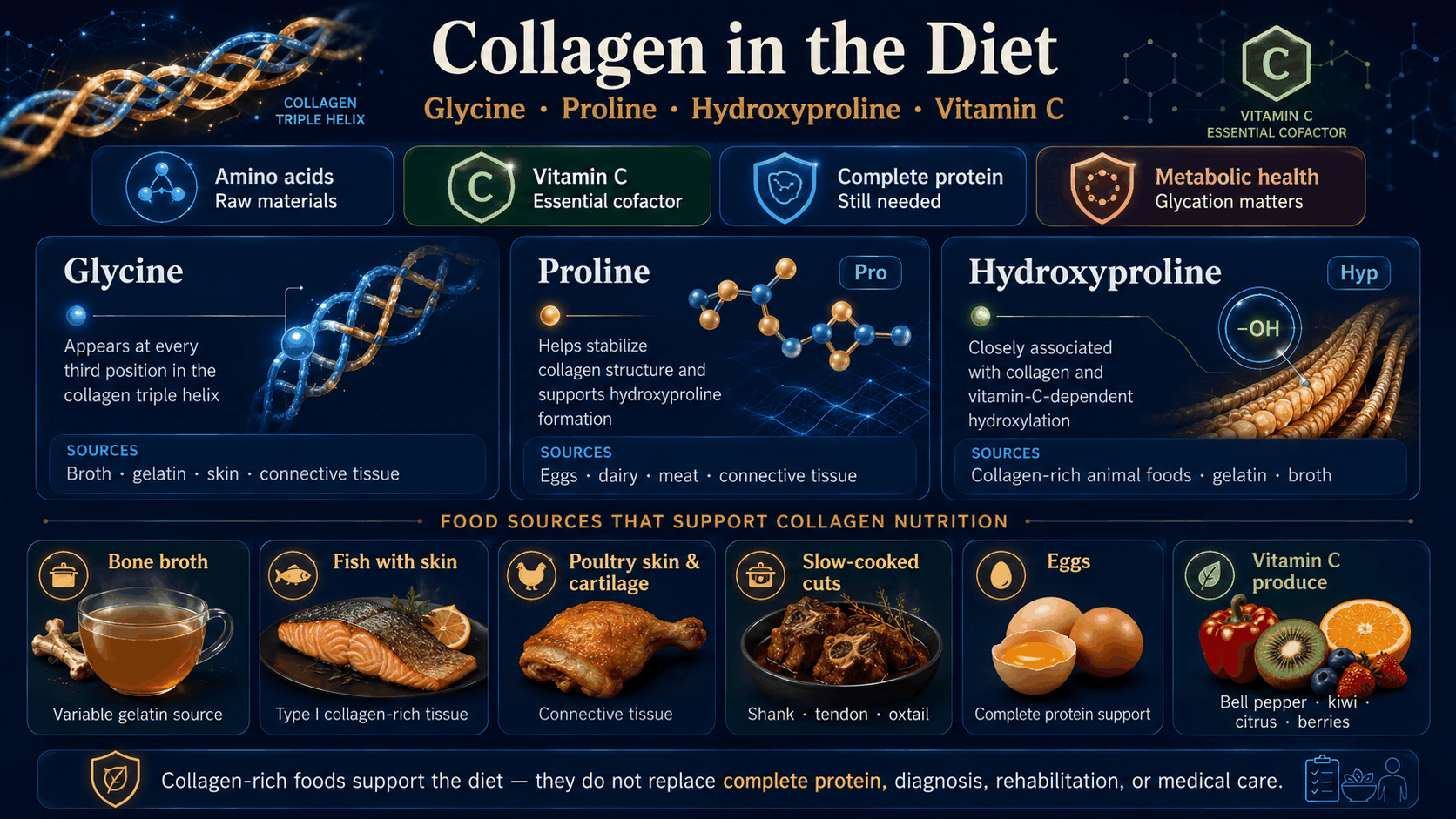
The body needs amino acids, vitamin C, zinc, copper, adequate energy, and total protein. Traditional foods such as broth, fish skin, poultry skin, gelatin, and slow-cooked connective cuts can contribute useful raw materials.
Three Key Amino Acids
Glycine
Appears at every third position in the collagen triple helix and is the most abundant amino acid in collagen.
Proline
Helps stabilize collagen structure and serves as the precursor for hydroxyproline.
Hydroxyproline
Closely associated with collagen and formed through vitamin-C-dependent hydroxylation.
 Sponsored / AffiliatePeptide ReGenesis · Peptide education, protocols, and wellness-focused resources
The Best Food Sources
Bone Broth: A Practical Recipe
Ingredients
- 1–1.5 kg beef or poultry bones with joints and connective tissue
- Onion, carrot, celery, herbs, and peppercorns
- Cold water to cover
- Optional vinegar for flavor and acidity
Method
- Roast bones if deeper flavor is desired
- Cover with cold water and bring slowly to a simmer
- Skim foam during the first stage
- Simmer gently: poultry 6–12 hours, beef 12–24 hours
- Cool promptly and refrigerate safely
Does Timing Matter?
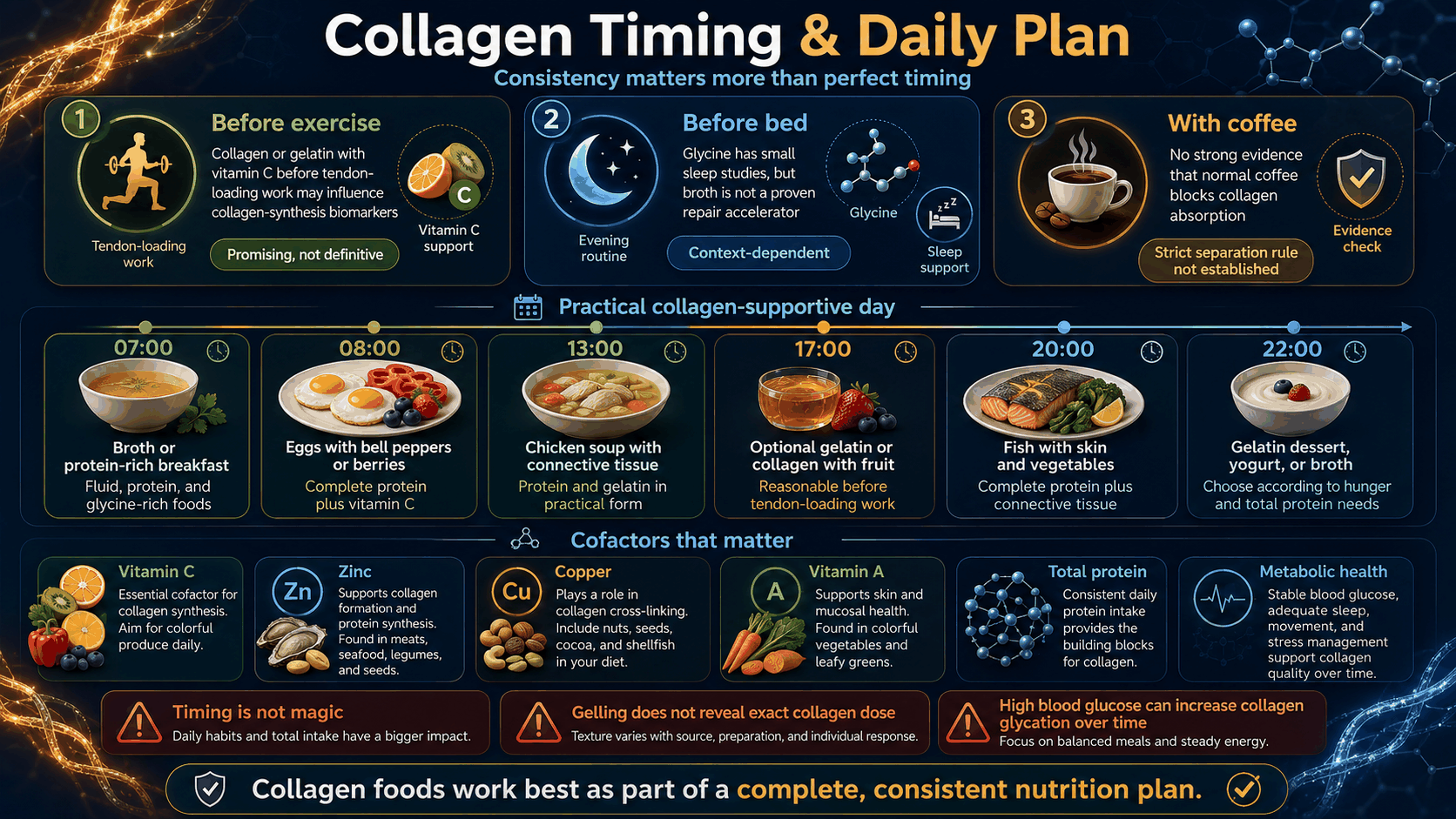
Timing may matter in selected situations, but total protein, training quality, and consistency are more important.
Before exercise
Small studies suggest gelatin or collagen with vitamin C before loading exercise may influence collagen-synthesis biomarkers. This remains promising rather than definitive.
Before bed
Glycine has been studied for sleep quality in small trials, but broth is not a proven way to amplify growth hormone or dramatically accelerate repair.
With coffee
There is no strong evidence that a normal cup of coffee blocks collagen absorption. A strict separation rule is not established.
 Sponsored / AffiliateQuest Health · Personal lab testing and health marker tracking
A Practical Day of Collagen-Supportive Eating
An easy way to add fluid, protein, and glycine-rich foods.
Complete protein plus vitamin C and micronutrients.
Provides protein and gelatin in a practical form.
May be reasonable before tendon-loading work.
Combines complete protein, connective tissue, and micronutrients.
Choose according to hunger and total protein needs.
What Else Collagen Synthesis Needs
Vitamin C
Required for hydroxylation of proline and lysine.
Zinc
Supports many enzymes involved in tissue repair.
Copper
Needed for lysyl oxidase and collagen cross-linking.
Vitamin A
Supports epithelial tissues and gene regulation.
Total Protein
Collagen foods should complement complete protein sources.
Metabolic Health
Chronic high blood glucose can increase collagen glycation over time.
Two Common Myths
Myth: Only hydrolyzed collagen powder is absorbed.
Fact: Collagen-rich foods are also digested into amino acids and peptides. Powders are simply more standardized and convenient.
Myth: Plant foods contain collagen.
Fact: Plants do not contain animal collagen. Plant-based diets can still support collagen synthesis through protein, vitamin C, zinc, copper, and adequate energy intake.
Frequently Asked Questions
Is bone broth better than collagen powder?
Not necessarily. Broth offers flavor and additional nutrients, while powder provides a more predictable collagen dose.
Does collagen need vitamin C?
Vitamin C is essential for normal collagen synthesis, but it does not have to be consumed in the exact same bite.
Can a vegetarian diet support collagen?
Yes. Adequate protein, vitamin C, zinc, copper, and total energy can support the body’s own collagen production.
Does coffee destroy collagen?
No strong evidence shows that normal coffee intake blocks collagen absorption. Overall caffeine intake, sleep, and stress matter more.
Can collagen-rich foods heal a torn tendon?
No. They may support nutrition but cannot replace diagnosis, rehabilitation, or surgery when indicated.
Key Takeaways
- Collagen is rich in glycine, proline, and hydroxyproline.
- Broth, gelatin, fish skin, poultry skin, and connective cuts are useful sources.
- Vitamin C is essential for normal collagen synthesis.
- Timing may help in selected situations, but consistency matters more.
- Collagen foods complement complete protein; they do not replace it.
- Metabolic health and total diet quality matter.