
Can Sensitive Skin Use Peptides?
Often yes—but the complete formula matters more than the word “peptide” on the label.
Peptides are not exfoliating acids and they do not usually require the very low pH associated with pure L-ascorbic acid. That can make them easier to tolerate. However, fragrance, alcohol, preservatives, botanical extracts, acids, and multiple active ingredients in the same product may still cause irritation.
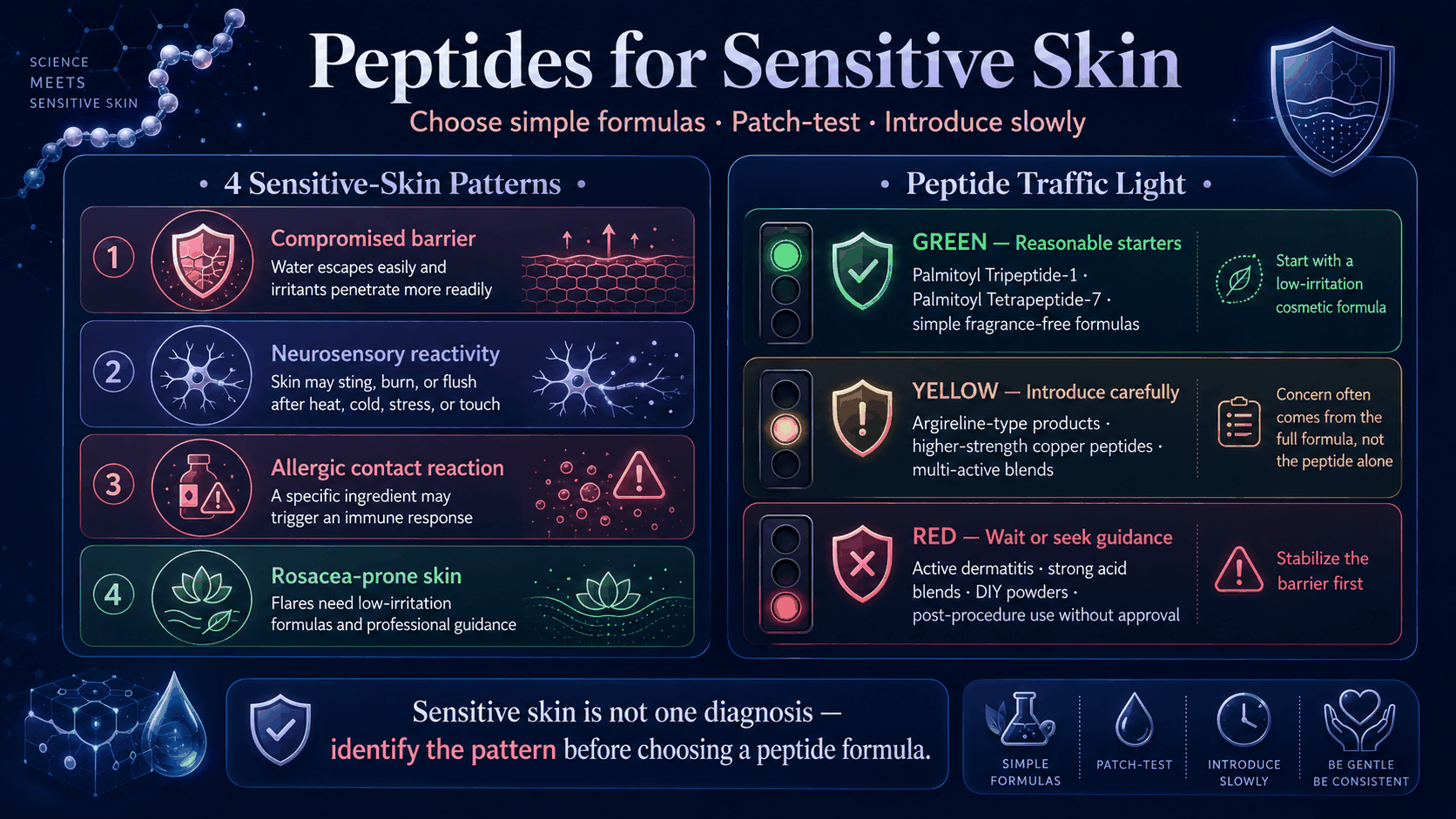
Four Common Sensitive-Skin Patterns
Compromised barrier
Water escapes easily and irritants penetrate more readily. Common contributors include harsh cleansing, over-exfoliation, weather, age, and unsuitable products.
Very commonNeurosensory reactivity
The skin may sting, burn, or flush after heat, cold, stress, or touch even when little visible damage is present.
Nerve sensitivityAllergic contact reaction
An immune reaction to a specific ingredient. Fragrance, preservatives, or botanical extracts may be more likely triggers than the peptide itself.
Patch-test carefullyRosacea-prone skin
Flushing may be triggered by heat, alcohol, spicy foods, stress, or irritating products. Active flares should be managed with professional guidance.
Use low-irritation formulasThe Peptide Traffic Light
Green — reasonable starters
Palmitoyl Tripeptide-1, Palmitoyl Tetrapeptide-7, Acetyl Tetrapeptide-9, simple low-strength copper-peptide formulas.
Yellow — introduce carefully
Argireline-type products, higher-strength copper-peptide products, SNAP-8, Leuphasyl, and multi-active blends.
Red — wait or seek guidance
New actives during active dermatitis, strong acid-peptide blends, injectable research products, post-procedure use without approval, and DIY mixtures.
 Sponsored / AffiliateApollo Peptide Sciences · Research-focused peptide science and molecular data
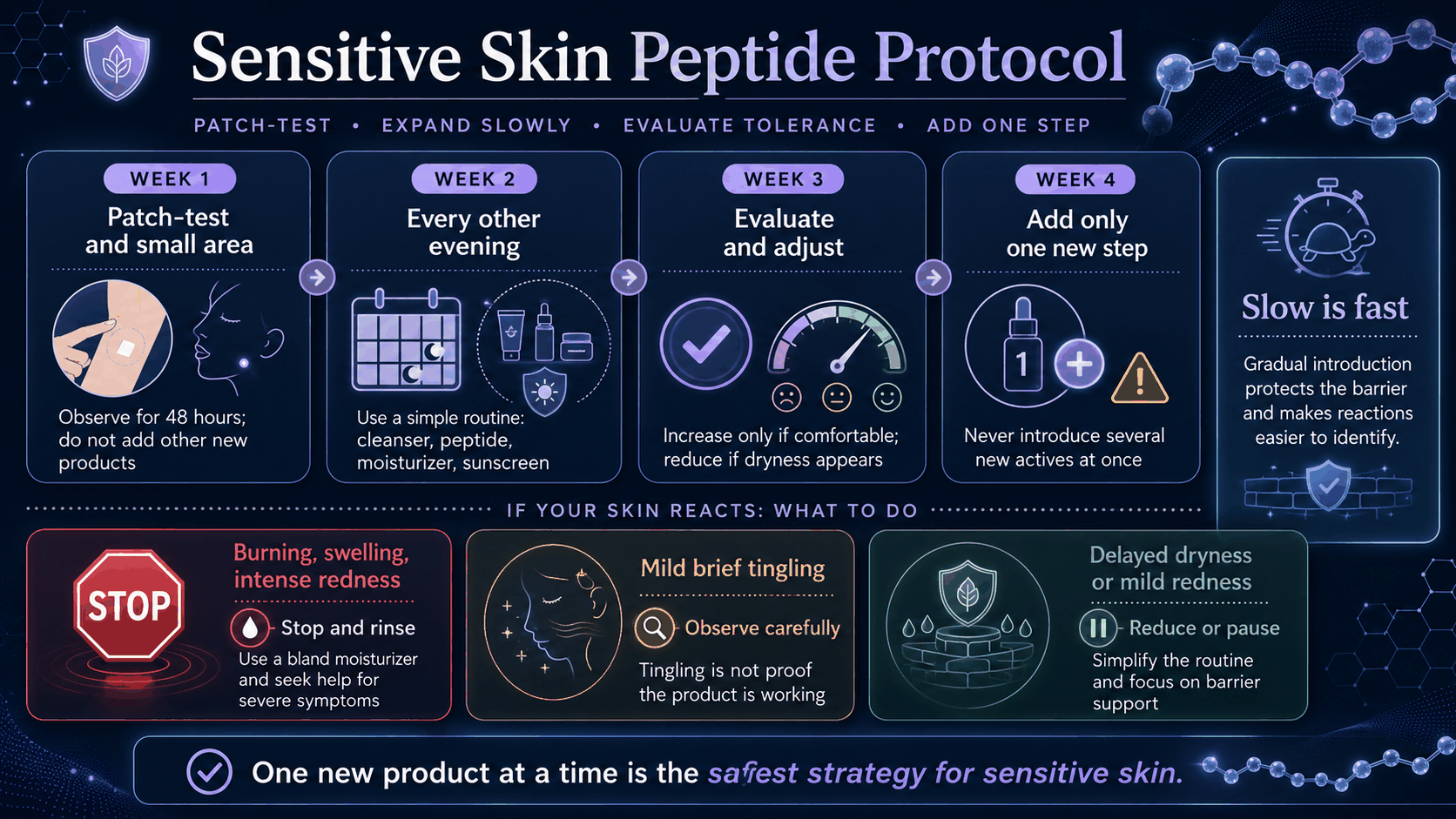
A Four-Week Introduction Protocol
Observe the test area for 48 hours. Then use the product once on a limited facial area. Do not add any other new product.
Keep the rest of the routine simple: gentle cleanser, peptide product, moisturizer, and morning sunscreen.
If the skin remains comfortable, consider daily evening use. If dryness or sensitivity appears, return to every-other-day application.
If the first product is well tolerated, add one other product at low frequency. Never introduce several new actives at once.
Six Peptide Categories to Know
Often used in formulas aimed at calmer-looking, more resilient skin.
A common foundational peptide used for firmness, hydration, and matrix-support products.
A less common matrix-support peptide. Human evidence is more limited.
Choose a finished cosmetic formula and avoid combining it with several strong actives at once.
Often used in expression-line serums, but multi-active formulas may be less suitable for highly reactive skin.
They do not contact the skin barrier, but they may still be unsuitable for people with allergies, digestive issues, or certain medical conditions.
What to Do if the Skin Reacts
Burning, swelling, or intense redness
Rinse the product off, stop using it, and use a bland moisturizer. Seek urgent care for breathing problems, severe swelling, eye symptoms, or blistering.
Stop and rinseMild brief tingling
Do not assume tingling means the product is working. If it persists, worsens, or returns each time, stop using the product.
Observe carefullyDelayed dryness or mild redness
Reduce frequency or pause the product. Simplify the routine and focus on barrier support. Persistent redness needs professional assessment.
Reduce or pauseStop List and Support List
Avoid
- New actives immediately after peels, lasers, or procedures
- Strong AHA/BHA products during the first weeks
- New products during active eczema, dermatitis, or rosacea flares
- Several new products at the same time
- Skipping the patch test
- DIY raw peptide powders or injectable products
Helpful steps
- Gentle cleanser and fragrance-free moisturizer
- Ceramides or panthenol if already well tolerated
- Daily broad-spectrum sunscreen
- A simple routine during the first two weeks
- Moisturizer sandwich method if drying occurs
- One new product at a time
Two Common Myths
Myth: Sensitive skin cannot use any active ingredients.
Fact: During a flare, a basic routine may be necessary. But after the barrier is stable, some people can tolerate carefully selected actives introduced gradually.
Myth: A natural peptide is automatically safe.
Fact: Natural origin does not guarantee tolerance. Fragrance, essential oils, botanical extracts, pH, dose, and allergy history all matter.
Frequently Asked Questions
Which peptide is the gentlest place to start?
A simple fragrance-free formula containing Palmitoyl Tripeptide-1 or Palmitoyl Tetrapeptide-7 is often a reasonable first category.
How often should sensitive skin use peptides?
Begin once or twice per week or every other evening, depending on the formula and your history of reactions.
Can peptides repair a damaged skin barrier?
Some formulas may support hydration and skin quality, but barrier repair still depends mainly on gentle cleansing, moisturizers, ceramides, and avoiding irritants.
Can I use peptides during a rosacea flare?
It is usually safer to avoid introducing new actives during an active flare and seek professional guidance.
 Sponsored / AffiliateDT Peptides · Peptide research products and laboratory-focused resources
Key Takeaways
- Sensitive skin can often use peptides, but the full formula matters.
- Start with one simple, fragrance-free product.
- Patch-test and introduce it over several weeks.
- Palmitoyl Tripeptide-1 and Palmitoyl Tetrapeptide-7 are practical first categories.
- Pause or reduce frequency if redness, dryness, or burning develops.
- One new product at a time is the safest strategy.