
What Is GHK-Cu?
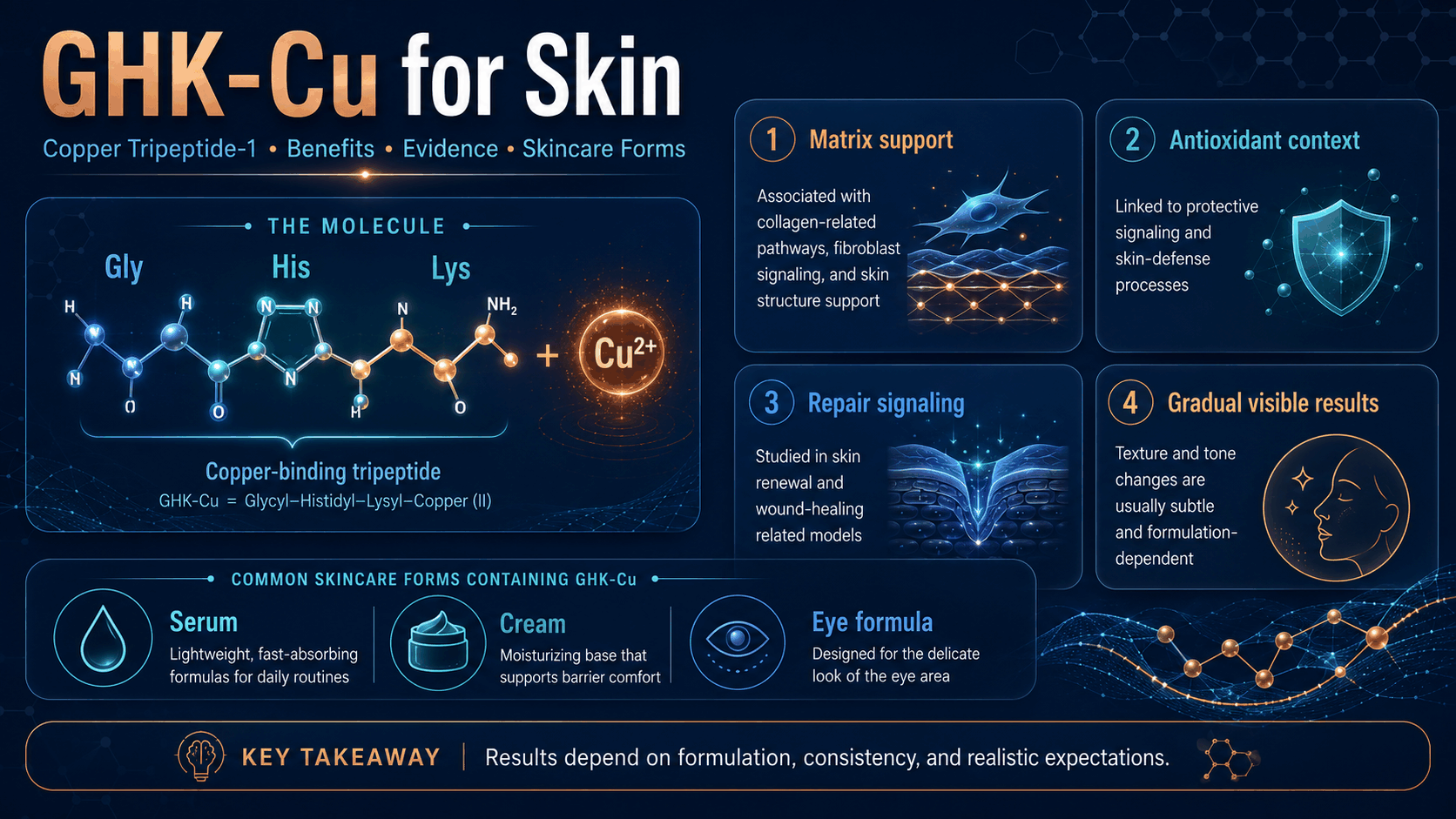
GHK-Cu is a naturally occurring copper-binding tripeptide made from glycine, histidine, and lysine.
It has been identified in human plasma and other body fluids and has been studied for its role in tissue repair, matrix remodeling, inflammatory signaling, and skin biology. In cosmetic ingredient lists, it is most commonly listed as Copper Tripeptide-1.
How GHK-Cu May Work in the Skin
Matrix support
GHK-Cu has been associated with fibroblast activity, collagen-related pathways, elastin support, and extracellular-matrix remodeling.
Antioxidant defense
Copper participates in antioxidant enzymes. GHK-Cu is studied for possible effects on oxidative stress and protective signaling in skin tissue.
Repair and regeneration
Research has explored GHK-Cu in wound-healing models, fibroblast migration, inflammatory regulation, and tissue-repair signaling.
 Sponsored / AffiliatePeptide ReGenesis · Peptide education, protocols, and wellness-focused resources
A 60-Day Personal Review
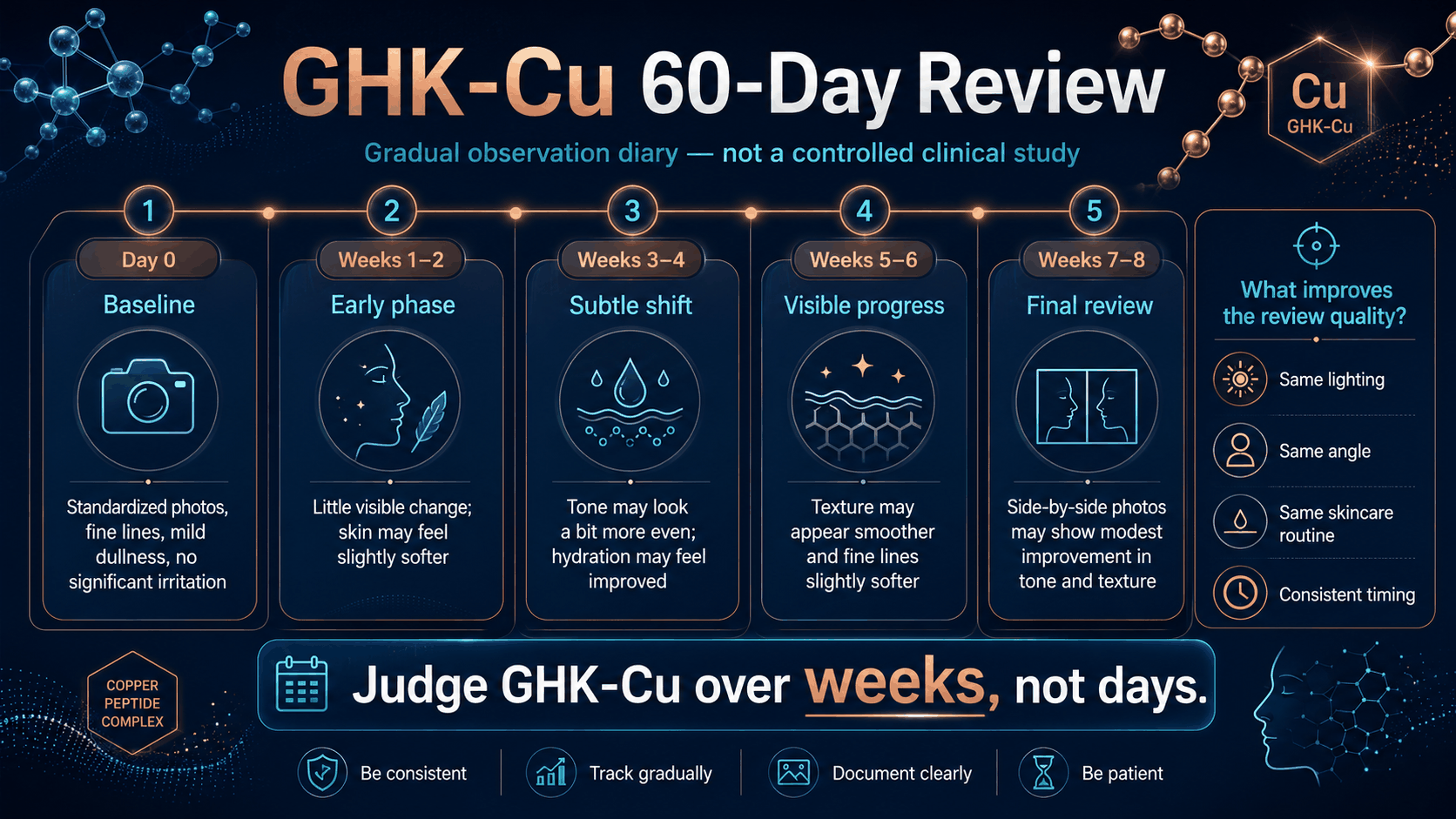
The following diary reflects one personal skincare trial, not a controlled clinical study. Lighting, photography, hydration, sleep, and natural variation can influence visible results.
Fine forehead lines, mild dullness, and no major irritation or barrier problems. Standardized photos were taken before starting.
The skin felt slightly softer, but the difference was subjective and not clear in photos.
Tone appeared more even and mild dullness seemed reduced. Hydration also felt somewhat improved.
Forehead lines looked slightly softer and the eye area appeared smoother at rest. Changes remained modest.
Tone and texture looked improved in side-by-side images. Fine-line depth appeared modestly reduced. No adverse effects were observed during the trial.
Forms of GHK-Cu and What to Look for
| Form / label name | Where it appears | What it means | Practical note |
|---|---|---|---|
| Copper Tripeptide-1 | Serums, creams | Standard cosmetic INCI name for GHK-Cu | Preferred term to look for |
| GHK-Cu powder | Research or custom formulation contexts | Raw or semi-finished ingredient | Not appropriate for casual DIY use |
| Copper Peptide Complex | Marketing language | May refer to one or several copper-containing ingredients | Check the full INCI list |
| Copper Gluconate | Cosmetics | A copper salt, not the same as GHK-Cu | Different ingredient and evidence base |
How to Use GHK-Cu in a Skincare Routine
Use after cleansing and before heavier creams, oils, or occlusive products.
Some users prefer to separate GHK-Cu from low-pH pure ascorbic acid to reduce potential stability or irritation concerns.
Allow at least six to eight weeks before judging visible changes.
If irritation occurs, alternate nights rather than layering several strong actives at once.
UV exposure accelerates collagen breakdown and can undermine any anti-aging routine.
Two Common GHK-Cu Myths
Myth: Any copper ingredient works like GHK-Cu.
Fact: Copper Tripeptide-1 is a specific copper-peptide complex. Copper salts such as copper gluconate are different ingredients with different behavior and evidence.
Myth: “Natural” means it can never cause problems.
Fact: Natural origin does not guarantee universal tolerance. Formula quality, other actives, irritation, allergy, and skin-barrier condition still matter.
Frequently Asked Questions
How long does GHK-Cu take to work?
Visible cosmetic changes, when they occur, usually require consistent use over several weeks rather than days.
Can GHK-Cu replace retinoids?
No. They are different categories with different evidence and mechanisms. Some people use both, but tolerance and product instructions should guide the routine.
Is blue color proof that a serum is strong?
No. Color may be a clue that copper is present, but it does not verify concentration, stability, or performance.
Is injectable GHK-Cu the same as topical GHK-Cu?
No. Route, regulation, risk, formulation, and evidence are different. This article focuses on cosmetic topical use.
 Sponsored / AffiliateiHerb · Supplements, wellness products, and daily health essentials
Key Takeaways
- GHK-Cu is a copper-binding tripeptide commonly listed as Copper Tripeptide-1.
- It is studied in collagen-related, antioxidant, inflammatory, and tissue-repair pathways.
- Visible skincare results are gradual and formulation-dependent.
- Six to eight weeks is a more realistic evaluation period than a few days.
- Use it on clean skin, introduce other actives carefully, and wear sunscreen.
- Topical GHK-Cu should not be confused with research-grade or injectable products.