
Why Everyone Is Talking About Peptides
The word “peptide” is everywhere: skincare, sports recovery, biohacking, and medicine.
The problem is that many explanations quickly turn into chemistry jargon. The easiest way to understand peptides is this: they are short chains made from amino acids, and some of them can work like biological messages inside the body.
What Are Peptides?
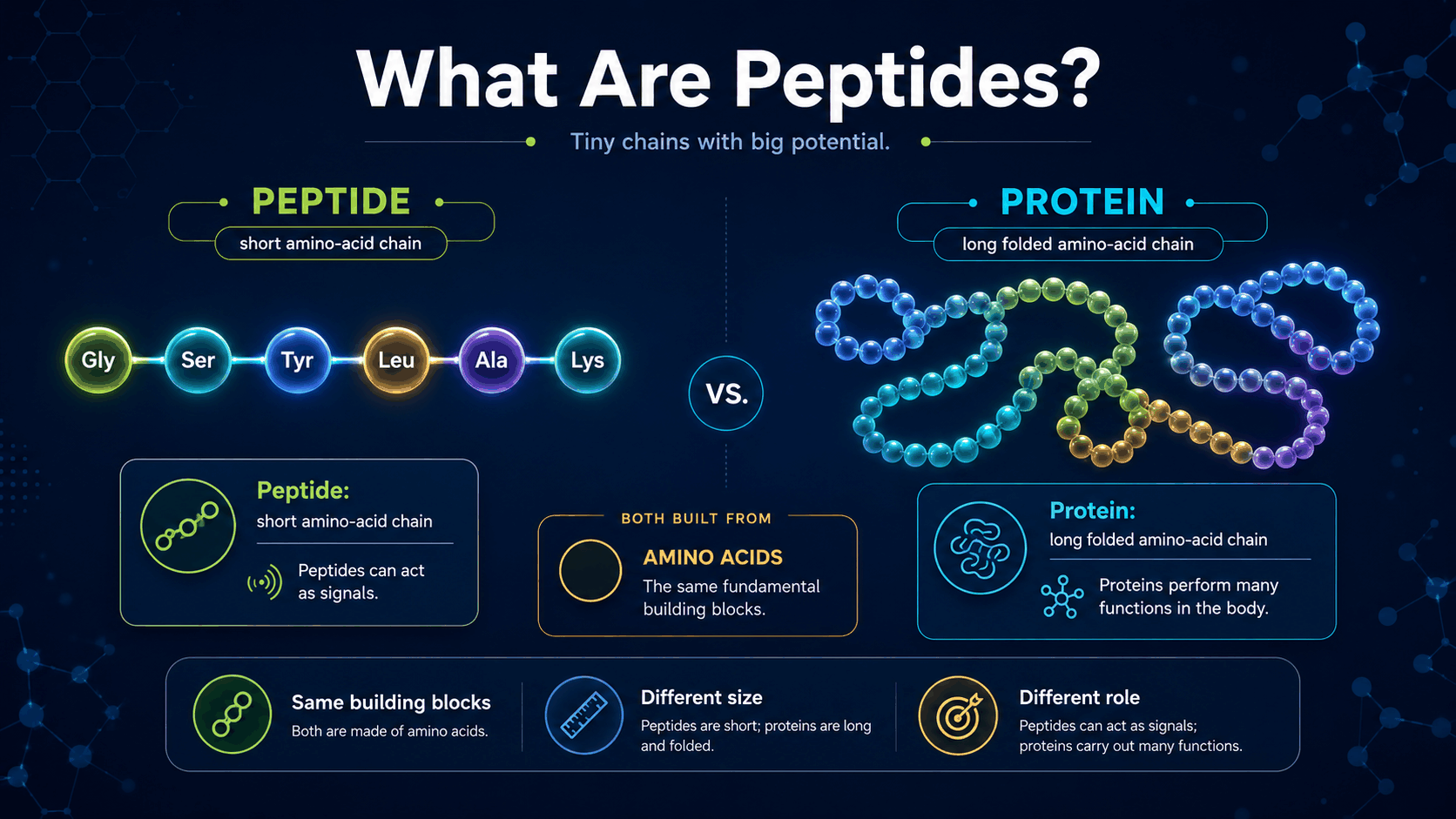
Your body is built from proteins. Your skin, muscles, hormones, immune cells, and many repair systems depend on proteins. Proteins are made from smaller building blocks called amino acids.
That is why a peptide is often called a “mini-protein.” It uses the same building blocks, but its size and behavior can be very different.
How Peptides Work in the Body
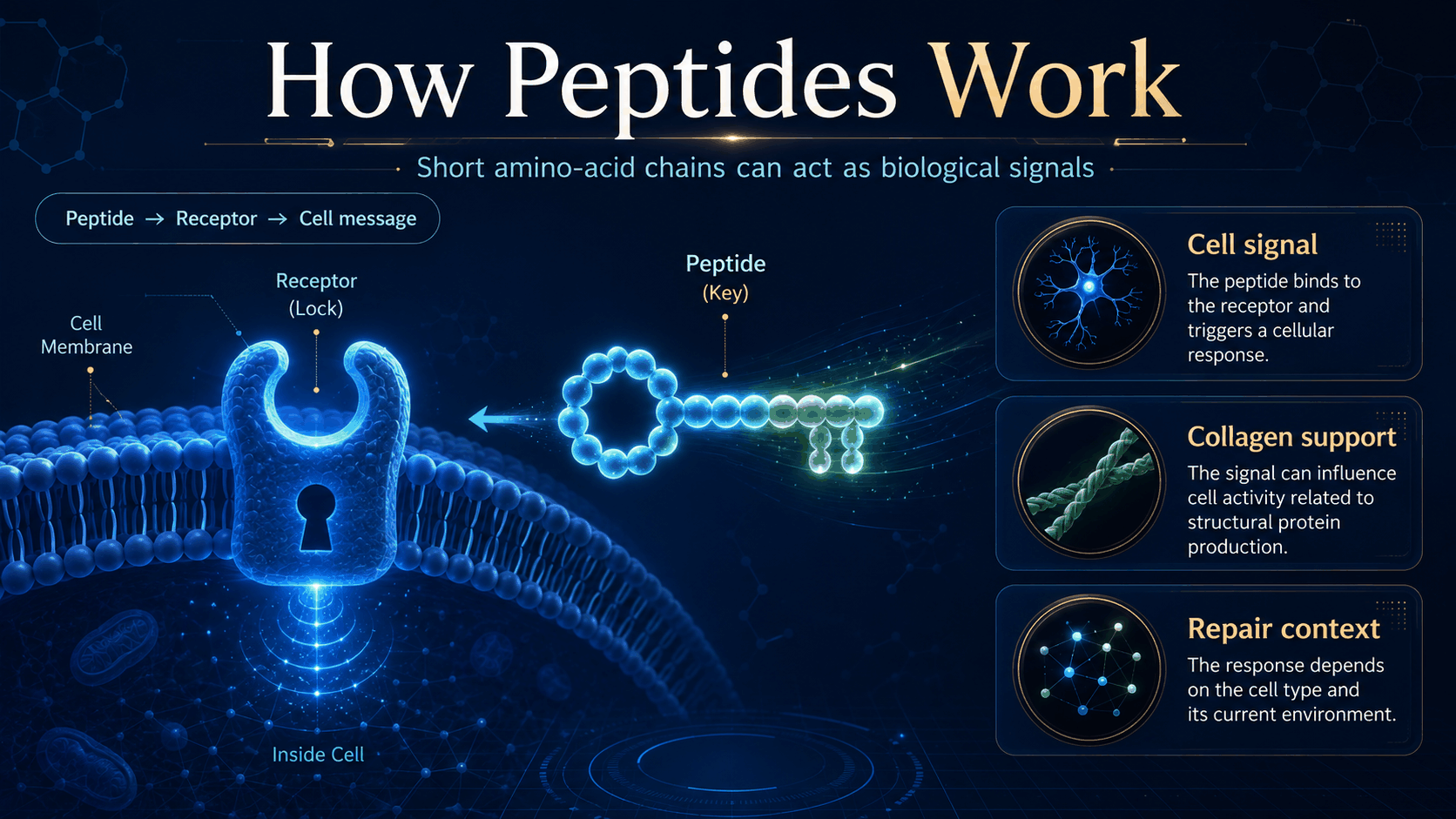
Because peptides are small, some can act as signals. Think of a cell receptor like a lock. A peptide can work like a key that fits into that lock and triggers a message inside the cell.
Molecular messenger
A peptide may tell a cell to start or stop a biological process.
Lock-and-key idea
The peptide binds to a receptor, and the cell interprets the message.
Different messages
Different peptides can have different biological contexts and targets.
Signals are powerful
Because peptides interact with biology, “natural-looking” does not mean “use casually.”
 Sponsored / AffiliateOura Partner · Sleep, HRV, readiness, and recovery insights
Where Peptides Are Used
The script highlights three broad areas where most beginners first encounter peptides.
Medicine
Some approved medicines are peptide-based. Insulin and oxytocin are classic examples of peptide-related biology.
Skincare
Ingredients such as GHK-Cu, Matrixyl, and Argireline are used in peptide skincare contexts, often around collagen and skin appearance.
Biohacking and sports
Peptides are often discussed around recovery, growth, anti-aging, and performance contexts — but this area requires careful safety framing.
The Biggest Myth About Peptides
“Synthetic peptides are just dangerous chemicals.”
This is too simplistic. Peptides can be broken down into amino acids, the same general building blocks found in food proteins.
“Safe” does not mean casual.
Peptides can interact with the body’s biochemistry. The right question is not whether the word sounds scary, but what the peptide is, what evidence exists, and what safety context applies.
Frequently Asked Questions
What is a peptide in simple terms?
A peptide is a short chain of amino acids. You can think of it as a mini-protein.
How is a peptide different from a protein?
Peptides are shorter. Proteins are much longer and often have more complex folded structures.
Are peptides hormones?
Some hormones are peptides, but not all peptides are hormones. “Peptide” describes a type of molecule, not one single function.
Are peptides safe?
Safety depends on the specific peptide, dose, route, quality, purpose, and medical context. This article does not provide use instructions.
 Sponsored / AffiliateHealthLabs.com · Lab testing for hormones, inflammation, and wellness
Key Takeaways
- A peptide is a short chain of amino acids.
- Proteins are longer amino-acid chains; peptides are smaller.
- Some peptides act as signals or molecular messengers.
- Peptides are encountered in medicine, skincare, and biohacking discussions.
- Simple does not mean risk-free: peptides can interact with biological systems.